
Free written scope consultation - allowances, timeline, and change-order rules on paper before a single trade is scheduled
 Before
 After
After Before
 After
After Before
 After
AfterCambria Home Additions & ADU: The Los Angeles Owner’s Guide
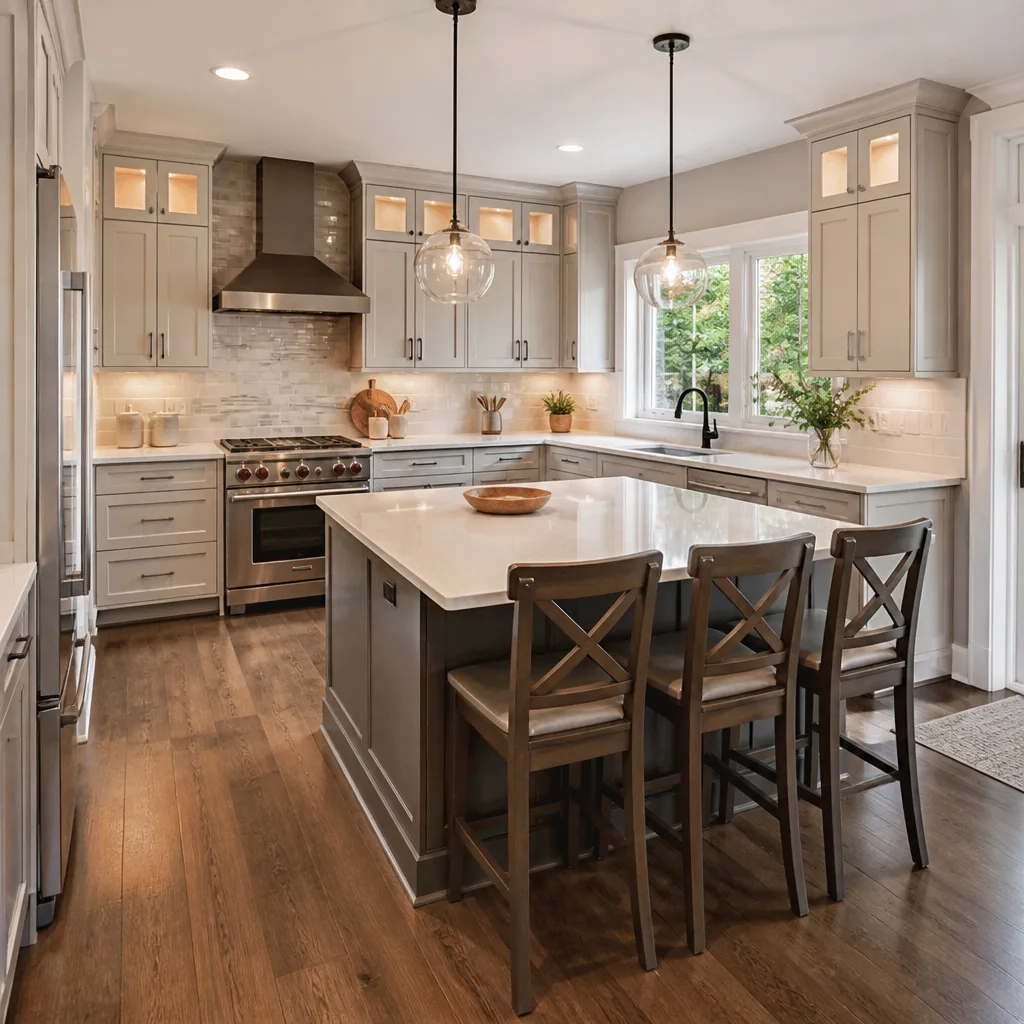
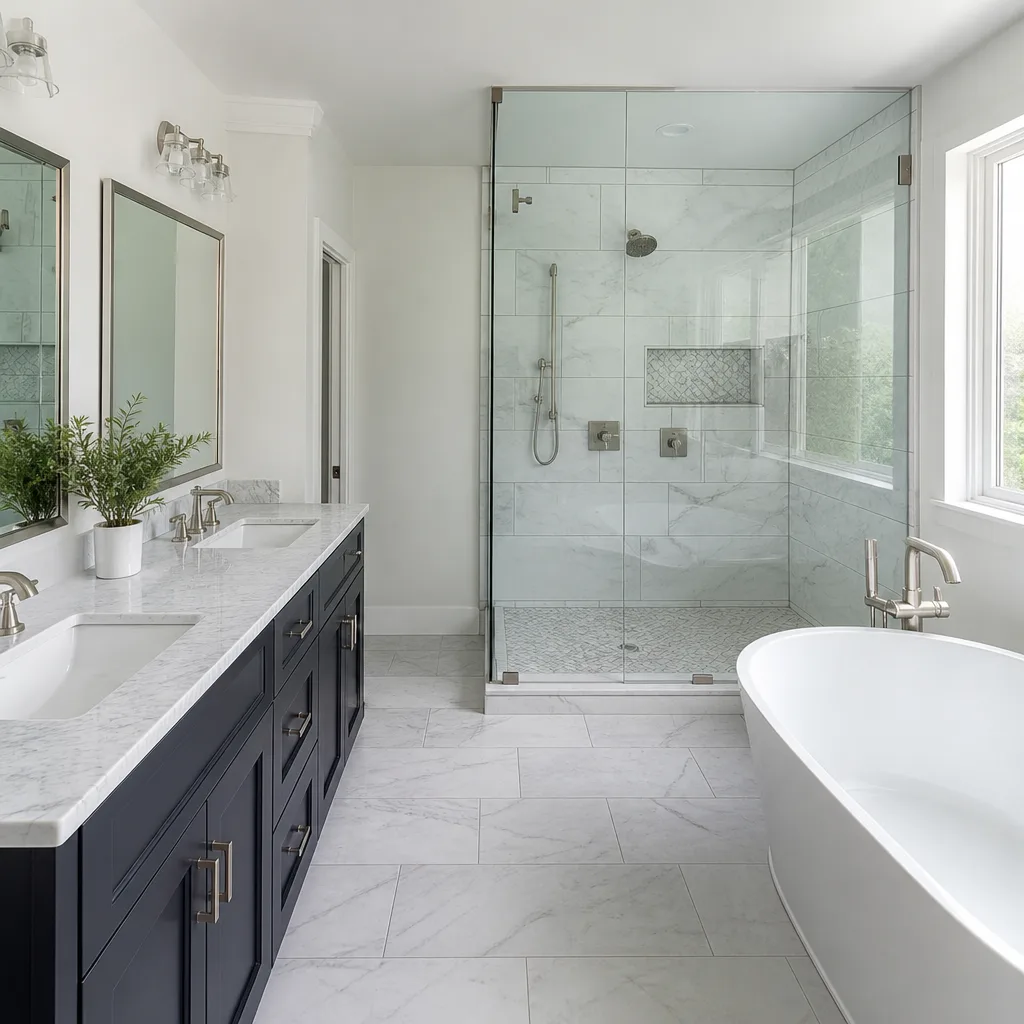
If you’re planning a home addition or ADU in Los Angeles and want Cambria quartz on the countertops, vanities, or island, the installed cost typically lands between $53,100 and $153,400 depending on square footage, foundation work, and how much Cambria surface you’re putting in. We stock Cambria-compatible fabrication specs, match slabs to your existing design, and coordinate the countertop install as part of the larger build. Most owners reach out to us when they’ve got Cambria in the main house and want the ADU or addition to match it exactly, or when a slab cracked during a remodel and the original fabricator won’t return their calls.
Here’s the reality with Cambria in a home addition: the countertop is one of the last things installed, but the decisions affecting it happen in week one. Cabinet layout, overhang support, seam placement, sink cutout position, and island framing all have to be right before the slab template is even taken. We handle that sequencing so you’re not paying for a second slab because a seam landed in the wrong spot.
Which Cambria Models This Applies To
Cambria runs about 200-plus design colors across several collections, and the good news is the material specs stay consistent across all of them. Whether you’ve got Brittanicca, Torquay, Ella, Portrush, or a discontinued color from ten years ago, the slab thickness, quartz composition (roughly 93% natural quartz), and fabrication requirements don’t change. What does change is color matching. Cambria’s designs are made in batches, and a slab of Torquay poured in 2023 won’t be an exact match to one poured in 2025. If you’re extending Cambria from your existing Los Angeles kitchen into a new ADU, we recommend pulling from the same lot if your fabricator has remnant stock, or accepting a near-match and designing a visual break between the old and new surfaces.
For the OEM-versus-aftermarket question on Cambria: Cambria doesn’t sell direct to homeowners. You’re always working through a fabricator, and that fabricator buys authorized slabs from Cambria’s distribution network. There’s no legitimate “aftermarket” Cambria slab. If someone offers you “Cambria-style” quartz at half the price, that’s a different quartz brand, and it won’t carry Cambria’s lifetime warranty. We install genuine Cambria slabs, sourced through authorized channels, and Cambria’s own warranty runs alongside our written workmanship guarantee.
Identification tip: your fabricator should have left a remnant or at minimum the slab lot number. That number is on the shipping label and matters if you ever need a matching piece.
Signs Your Cambria Home Additions & ADU Planning Is Going Wrong
Most failures with Cambria in an addition aren’t the material itself. Quartz is dense and hard to damage. The failures happen in planning and installation. Here’s what we see on jobs where another contractor got it wrong first:
- Seam placed directly over a dishwasher or under a window. Cambria slabs are heavy, and seams need support on both sides. A floating seam will eventually show a hairline crack or collect grime that makes the line obvious.
- Island overhang bouncing when you press on it. Cambria requires corbels or steel brackets for any overhang past 12 inches. Without them, the unsupported slab flexes and eventually stress-cracks at the cabinet edge.
- Countertop templated before cabinets were leveled. If the cabinet boxes aren’t shimmed dead level, the slab gets scribed to a crooked base, and every seam opens up within the first year.
- Wrong sink cutout size. Cambria slabs are cut with CNC routers. A mis-measured sink opening means the slab is scrap, and someone eats the cost. That’s a $2,360 to $7,670 countertop do-over in Los Angeles.
- Main-house Cambria and ADU Cambria don’t match. This is the one that frustrates homeowners most. You wait eight months for the ADU, and the new slab is two shades off because the original lot sold out. See the note above about lot numbers.
Replacement Cost & What’s Included
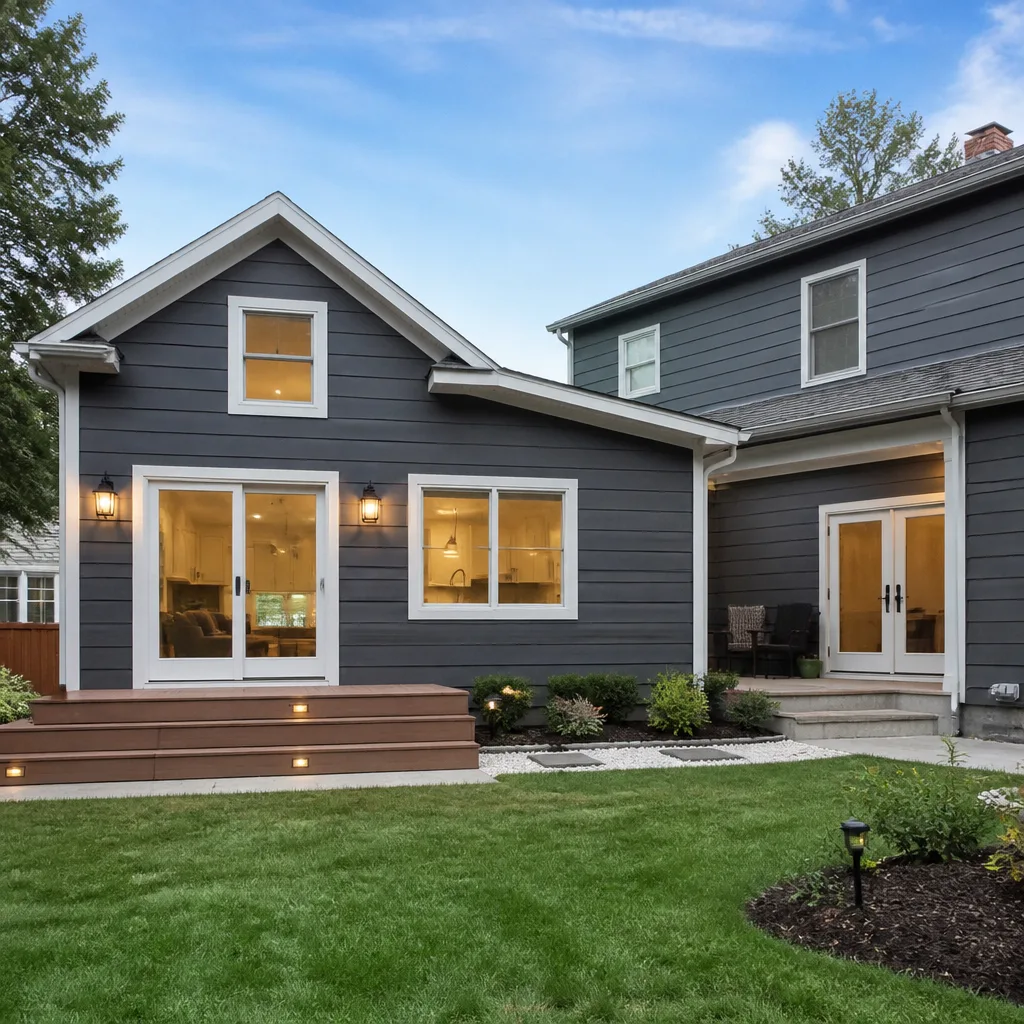
A full home addition in Los Angeles runs $53,100 to $153,400, and an ADU construct ranges from $106,200 to $259,600 depending on the foundation, utilities, and finish level. The Cambria portion of that, for countertops and island surfaces, usually lands between $2,360 and $7,670 for fabrication and install, with the slab cost driven by the specific Cambria design you choose. Standard colors sit at the lower end; darker, heavily veined designs run higher per square foot.
What drives the range on the addition itself: whether you’re on a slab or raised foundation, how far the new structure ties into existing roofline, whether the ADU needs separate metering, and what Los Angeles Department of Building and Safety requires for setbacks on your specific lot. We give you a written breakdown before any work starts, so the countertop line, the framing line, and the permit line are all spelled out. No change orders after demo day. Our 365-Day Done Right Promise applies to the entire job, including the Cambria install. If a seam fails or a bracket shifts within the first year, we come back and fix it at no charge.
DIY or Call Us?
A Cambria slab weighs about 14 pounds per square foot. A typical 10-foot island with a 2-inch mitered edge can weigh over 700 pounds. That’s not a two-person carry, and if you drop a slab on a Los Angeles slab foundation, you’re not cracking the concrete, you’re cracking the quartz and possibly a toe. We don’t recommend homeowners attempt any part of slab handling, templating, or cutting. The CNC cutting alone requires equipment that costs more than the countertop.
What you can do is check your existing cabinets with a 4-foot level before anyone templates. If the level rocks, that’s fixable before the slab goes on. And you can ask your fabricator for the slab lot number and keep it with your remodel paperwork. Beyond that, this is one job where calling a professional isn’t a luxury. If you’re mid-planning, call us at (936) 259-2607 and we’ll walk you through what to spec before the first wall goes up.
FAQs
Cambria quartz will outlast the cabinets it sits on. The material is non-porous and won’t stain, etch, or fade from Los Angeles sun exposure the way natural stone can. The weak points are the seams, the brackets, and the cabinet foundation, not the slab itself. With proper support and sealed seams, expect 40-plus years from the surface.
Small chips can be filled and polished by a fabricator. A full stress crack through the slab thickness cannot be repaired to structural soundness, and any repair will be visible. If the crack happened because of missing brackets or an unlevel base, replacing the slab without fixing the support is throwing money away. Call (936) 259-2607 and we’ll tell you honestly which one you’re looking at.
The template appointment takes about an hour, then fabrication runs one to two weeks. Installation day is typically one full day for the main countertop surfaces. In a full addition or ADU project, we schedule the Cambria install after cabinets are set and before the final plumbing and appliance hookup.
We don’t warehouse slabs; Cambria requires authorized fabrication, and each project pulls from current lot inventory at the distribution center. What we do keep on hand is everything else that touches the countertop install: steel brackets, seam adhesive, leveling shims, and the template tooling. For KraftMaid and Silestone projects, same approach: manufacturer-authorized sourcing, correct from day one.
If you’re in Los Angeles and planning an addition or ADU with Cambria surfaces, call (936) 259-2607 for a free estimate. Trevor Nash will make sure the price is in writing before the first tool is picked up.
Written by Trevor Nash, Owner, Penhallow Remodeling at Penhallow Remodeling, serving Los Angeles and nearby areas.