
Free written scope consultation - allowances, timeline, and change-order rules on paper before a single trade is scheduled
 Before
 After
After Before
 After
After Before
 After
AfterGAF Fence Installation: The Los Angeles Owner’s Guide
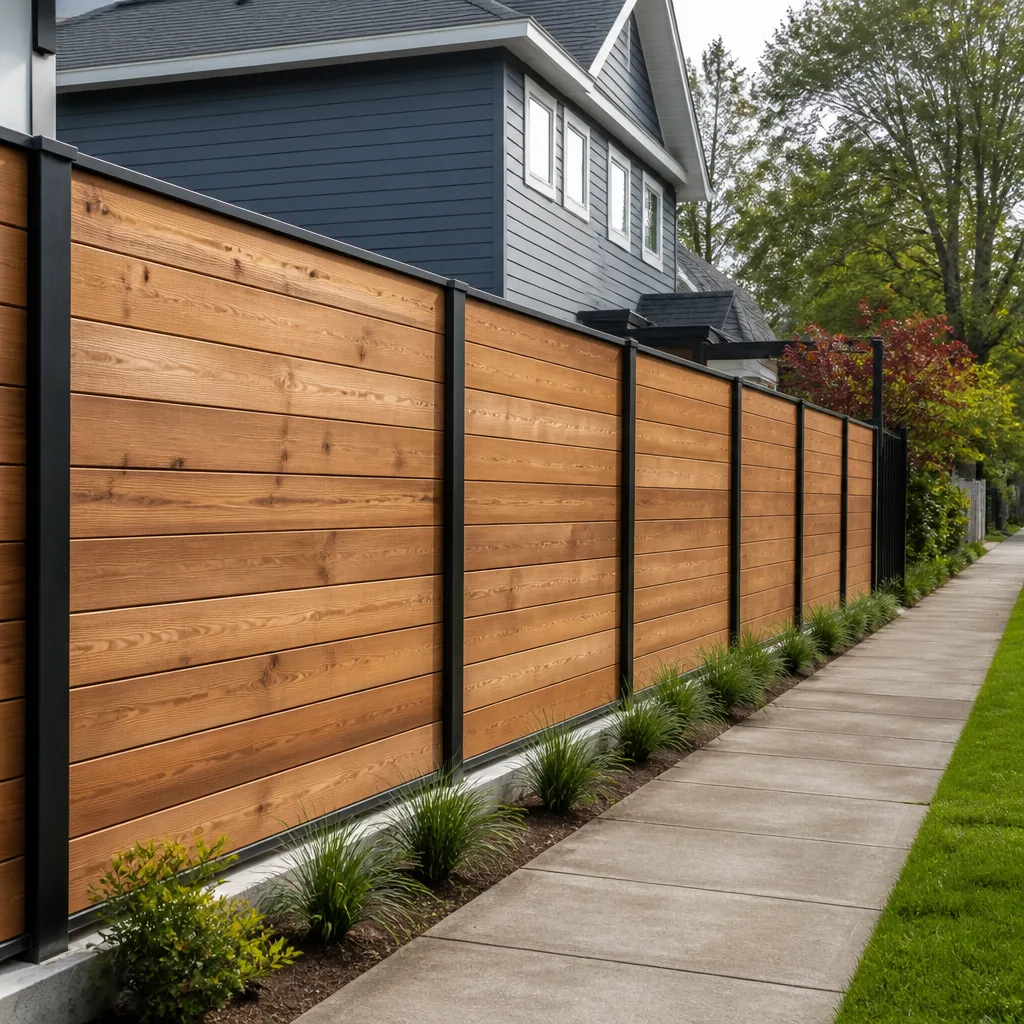
GAF fence installation in Los Angeles typically runs $4,130 to $10,620 for a standard residential perimeter, with most jobs landing around $7,200 for roughly 150 linear feet of vinyl or composite fencing. If your GAF product has cracked, warped, or pulled loose from its posts after a few hot summers, you’re not alone. We keep GAF-compatible fencing materials on hand and can usually have a crew out for a written estimate within a few days of your call.
Most Los Angeles homeowners discover the problem the same way: a post leans after heavy rain, a gate drags against the concrete, or a fence panel splits at the rail. What started as a “we’ll get to it” item becomes urgent the moment a neighbor’s dog walks through the gap. Before you patch it again, here’s what actually works in this climate.
Which GAF Models This Applies To
GAF’s fencing line covers a few distinct product families, and the part that fails determines what you’re watching for. The most common in Los Angeles yards are GAF’s vinyl privacy fence panels (typically 6′ x 8′ with a tongue-and-groove profile) and their post-and-rail systems, which use a 5″ x 5″ hollow post with routed rail slots. Composite rails from GAF’s Timberline-adjacent lines run slightly narrower, usually 1.5″ thick rails that slide into steel-reinforced post inserts.
Here’s the compatibility gotcha we see weekly: GAF fence panels from before 2018 use a different rail-to-post bracket than current production. The older brackets are a full 1/4″ shallower, which means a brand-new panel won’t seat correctly in an older post without a retrofit bracket. If you’re matching a single panel to an existing fence, check the date stamp on the back side of a panel near the bottom rail, or look at the bracket profile: flat brackets are pre-2018, stepped brackets are current. For most Los Angeles properties, a quality aftermarket panel from a supplier like Ply Gem or Veranda performs as well as OEM, but we’ll walk you through that choice based on how many panels you’re replacing and whether color match matters. Faded GAF tan rarely matches a new OEM tan exactly, so if you’re doing a partial fence, plan on painting the whole run or accepting a visible seam.
Signs Your GAF Fence Installation Is Failing
- Post lean after rain. Los Angeles gets short, heavy downpours between long dry spells. If your concrete footings were set at 18″ instead of 30″ (common with quick-build installs), saturated soil lets the whole post shift. The fence may look fine in August and lean 4″ by February.
- Cracks radiating from the post base. Vinyl expands and contracts more than wood does. Posts set too tight to hardscape, or panels mounted without expansion clearance at the rails, crack at the base within two or three Los Angeles summers. A crack that starts at the post kickboard is almost always a thermal expansion failure, not an impact hit.
- Gate drag or latch misalignment. The gate post takes the most load on any fence line. When the post kicks out even a half inch, the latch no longer lines up. Tightening a hinge won’t fix it; the post needs to be re-set or the gate needs a sag kit installed.
- Rails pulling out of post slots. The rail-to-post bracket carries the panel’s full weight plus wind load. In Santa Ana wind conditions, a undersized bracket lets the rail work free over time. You’ll see a gap open at the top rail before anything actually falls.
- Bottom rail rot or separation on composite runs. In yards with sprinkler overspray or poor drainage, even composite bottom rails absorb enough water to warp. The top of the fence looks perfect; the bottom 12 inches are the problem.
Replacement Cost & What’s Included
Full GAF fence installation in Los Angeles runs $4,130 to $10,620. On the low end is a small yard, maybe 60 to 80 linear feet of vinyl, minimal demo. The high end covers 200-plus feet with multiple gates, old fence removal, and concrete footing work. Most projects in the middle of that range: a 150-foot perimeter with one gate, old posts pulled, new footings poured, and panels hung.
You’ll get a written price before we start, and that number includes materials, labor, haul-away, and the concrete work. If we open the ground and find something unexpected, like an unmarked irrigation line under the post we’re pulling, we stop and talk to you before spending another dollar. Every GAF-compatible fence we install carries our 365-Day Done Right Promise in writing: if anything fails inside a year, we come back and fix it at no charge.
DIY or Call Us?
You can absolutely check the date stamp, measure your panel width and post dimensions, and figure out whether you’re dealing with pre-2018 brackets. That helps the conversation. But setting posts and getting a straight, code-compliant fence line in Los Angeles soil is harder than it looks, and the consequences of a bad install show up months later when the post shifts and the gate stops latching.
Fence work involves digging below the frost line equivalent (30″ in LA for fence posts), managing underground utilities on the property, and pouring level concrete footings with the right slope for drainage. Do it wrong and you’re looking at the same fence leaning again in a year. We’d rather give you a written number so you know exactly what the job costs, then do it once. Call (936) 259-2607 and we’ll schedule a walk-through.
FAQs
A properly installed GAF vinyl or composite fence should last 20 to 30 years in the Los Angeles climate, with composite skewing shorter if it faces full afternoon sun year-round. The limiting factor isn’t usually the panel material; it’s the footing depth and rail bracket quality from the original install.
Yes, in many cases a leaning post can be straightened and re-set with a concrete collar rather than fully pulping the old footing and pouring new, which saves money on shorter runs. We only recommend this when the post itself is sound; if the post is cracked at the base, a collar won’t hold and we’ll tell you that before you spend on the wrong fix.
A standard 150-foot fence with one gate takes our crew two to three working days in Los Angeles, including old fence removal and concrete work. Larger properties with multiple gates, retaining walls, or hard-to-reach backyards can run four to five days.
We stock common 6′ x 8′ white and tan GAF-compatible vinyl panels and the current stepped rail brackets, which covers most quick-turn repairs in the Los Angeles area. For faded colors, composite lines, or matched replacement on older brackets, we order the specific part and include that lead time in your written estimate so you’re never surprised at the door.
Written by Trevor Nash, Owner, Penhallow Remodeling at Penhallow Remodeling, serving Los Angeles and nearby areas.