
Free written scope consultation - allowances, timeline, and change-order rules on paper before a single trade is scheduled
 Before
 After
After Before
 After
After Before
 After
AfterBarrette Driveway & Pavers: The Los Angeles Owner’s Guide
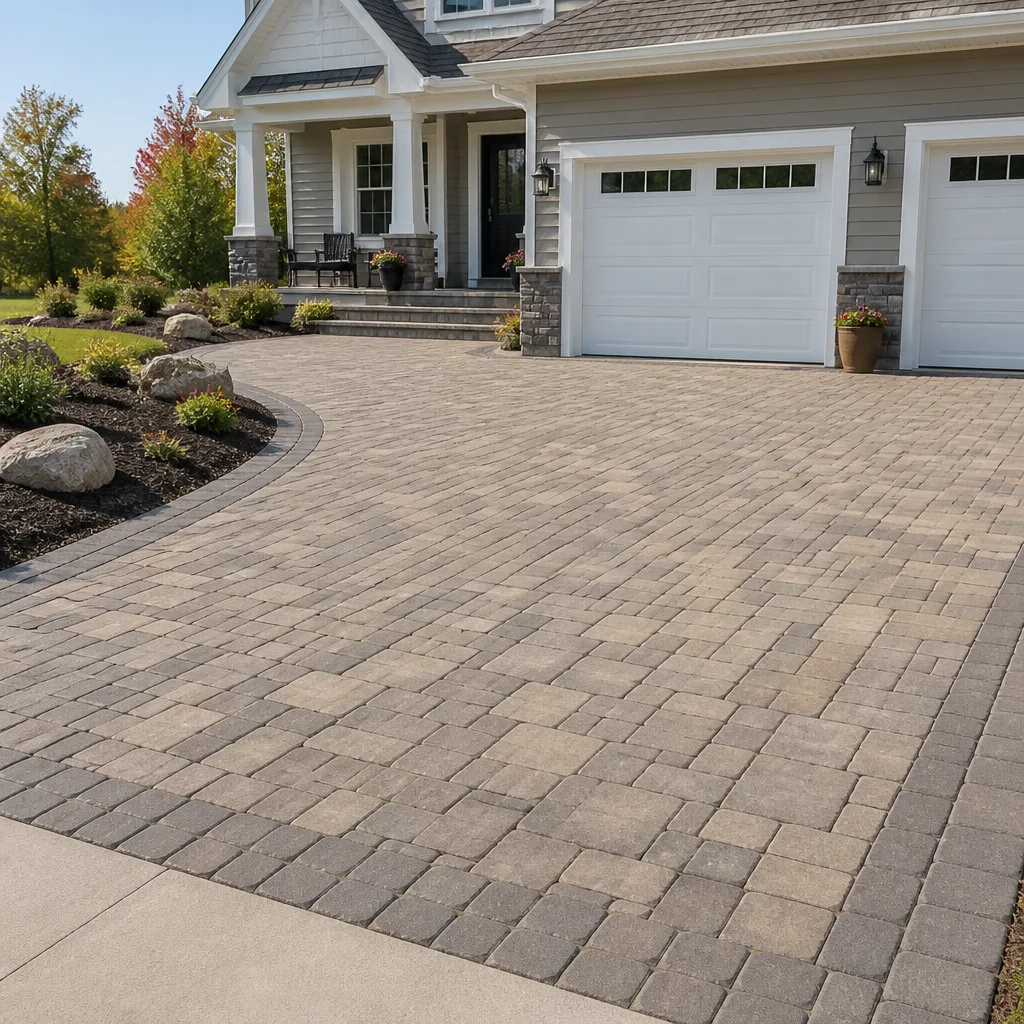
Barrette paver driveway and patio work in Los Angeles typically runs $8,260 – $21,240 for full installation, with component-level repairs like edge restraint replacement, paver resetting, or sand joint restoration usually falling between $400 and $2,100 depending on the square footage and how far the base layer has shifted. We stock Barrette-compatible pavers, edging, polymeric sand, and base materials, and we can match most currently sold Barrette paver patterns same week. Most Los Angeles homeowners discover a problem the same way: a paver that rocks underfoot near the garage, a low spot collecting water after January rain, or an edge row that’s started to drift toward the lawn. The fix is usually less invasive than it looks, but matching the paver color lot and getting the base compacted correctly is where the real skill lives. We’re an independent contractor, not affiliated with Barrette, which means we match parts honestly and install them to hold up under Los Angeles sun, rain, and shifting clay soil.
Which Barrette Models This Applies To
Barrette Outdoor Living sells paver and edging products through several regional lines, and the naming gets confusing fast. The most common pavers we see in Los Angeles driveways and patios are the Mega-Tumbled and Mega-Antica series: tumbled-edge concrete pavers that come in a three-piece modular system (typically a 6″ x 6″, 6″ x 9″, and 6″ x 12″ mix). If you have a Barrette driveway, your pavers were almost certainly installed as one of these modular packs. The fastest way to identify what you have is to pull one full paver and measure it, then check the underside for a stamped lot code. That stamp matters more than most people realize: Barrette’s color lots shift noticeably between production runs, and a paver bought today from a different pour can be visibly lighter or darker than what’s in your driveway. We’ve had homeowners order the “same” color online and end up with a checkerboard. The OEM versus aftermarket decision for Barrette specifically comes down to age. Pavers older than five or six years have faded, so an aftermarket equivalent that matches the faded tone is often a better visual match than a brand-new OEM paver in the original color. For edge restraints, spikes, and polymeric sand, we use aftermarket products that meet or exceed the originals because the materials are simpler and the quality is equivalent. One compatibility gotcha: Barrette’s 60mm thick pavers (about 2 3/8″) are not the same as the 80mm commercial pavers sold at some supply yards in the San Fernando Valley. Mixing thicknesses in a driveway leads to lippage and cracking. Always match the thickness, not just the face dimensions.
Signs Your Barrette Driveway & Pavers Is Failing
- Rocking or wobbly pavers near the garage or walkway. This almost always means the sand bedding layer has eroded or washed out underneath. In Los Angeles, we see it most often after heavy rain on driveways with a slope, where runoff carves channels beneath the pavers.
- Low spots that hold water for more than a couple hours after rain. This points to base failure or settling, not just surface wear. Clay soil in neighborhoods like Reseda and Van Nuys expands and contracts with moisture, and over five to ten years it can sink a driveway base unevenly.
- Edge pavers drifting outward into the lawn or planting beds. The edge restraint failed or was never installed correctly. Without a solid edge, the whole field of pavers slowly spreads, and gaps open up at the perimeter.
- Weeds or grass pushing up through joints that were once solid. Polymeric sand has a lifespan, usually five to eight years in Southern California UV exposure. Once it breaks down, the joints become seed beds.
- Paver surface flaking, chalking, or showing white patches. This is efflorescence or surface spalling, common on older concrete pavers in Los Angeles where irrigation overspray and dry heat cycle repeatedly. It’s cosmetic in most cases, but it signals that the paver surface is aging and may not take a color-match repair well.
Replacement Cost & What’s Included
For Barrette-compatible driveway work in Los Angeles, here’s what we quote and what’s inside the number:
- Paver resetting and releveling (spot repair): $400 – $1,200 depending on square footage and base condition.
- Full sand joint restoration with polymeric sand: $295 – $825 for a standard two-car driveway.
- Edge restraint replacement (one side): $200 – $600 including removal of the failed edging, new restraint, and spikes.
- Full paver driveway replacement with Barrette-compatible pavers: $8,260 – $21,240 depending on driveway size, paver thickness (60mm vs 80mm), and whether the base layer needs to be rebuilt or just recompacted.
Every line-item quote includes parts and labor, debris hauling, and compaction of the base before reinstallation. The price you get in writing is the price you pay, which is a Kingswell Way commitment we’ve held since 2004. If a repair fails inside 365 days, we come back and make it right at no charge, and the second visit is free. No service call fee, no re-inspection charge. We also carry paver supplies for KraftMaid cabinet remodels, Cambria countertop projects, and Silestone work, but driveway pavers are the only one of those brands you’ll walk on.
DIY or Call Us?
Concrete pavers are heavy, and driveway work is not like re-tiling a backsplash. A full 60mm Barrette paver weighs around 20 to 25 pounds, and moving several hundred of them is a back injury waiting to happen if you’re not used to it. The base layer underneath is the bigger issue. If the pavers are sinking or spreading, no amount of re-sanding the surface will fix it, and you could spend a weekend lifting and resetting pavers only to watch them settle again in three months. What you can safely check yourself: measure a loose paver’s thickness, look for a lot code on the underside, and note whether the low spot is in the middle of the field or at the edge. That tells us a lot before we even show up. For anything involving base excavation, compaction, or more than about a dozen pavers, call us at (936) 259-2607. Give me the whole picture first, then we pick up the tools.
FAQs
Barrette concrete pavers typically last 20 to 30 years in Los Angeles when the base is compacted correctly and the joints stay filled with polymeric sand. The base underneath usually fails before the pavers themselves do, especially in neighborhoods with expansive clay soil.
Yes, in most cases individual pavers can be lifted, the base recompacted, and the pavers reset without a full replacement. Full replacement only makes sense when more than about a third of the surface is failing or the base has collapsed in multiple spots. Call (936) 259-2607 for an honest assessment and a written price before anything gets lifted.
Spot repairs and sand joint restoration usually take half a day to one full day. A full driveway replacement in Los Angeles typically runs three to five working days, including base work, paver laying, cutting at the edges, and final compaction. We’ll give you the timeline in writing before we start.
We stock the most common Barrette-compatible pavers in the 60mm thickness, along with edge restraints, spikes, base rock, and polymeric sand. For less common colors or the 80mm commercial pavers, we source them through our Los Angeles suppliers, usually within a few business days. Call (936) 259-2607 and we’ll check stock while you’re on the phone.
Written by Trevor Nash, Owner, Penhallow Remodeling at Penhallow Remodeling, serving Los Angeles and nearby areas.