
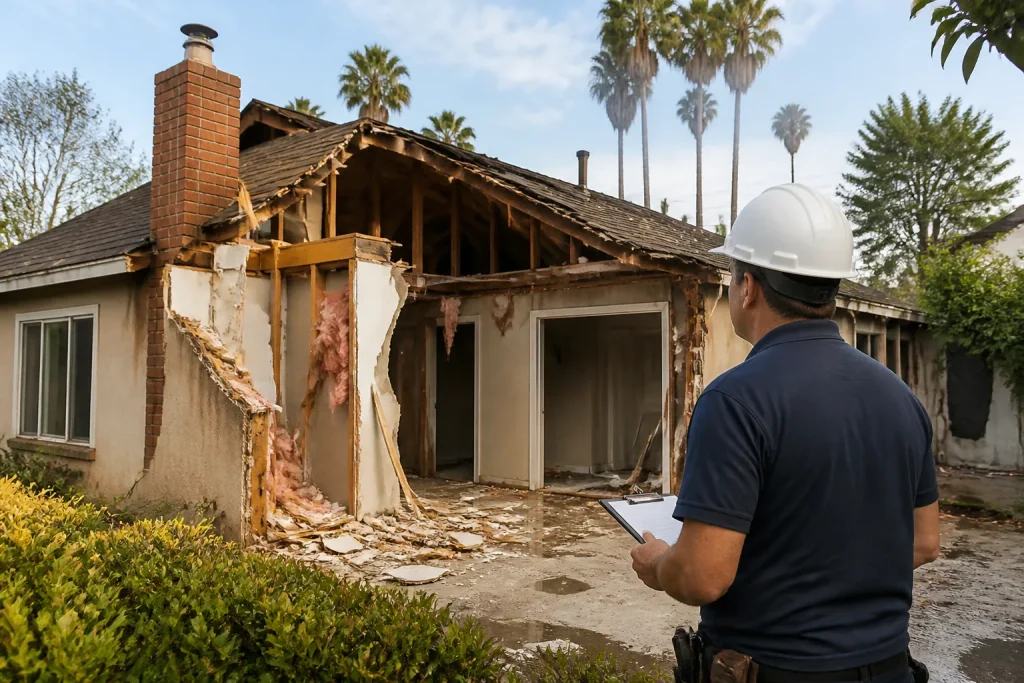
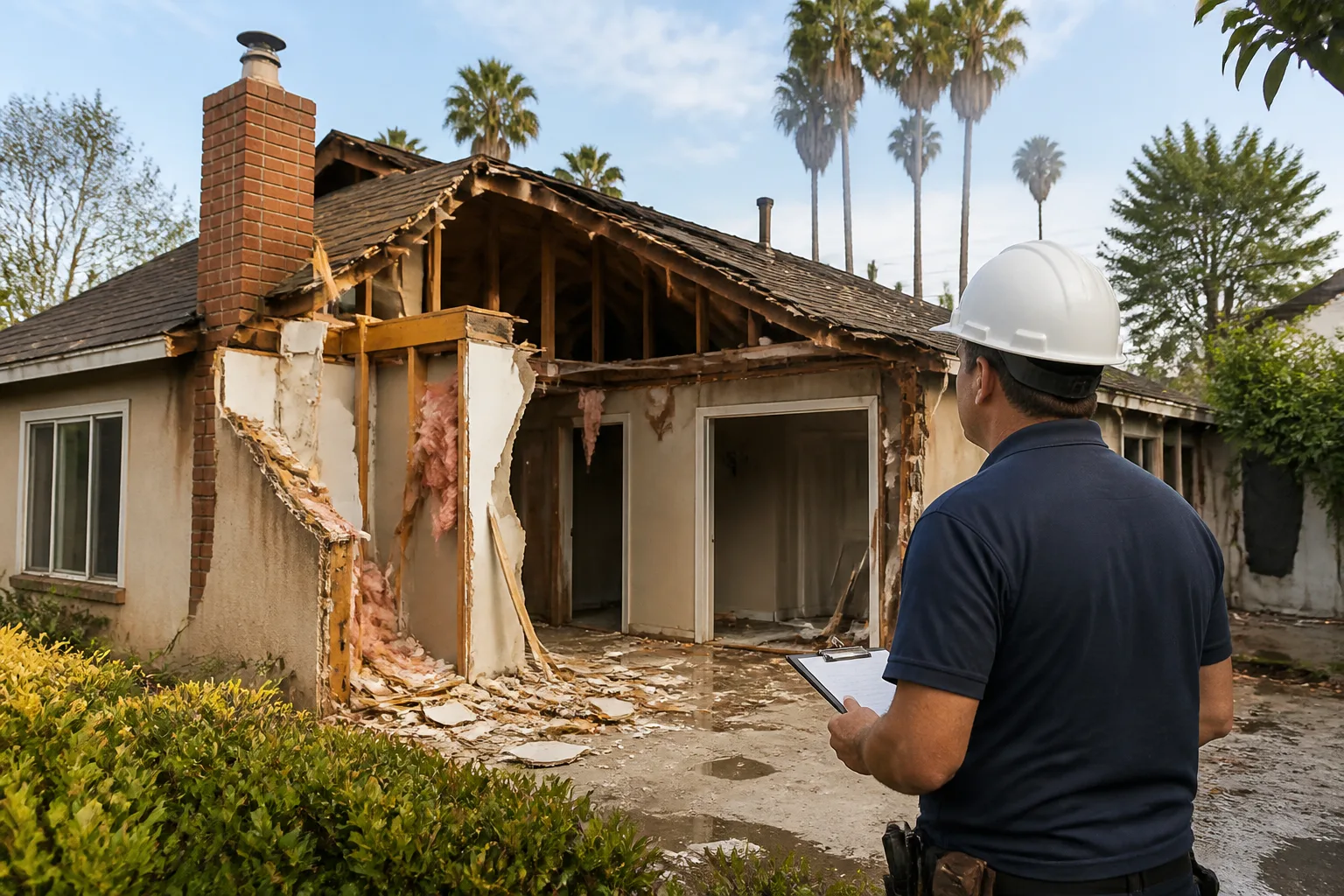
Emergency General Contractor Near Me: What Los Angeles Homeowners Should Do First
If you’re searching for an emergency general contractor near me in Los Angeles, the first call should not be to a contractor. It should be to your insurance carrier. Calling a contractor before you open a claim can be treated as a voluntary repair election, which means your insurer may cover nothing. The two-hour sequence you follow after a pipe bursts, a tree limb comes through the roof, or a retaining wall gives way controls whether your claim is approved, and for how much.
We’ve sat across kitchen tables from Los Angeles homeowners who made this mistake, and we’ve also helped plenty who did it right. This guide lays out the exact order of operations. It’s not complicated, but it’s specific, and it protects your money.
Document Everything Before You Touch Anything
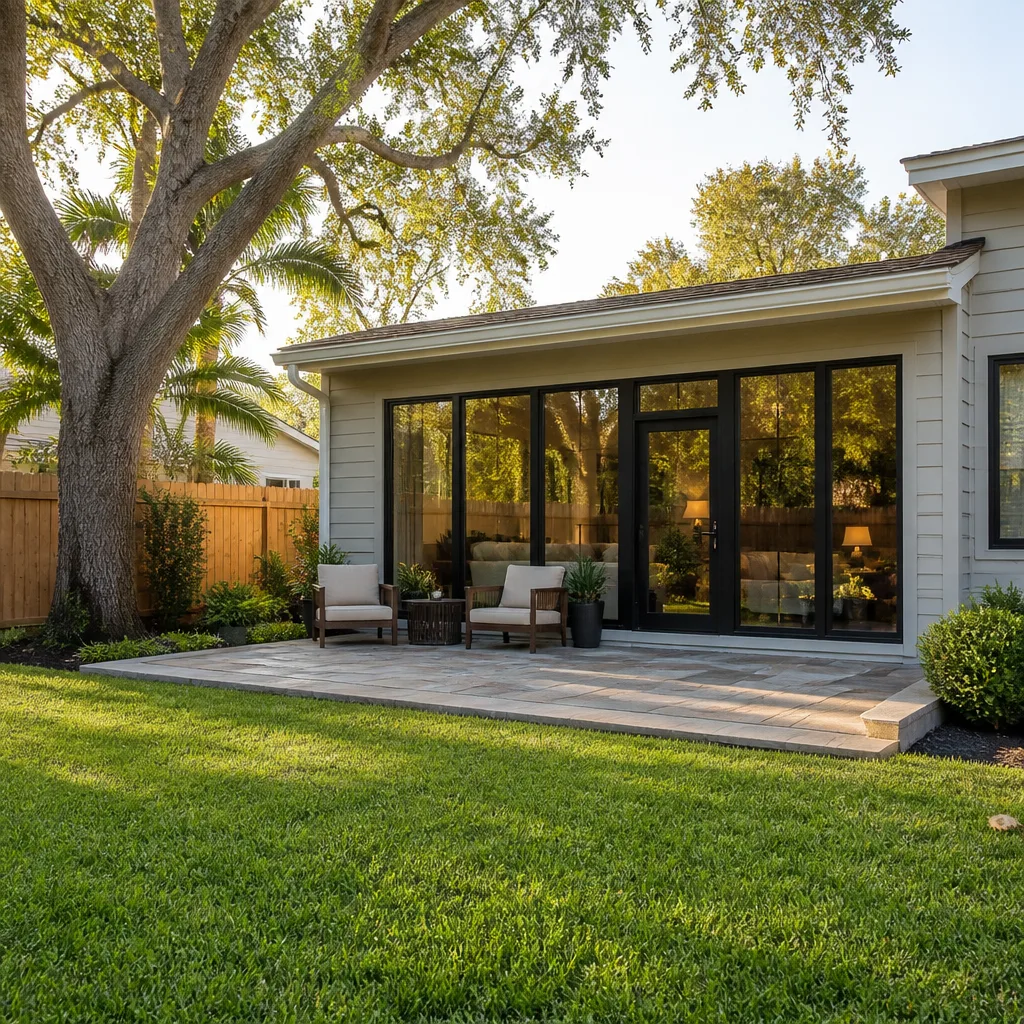
Your phone camera is the first tool in any emergency. Walk the damage with your phone out. Take wide shots that show the whole room, then close-ups of every crack, bulge, wet spot, and displaced object. Film the water running, the sagging ceiling, the gap where the window frame pulled away from the wall. In our experience, the difference between a claim that pays out fully and one that gets reduced to a fight is the first 20 photos.
Do this before you move a single item. In Los Angeles earthquake damage claims, for example, adjusters look for evidence that the homeowner shifted debris before documenting it. When debris gets moved, the story of how the damage happened gets harder to prove. We pulled a homeowner’s dining room table out of a Santa Monica living room last year after a ceiling collapse, and the first question the adjuster asked was whether the table had been photographed exactly where it fell. It had been. That single habit saved about $4,000 in disputed contents coverage.
After photos and video, write down the time the damage started or was discovered. Notate what you saw, heard, or smelled. If a pipe burst in a wall, the time you noticed the running water matters because it establishes how long water had been moving through the framing. Insurance carriers in Los Angeles are methodical about this, and your notes become part of the record.
Call Your Insurance Carrier and Open the Claim
The second step is calling your insurer, not a general contractor in Los Angeles. Say this, plainly: “I need to open a claim for water damage at my property.” The carrier will assign a claim number. Write it down. Ask the representative two direct questions:
- “What is my loss-of-use coverage while the home is being repaired?” This is the coverage that pays for a hotel or temporary rental if your home becomes unsafe or unlivable.
- “Do I need authorization before I begin mitigation?” Mitigation means stopping the active damage: extracting water, drying the structure, tarping a roof opening. Some policies require pre-authorization for reimbursement, and getting a “no” now beats a denied reimbursement later.
Once you have a claim number and clarity on authorization, the next call can be a contractor. The sequence matters because the claim number is your anchor. Every contractor conversation after this point references that number, and every invoice gets tied to it. Homeowners who call the contractor first and the insurer second often find themselves explaining to the carrier why they authorized work before the carrier knew a claim existed. Adjusters are trained to treat that as a red flag.
Mitigation Versus Repair: Know the Difference Before You Sign
This is the distinction that costs Los Angeles homeowners real money when it gets blurred. Emergency mitigation is the work that stops active damage. It’s the water extraction after a slab leak, the tarp over a storm-damaged roof section in the San Fernando Valley on a rainy night, the temporary shoring of a cracked foundation wall after a tremor. Mitigation is urgent, limited, and usually authorized quickly by an insurer.
Emergency repair is different. Repair restores function: replacing the wet drywall, re-roofing the section, rebuilding the wall. Repair is not a two-hour job and it should never be authorized verbally in a crisis. When a contractor arrives and immediately proposes full repair under the heading of “emergency,” that’s a reason to slow down.
In Los Angeles, we regularly see “mitigation only” authorization from carriers after rain events in hillside neighborhoods like Mount Washington and Eagle Rock. That authorization means the insurer is paying to stop further damage, not to rebuild anything. If a contractor skips straight to demolition and rebuild under a mitigation-only authorization, the homeowner can end up holding the full repair bill, with the carrier declining payment because the work exceeded the authorization. Before any contractor touches the structure, ask: “Is this scope mitigation, or is this a repair proposal?” If they cannot answer that cleanly, keep looking.
Check the License Before You Let Anyone In
Los Angeles has a specific problem after every heavy rain, earthquake, and fire season: unlicensed storm chasers. They show up in neighborhoods like Sunland-Tujunga after mudslides, in the West Valley after wind damage, and in Long Beach after ground movement. They carry clipboards and offer fast fixes for cash deposits. Some of them are not licensed to do any construction work in California, and a homeowner who hires one has no recourse through the Contractors State License Board.
The license check takes 60 seconds. Go to the California State License Board website, enter the contractor’s license number, and confirm three things:
- The license is active, not suspended or expired.
- The name on the license matches the name on the contract. Subcontractor name-swapping is a common trick.
- The license classification matches the work. A Class B General Building license covers most remodeling work in Los Angeles. A limited specialty license does not.
At Penhallow Remodeling, we tell every Los Angeles homeowner we meet: no license number, no key. It’s that simple. We also recommend asking for proof of liability and workers’ compensation insurance before anyone sets foot on the property. A contractor who cannot produce both is shifting risk onto you.
Written Scope, Written Price, Even in an Emergency
Urgency does not suspend the need for a written agreement. A verbal “we’ll get the water out and figure out the rest later” is how billing disputes start. In an emergency, a contractor can write a one-page scope in 20 minutes. That scope should include:
- The specific work being done: extract 400 square feet of water from first-floor slab and walls in the den and hallway, place 6 air movers and 2 dehumidifiers for 72 hours, remove and dispose of wet carpet pad.
- The price for that specific work: a dollar figure, not a range, not a “we’ll see how it goes.”
- What is NOT included: any rebuild, any finish work, any material replacement beyond the mitigation scope.
- The date the written scope was provided and the date work begins.
At Penhallow Remodeling, we operate under the Kingswell standard, which requires a written price before any work starts and a defined arrival window. That standard applies to Kitchen Remodeling in Los Angeles and Bathroom Remodeling in Los Angeles, and it applies just as firmly when a homeowner calls us about a water line that let go at midnight. The written scope protects both sides. It tells the insurance adjuster exactly what was done and for what price, and it keeps the homeowner from being surprised by an invoice that doubles because “we had to open the wall up a little more.”
If a contractor says they cannot produce a written price in an emergency, what they are really saying is they don’t want to be held to a number. The Kingswell way is the opposite: say the price before the work. Show up in the window we gave. Leave the place cleaner than we found it. And when it’s a remodel rather than a mitigation, the same rule applies. A kitchen remodel typically runs $18,000 to $55,000 in Los Angeles depending on layout, cabinet line, and countertop material. The number is on paper before the first cabinet comes out.
Los Angeles-Specific Risks Homeowners Should Know
Los Angeles construction has a distinct set of failure modes, and recognizing the one affecting your property helps you talk to your adjuster and your contractor with precision.
Hillside homes in neighborhoods like Laurel Canyon, Studio City, and parts of Pasadena deal with slope movement after heavy rain. Retaining walls crack, patio slabs shift, and doors stop latching. In our experience, homeowners often dismiss a sticking door as humidity when it’s actually the first sign of fill movement behind a poured wall. If you live on a slope in Los Angeles and a door suddenly sticks after a storm, photograph it and mention it to your insurer as part of the claim, not as a separate repair.
Older homes in Los Angeles, especially those built before 1960, often have galvanized steel supply lines that fail at threaded joints. When those pipes let go inside a wall, the water runs for hours before anyone sees it. Water follows framing and settles in the lowest point, which is often a sunken living room or a garage slab in mid-century construction. If you have a mid-century home in Sherman Oaks or Lakewood and you hear water running but cannot find the source, shut the main valve at the street and call both your insurer and a plumber in that order.
Window and door flashing failures are a chronic Los Angeles issue in stucco homes, especially after the wind-driven rain that comes in from the Pacific. Water gets behind the stucco, rots the sheathing, and shows up as peeling paint or soft drywall months later. By the time the stain appears on the interior wall in a Westchester or Mar Vista home, the damage behind it is usually larger than the stain suggests. Document it, file the claim, and get a written scope for opening the wall to assess framing before any rebuild is discussed.
What It Costs to Handle an Emergency the Right Way
Los Angeles homeowners ask us about cost more than anything else, and the honest answer is that emergency costs split into two lanes: mitigation and restoration. The price difference between the two is where the bill gets big.
| Scope of Work | Typical Los Angeles Range |
|---|---|
| Water extraction, drying equipment, and monitoring after a pipe leak (single room) | $1,800 – $4,500 |
| Temporary roof tarp and dry-in after storm damage | $800 – $2,200 |
| Emergency board-up of a broken window or door opening | $300 – $900 per opening |
| Temporary shoring of a damaged wall or ceiling section | $1,200 – $3,500 |
| Full restoration of a water-damaged bathroom (gut to finish) | $12,000 – $28,000 |
| Fire damage rebuild, including framing, drywall, and finish | $30,000 – $90,000 |
Mitigation is a controlled, bounded job with a free-standing price. Restoration is a remodel, and it carries remodel pricing. When a Los Angeles homeowner tells us a contractor quoted a mitigation price that “sounds like a remodel price,” the answer is usually that they were being quoted a remodel. Restoring a water-damaged bathroom in Highland Park often runs $12,000 to $28,000 by the time the substrate, the moisture-resistant layer behind your tile, is replaced and materials come back in. We install Delta and Moen fixtures on many of those restorations because those are trade brands with warranties that stand behind the work. The brand names are not decorative, they are part of the guarantee.
If you’re looking at a restoration and want an exact number for your house, call us at (936) 259-2607. The estimate is free, and the written price is part of how we work, emergency or not.
When to Call a Pro
If water has been running for more than an hour, if a wall or ceiling is visibly sagging, if you smell gas, or if a crack has opened in a foundation wall wider than a quarter inch, call a professional immediately. These conditions are not DIY moments, and the delay between the damage and the mitigation is the single biggest factor in the final repair cost.
A real emergency contractor will ask for the same things your insurer asks for: photos, a timeline, and a description of what failed. They will not push you to sign a full reconstruction before the insurer has seen the damage. If a contractor in Los Angeles tells you the permit can wait, the insurance will sort itself out, or the contract is “just a formality,” that’s the moment to slow down and call someone else.
Related services in Los Angeles: if the emergency is contained and you’re ready to talk about the rebuild, our team handles Kitchen Remodeling in Los Angeles and full-home restoration with the same written-price standard. Start with a call and we’ll walk you through the scope.
The Bottom Line
When something fails in a Los Angeles home, the order of operations is: photograph everything, call your insurer and get a claim number, ask about mitigation authorization, check the contractor’s license on the CSLB site, and get a written scope with a written price before any work begins. Skip any one of those steps and you’re handing someone else control of your money.
If you’re in Los Angeles and you need an emergency general contractor who will follow this sequence with you rather than around you, Penhallow Remodeling offers free estimates and written pricing on every job. Call (936) 259-2607. A real person answers, day or night, and we’ll tell you honestly whether you need mitigation, restoration, or both.
Frequently Asked Questions
Call your insurance company first. Opening a claim creates a claim number that anchors every contractor invoice and authorization. Calling a contractor first can be read as a voluntary repair election, which may reduce or eliminate coverage for work done before the carrier was notified.
Go to the California Contractors State License Board website and search the contractor’s license number. Confirm the license is active, the name matches the contract, and the classification covers general building. The check takes about 60 seconds and protects you from unlicensed operators who appear after storms, fires, and earthquakes in Los Angeles.
Mitigation stops active damage: water extraction, tarping, board-up, temporary shoring. Repair restores function: replacing drywall, rebuilding the roof section, re-installing cabinets. Insurers authorize these separately, and a contractor who blends them into one verbal approval can create a coverage dispute. Get each scope in writing.
Mitigation for a single-room water leak typically runs $1,800 to $4,500 in Los Angeles. Full restoration of a water-damaged bathroom ranges from $12,000 to $28,000 depending on finishes and materials. Call (936) 259-2607 for a written estimate on your specific situation. The estimate is free.
Penhallow Remodeling home provides general contracting for restoration and remodel work in Los Angeles, with written pricing before any work starts and a Done Right Promise on every project. If your emergency has a mitigation component, we’ll help you sequence it correctly with your insurer. Call (936) 259-2607 and a live person will answer. For more on our services, see General Contractor in Los Angeles.
Written by the team at Penhallow Remodeling.
Need Construction Help?
Call Penhallow Remodeling - licensed & insured, here with fast after-hours help in Los Angeles.
(936) 259-2607