
Dvele General Contractor in Los Angeles: A Homeowner’s Guide
Dvele homes are built to millimeter tolerances in a controlled factory. The Los Angeles lot they land on is anything but controlled, and the general contractor bridging those two realities is the most important hire you’ll make in the whole process. Hiring the right GC means the difference between a seven-figure Dvele that performs like the spec sheet promises and one that fights its own foundations for decades.
If you’d rather skip the research and talk to someone who’s walked a few of these jobs in Los Angeles, call (936) 259-2607. Otherwise, here’s what we think you need to know, written the way we’d explain it over coffee.
Key Takeaways
- The GC’s real job on a Dvele project happens before the modules ever leave the factory. Site prep, foundation work, and utility rough-ins decide whether the build goes smoothly.
- Dvele modules arrive with tolerances down to the millimeter. A GC used to framing with a half-inch of slop will blow the budget on the finish line.
- Los Angeles permits for Dvele projects are a hybrid: the factory handles some approvals at the state level, but the local plan check still has to happen in LA.
- Your written contract needs to separate factory warranty from site-work warranty, or you’ll be arguing about who owns a leak for six months.
- Ask any prospective GC a blunt question: “How many factory-tolerance modular units have you set and tied in?” If they blink, keep looking.
What a Dvele Really Is (and What It Isn’t)
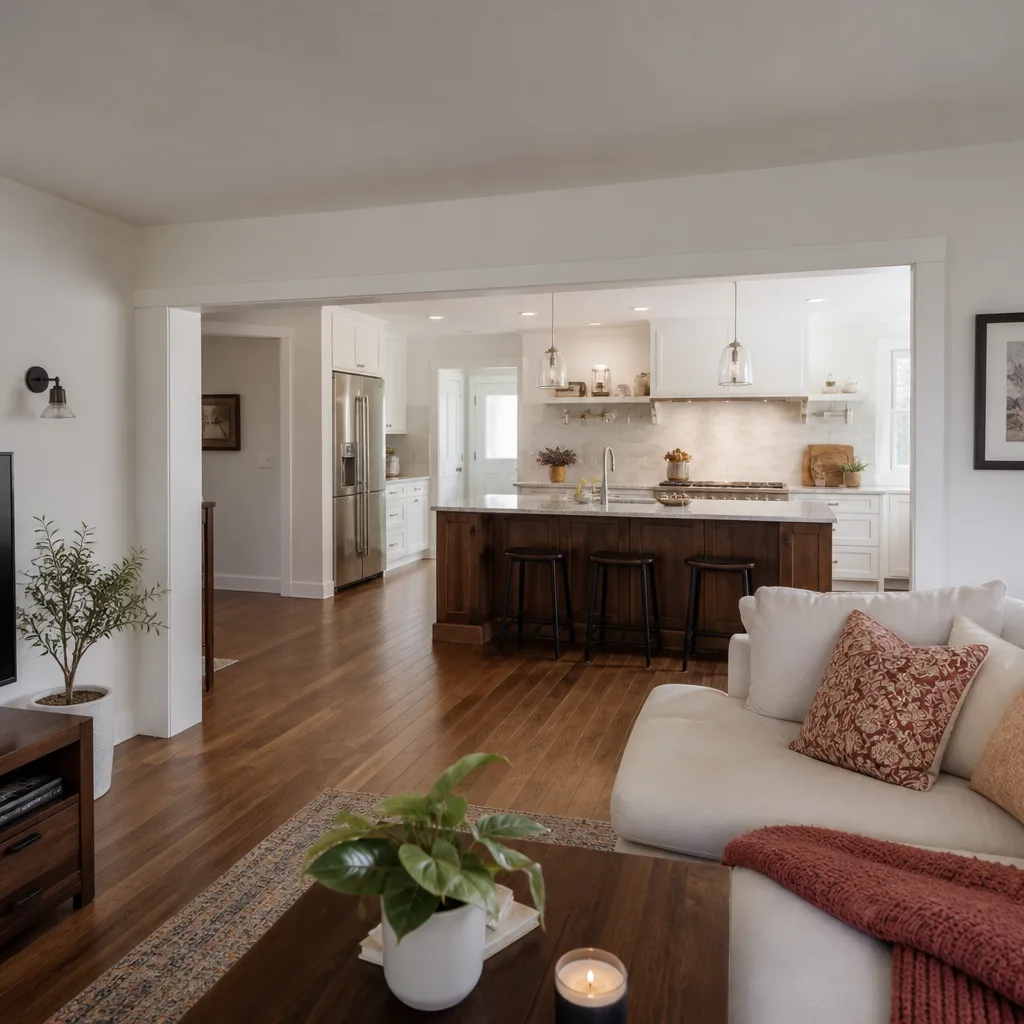
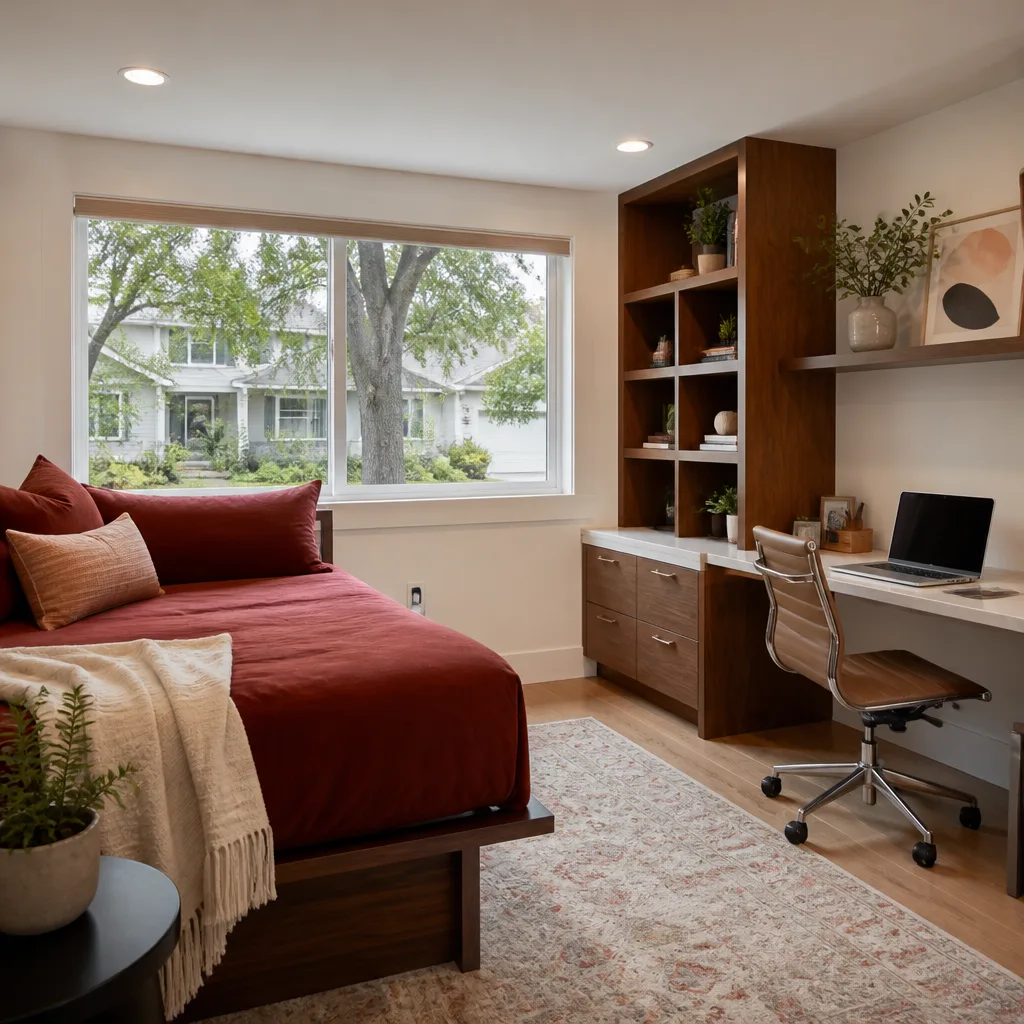
Dvele is a California-based prefab home manufacturer. Their homes are built as large modules inside a factory in the San Diego area, then trucked to the site and set onto a foundation with a crane. The modules arrive with framing, windows, drywall, fixtures, and much of the mechanical work already complete. Think of it as a house that’s 85% finished before it touches Los Angeles soil.
That’s not a mobile home and it’s not a manufactured home in the HUD-code sense. Dvele builds to California Building Code, the same code a site-built house in Los Angeles has to meet. The difference is the process: controlled factory conditions, consistent materials, and tolerances that make site-built framing look casual by comparison.
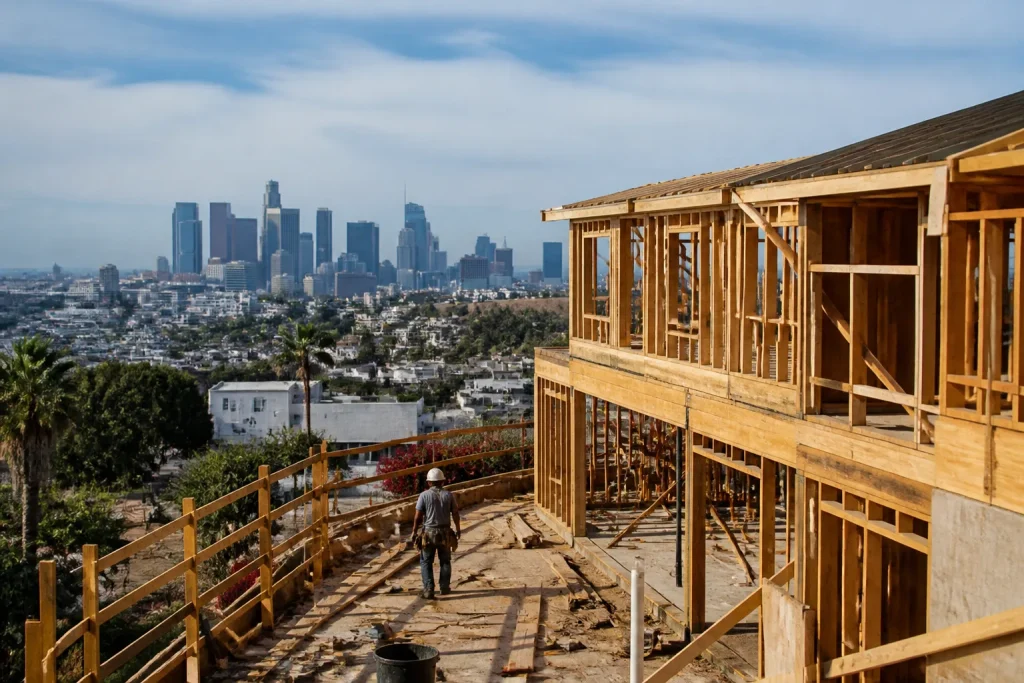
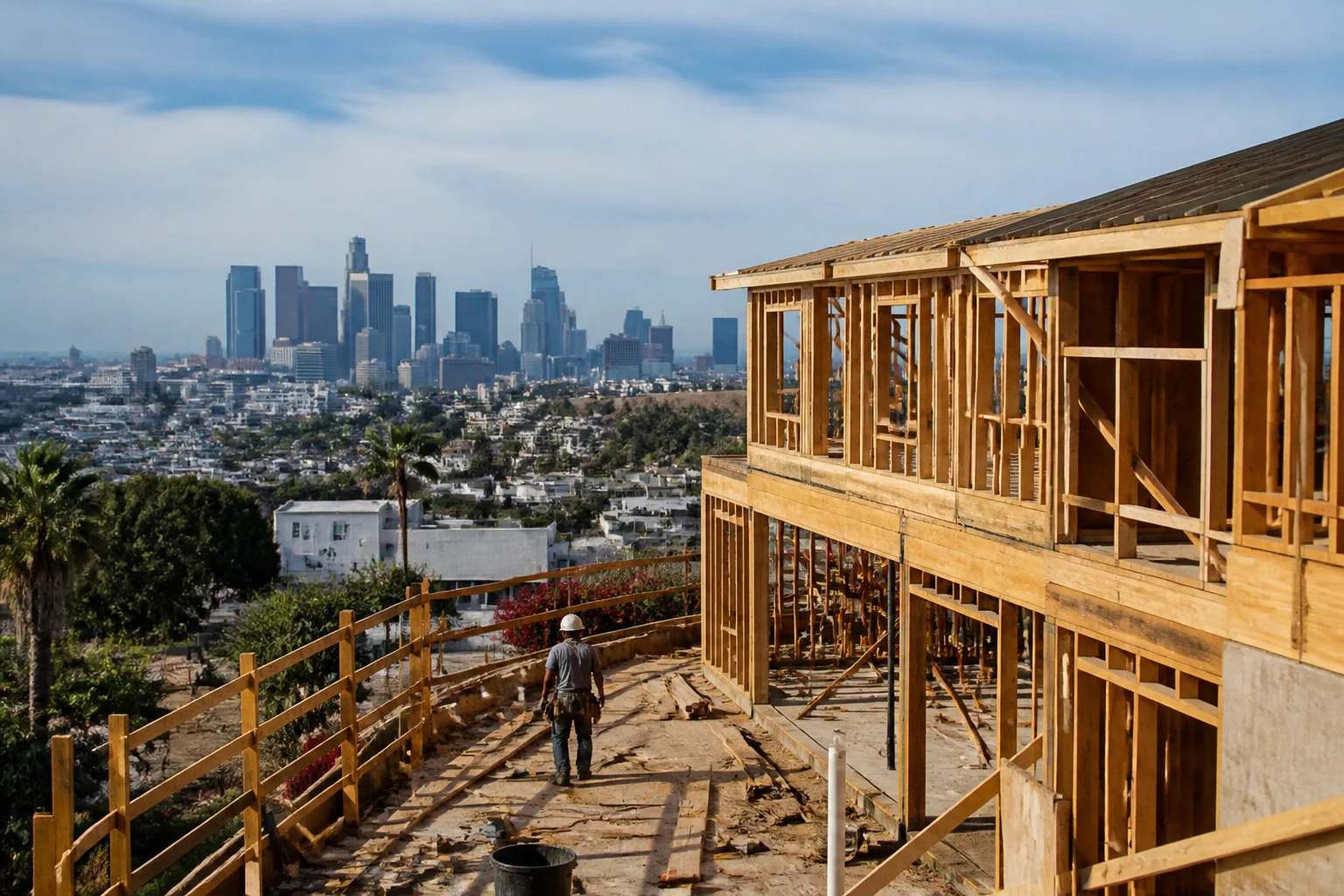
What many homeowners miss, though, is that a Dvele home still needs a general contractor. The factory doesn’t dig your foundation. It doesn’t pull your LA permits. It doesn’t bring water, sewer, gas, and power from the street to the connection points on the module. That work is on you, and it’s done by a GC on a Los Angeles construction site, in Los Angeles soil, under Los Angeles inspection.
We’ve written about the scope of GC work elsewhere on our General Contractor in Los Angeles page, and much of it applies directly to Dvele projects. The difference with prefab is precision.
The Real Challenge: Site Prep and Utility Tie-In
Here’s the thing most Dvele homeowners don’t realize until it’s almost too late: the factory has already built the house to a tolerance you can measure in millimeters. Your foundation has to match it, or the modules don’t set right, the connections don’t line up, and the finish work goes sideways.
On a site-built home, a framer can trim a stud or shim a plate and nobody ever notices. On a Dvele, the module arrives with pre-cut openings, pre-mounted window frames, and pre-routed utility chases. If your foundation is an inch out of square, you don’t shim it and move on. You fix the foundation, or you pay a lot of money for custom trim and drywall work that shouldn’t exist.
Here’s what the GC has to nail before the modules ever leave the factory:
- Foundation survey and layout. The foundation has to be poured to the exact dimensions on Dvele’s set plans. No “close enough.” We’re talking surveyed, verified, and checked twice.
- Utility rough-ins at exact locations. Water lines, sewer stubs, gas lines, and electrical conduits have to surface within the tolerance window Dvele specifies. If a sewer stub is six inches off, the plumber on site has to cut concrete and re-route it, and that’s a change order on a job that wasn’t supposed to have change orders.
- Access and crane logistics. Dvele modules arrive on flatbed trucks that are 60-plus feet long. The site needs a clear route from the street to the set area. On tight Los Angeles hillside lots, that can mean removing fences, trimming trees, or even renting a neighbor’s driveway for the afternoon. A GC who’s never coordinated a crane set in a dense LA neighborhood is about to learn some expensive lessons on your dime.
- Site drainage and grading. Dvele homes are built tight. That’s the point. But a tight envelope over a poorly drained slab means water finds a way, just like it does on any other Los Angeles home. The GC has to get grade, drainage swales, and waterproofing right the first time.
We’ve seen the difference on jobs around Los Angeles, from Eagle Rock to Mar Vista. The sites that went smoothly were the ones where the GC treated the foundation like a machined part, not a poured slab.
Why GCs Without Prefab Experience Underestimate Costs
Most general contractors in Los Angeles have spent their careers on conventional builds. They’re good at it. Framing, drywall, tile, trim – that’s the bread and butter of the Penhallow Remodeling home trade, and it’s what most GCs know cold.
Dvele is different. The modules arrive with factory-installed finishes, pre-wired electrical, pre-plumbed mechanicals. The GC’s crew doesn’t build the house. They connect it. And connecting a factory-built module to site-built utilities is a specialized skill that most framing crews never develop.
Where a prefab-inexperienced GC gets burned:
- Underestimating point-load requirements. Dvele modules weigh tens of thousands of pounds and they concentrate their weight at specific points. The foundation engineering has to account for those point loads exactly. A GC who pours a standard slab and calls it good might set the module and watch it settle unevenly within a year.
- Assuming standard finish details. When modules meet, you get a marriage line – the seam where two factory-built boxes join. Concealing that line takes finish skill and an understanding of how factory tolerances stack. A GC who’s never done it will bid low and then discover the drywall work is twice what they estimated.
- Misreading the utility connection scope. The factory stubs out the mechanicals to a specific point. From that point to the street, it’s the GC’s job. Some GCs assume the factory handles “everything inside the walls,” then realize at connection time that the gas line needs different sizing, the panel needs a heavier feed, or the sewer invert doesn’t match LA’s municipal requirements.
None of this is Dvele’s fault. The factory does its job perfectly. The risk is hiring a GC who doesn’t understand what their job actually is on a prefab project. Get a written price up front, in the contract, that includes the full site-prep and tie-in scope. If the GC can’t give you a number before the modules arrive, that’s a red flag.
Los Angeles Permits for Dvele Projects: What’s Pre-Approved, What Isn’t
Dvele homes are built in a California factory and inspected at the state level under the California Department of Housing and Community Development (HCD). That means the modules themselves – framing, electrical, plumbing, mechanical inside the factory-built portions – are built under HCD certification, not a Los Angeles field inspection.
What still requires local permitting in Los Angeles:
- The foundation. LA Department of Building and Safety reviews and permits the foundation plans, including engineering for point loads, shear, and seismic requirements. Los Angeles has its own seismic overlays, and your foundation has to meet them.
- Site utilities. Water, sewer, gas, and power connections from the module stubs to the municipal services all require LA permits. That includes trenching, backflow prevention, meter installation, and LADWP coordination.
- Site improvements. Driveways, retaining walls, grading, drainage, and any detached structures (garages, ADUs, decks) go through the standard LA plan check process, same as any other build.
- Final occupancy. LADBS issues the certificate of occupancy after the modules are set, connected, and inspected. You don’t get to move in just because the factory says the house is done.
The practical takeaway for a Los Angeles homeowner is this: your GC has to pull permits for the site work, coordinate with HCD on the factory-side approvals, and get LADBS to sign off on the final assembly. That’s a permit sequence most GCs don’t see on a conventional remodel. Ask your GC how many HCD-certified modular homes they’ve brought through LA plan check. If the answer is none, ask how they plan to handle the certification handoff.
The answer matters, because a Dvele permit mistake in Los Angeles can stall your project for months while the city sorts out which approval applies to which part of the house.
Structuring a Written Contract So Warranties Don’t Collide
This is where we see prefab projects go sideways, even when the build itself goes fine. Dvele provides a factory warranty on the home – structure, systems, finishes inside the factory-built modules. Your GC provides site work: foundation, utilities, connections, site improvements. Those are two different warranties from two different parties, and the contract needs to separate them clearly from day one.
Here’s the structure we recommend for a Los Angeles Dvele project:
- Define the split. The contract should list exactly what the GC owns: foundation, site utilities, module setting, utility tie-ins, finish work at the marriage lines, and any site-built portions. Everything inside the module envelope is Dvele’s. Spell it out in writing, with a line-by-line scope list.
- State the GC’s warranty term on site work. A foundation that cracks, a sewer connection that leaks, or a marriage line that opens up is the GC’s responsibility. Put the term in writing – we write our Done Right Promise into every contract, which says if the work fails inside the guarantee period, we come back and fix it at no charge. Whatever term you negotiate, make sure it’s written, not verbal.
- Clarify the handoff. When LADBS signs off on final occupancy, warranty responsibility shifts. The contract should say exactly when the GC’s site-work warranty starts (at final inspection) and what happens if a warranty question spans both parties – for example, a leak at the point where the module stub connects to the site plumbing. That connection needs a defined owner before the leak happens, not after.
- Get the price in writing. This is the Kingswell standard we operate under, and it applies to any Dvele project: the price on day one is the price on the invoice. If the foundation quote changes because soil conditions changed after excavation, that’s a legitimate change order, but it gets written down and signed before the extra work happens. No verbal price adjustments at the door.
Vague scope language is how GCs win warranty arguments, and homeowners lose them.
Questions to Ask a Prospective GC on a Dvele Project
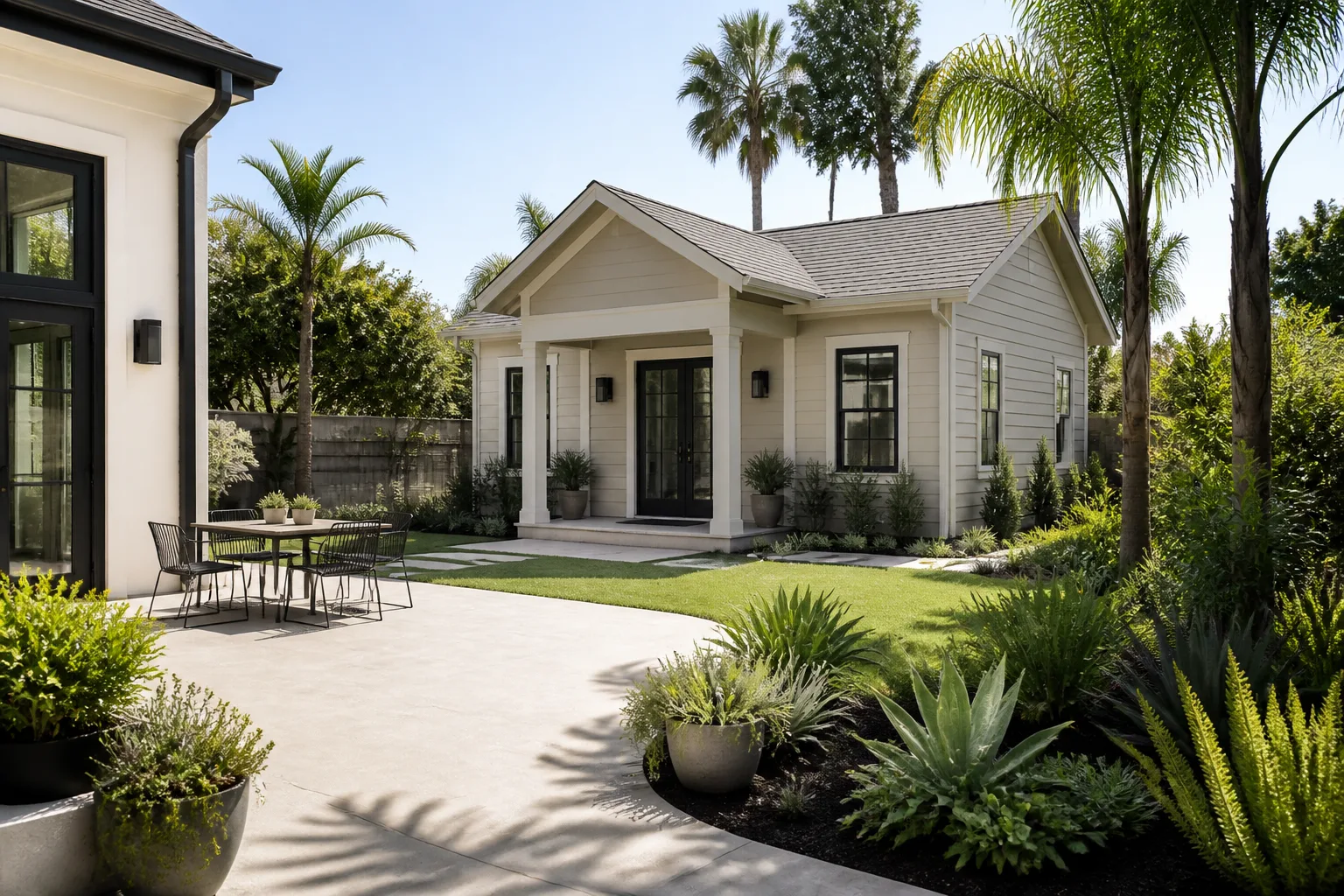
Before you sign anything, sit down with the GC and ask these questions, point blank. We’d welcome any of them, and we think a good Los Angeles GC should answer without hesitation.
- “How many factory-built modular homes have you set and tied in?” If the answer is zero, the follow-up is simple: “Then how will you handle the tolerance issues?” There’s a right answer (“I’ll work from Dvele’s set-book dimensions and verify every measurement before the pour”) and a wrong answer (“It’s just like a regular house”).
- “Who pulls which permits?” The GC should be able to explain the HCD factory certification versus the LADBS site permits without stumbling. If they can’t explain the difference, they haven’t done their homework on Dvele.
- “What’s included in your site-work price?” Get a written line-item breakdown: excavation, foundation, utility trenching, module set, tie-ins, finish work at marriage lines, site restoration. If the GC can’t break it out, the price isn’t real.
- “How do you handle warranty overlap?” A GC who’s done prefab work before will have a standard answer. Ours is in the contract, on every project, including a free second visit if a repair fails inside the warranty window.
- “Who are your point-load and tolerance references?” Ask for the names of past Dvele or prefab clients in Los Angeles. If they can’t produce any, you’re hiring on faith. That’s fine for a bathroom remodel. For a million-dollar prefab set on a hillside, it’s not.
We’ve also written about the broader GC selection process on our dedicated General Contractor in Los Angeles page, and most of that advice applies here too. Background checks, written pricing, specific scope – all non-negotiable.
How Much Should Site Prep and GC Work Cost on a Dvele in Los Angeles?
Let’s talk real numbers, because vague cost talk helps nobody. On a typical Dvele project in Los Angeles, the GC’s scope – foundation, utilities, crane coordination, module set, tie-ins, and finish work – typically runs $150,000 to $400,000 depending on site conditions and home size. That’s on top of the factory price for the modules themselves.
Here’s what drives the number up or down:
- Foundation type. A flat slab on grade on stable soil is the cheapest. A hillside lot requiring caissons, retaining walls, or a stepped foundation can double the concrete scope. Los Angeles hillside lots in neighborhoods like Mount Washington or Pacific Palisades routinely add six figures in foundation work.
- Utility distance. If your lot is 20 feet from the sewer main and the electric panel, tie-ins are simple. If you’re 150 feet up a private road with no gas main at all, you’re running lines for real money. Some Dvele homeowners in LA County have spent $40,000 to $80,000 just on utility extensions.
- Crane and access logistics. A wide-open lot with straight truck access might cost $8,000 to $15,000 for the crane day. A tight lot with power lines overhead, a narrow street, or a tricky setback can push crane and traffic control costs past $30,000. The GC has to coordinate this, and the price has to be in the contract.
- Finish scope. Some Dvele homeowners want the interior exactly as built, no customization. Others want the marriage lines concealed, custom millwork, or site-built decks. Every addition is a change to the GC’s finish scope, and it needs a written price attached.
If you’re considering a Dvele and want a firm number for the site-work side in Los Angeles, call (936) 259-2607. We’ll walk the lot, look at the set plans, and write you a price. It’s free.
When to Call a Pro
If you’re at the point of serious Dvele planning – you’ve got a lot, a budget, and a builder’s set of plans – it’s time to bring in a GC, not later. The biggest prefab mistakes we see in Los Angeles happen when homeowners sign a factory contract first and then realize nobody has priced the foundation, the utilities, or the crane. By then, the GC’s scope is reverse-engineered from what’s already committed, and the price reflects it.
Call early. A good GC will review the site, flag access or grading issues before you’re locked into a set date, and give you a written site-prep number you can actually plan around.
Related services in Los Angeles: while Dvele handles the factory build, the site-side work often overlaps with the scope we handle every day – Kitchen Remodeling in Los Angeles if you’re integrating a Dvele module into an existing home, and Bathroom Remodeling in Los Angeles for site-built additions. Same written pricing, same guarantee.
The Bottom Line
A Dvele home in Los Angeles is only as good as the foundation it sits on and the utilities feeding it. The factory does its part perfectly – that’s the point of prefab. The risk lives in the site work, and the GC you hire to handle that site work is either your strongest insurance policy or your most expensive mistake.
Ask hard questions. Get a written price. Split the warranties in the contract. And if you’re looking for a Los Angeles GC who will put all of it in writing before any dirt moves, Penhallow Remodeling offers free estimates – call (936) 259-2607.
Frequently Asked Questions
No. Dvele homes require a GC who understands factory tolerances, point-load foundation engineering, HCD certification handoffs, and crane-set logistics. A conventional remodel GC can technically do the job, but they’ll likely underbid the site work and discover expensive surprises at module set. Ask about direct prefab experience before hiring.
Site prep – foundation, utilities, grading – typically runs 2 to 4 months depending on plan check, excavation conditions, and utility coordination. Module delivery and crane set usually happens in 2 to 5 days. After set, the GC’s tie-in and finish work runs another 4 to 8 weeks before LADBS final inspection. Total site-side timeline: 4 to 7 months in most Los Angeles cases.
Both. Dvele handles factory-side approvals through HCD. The GC handles all site-side permits through LADBS: foundation, utilities, grading, site improvements, and final occupancy. The contract should name exactly who pulls which permit and who’s responsible if a permit issue delays the set date.
You fix it before the module ever leaves the factory, or you pay for extensive finish work on site. The foundation has to match Dvele’s set-book dimensions within a tight tolerance. If it doesn’t, the set crew can’t align the modules properly, utility connections miss their stubs, and the finish work at the marriage lines turns into a very expensive custom job. A good GC verifies every foundation measurement before the pour. Call (936) 259-2607 if you want a second set of eyes on your foundation plans.
Written by the team at Penhallow Remodeling.
Need Construction Help?
Call Penhallow Remodeling - licensed & insured, here with fast after-hours help in Los Angeles.
(936) 259-2607