
Bathroom Remodeling: Repair or Replace? How Los Angeles Homeowners Decide
Here’s the short answer: in Los Angeles, a visible crack in your tile is usually the last thing to show up, not the first thing to go wrong. The real decision between repair and replace gets made by what’s behind the tile, because much of LA’s housing stock was built before waterproofing standards caught up with how we actually shower. If the substrate is dry and sound, repair it. If it’s wet, crumbling, or never waterproofed correctly in the first place, you’re replacing the wet area no matter how good the tile on top looks. And if you’d rather skip the detective work, call (936) 259-2607 and we’ll walk you through it.
We pulled a shower apart in Eagle Rock last month where the homeowner had regrouted twice in three years. The grout lines kept cracking because the cement board behind them had the structural integrity of a saltine cracker. That’s not a grout problem. That’s a replacement hiding behind a repair price.
The Hidden Water Damage Factor: Why LA Bathrooms Are Different
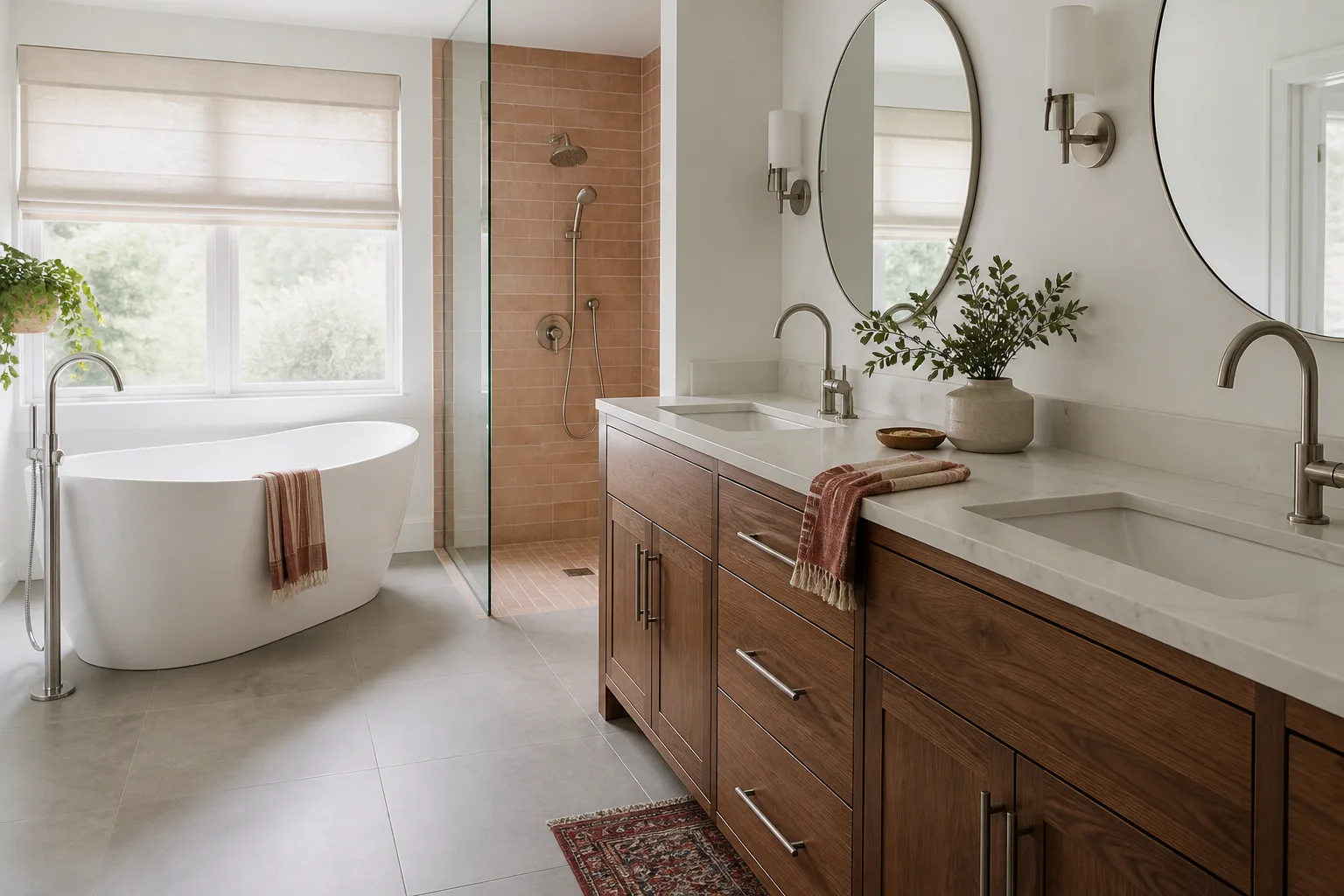
Los Angeles has old houses. Not just charming 1920s Spanish bungalows in Highland Park or mid-century ranches in the Valley, but tens of thousands of bathrooms built between 1950 and 1985, which happens to be the era when shower waterproofing was mostly wishful thinking. Builders set tile directly on drywall or green board, ran a rubber pan under the shower floor, and called it done. It worked until it didn’t.
What does that mean for your repair-or-replace decision? It means a hairline crack in a wall tile in a 1970s Los Angeles bathroom is not a tile problem. It’s a symptom. Water has been getting behind that tile for years, wicking into the wood framing, feeding mold, and quietly rotting the subfloor under your feet. The visible damage usually represents about ten percent of the actual problem.
Newer housing markets don’t fight this the same way. A 2015 tract home in Phoenix or Austin has a waterproof membrane behind the tile and a presloped shower pan underneath. Crack a tile there and you’re fixing a tile. Crack a tile in a 1962 bathroom in Los Angeles and you’re often rebuilding a shower.
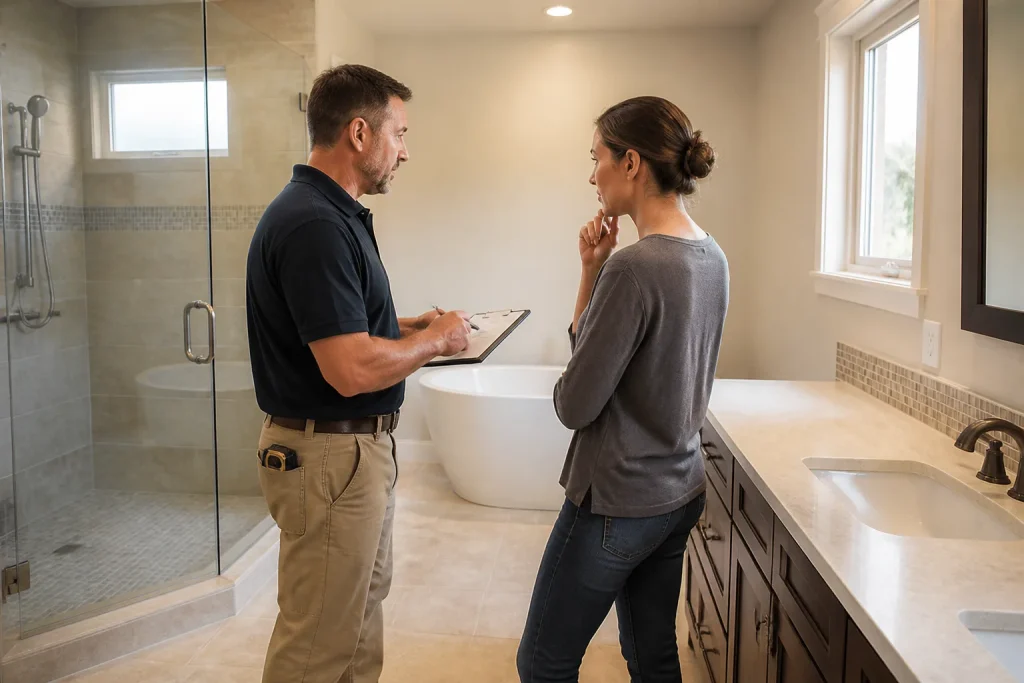
This is why the repair conversation has to start with moisture, not aesthetics. A trustworthy contractor will suggest a moisture meter reading before anyone signs a repair contract. We do this on every bathroom call where the tile is over 20 years old. It takes five minutes and tells you whether you’re dealing with a $400 tile patch or a $14,000 wet-area replacement. We’d rather have that conversation before demo starts than after, because the worst conversation in remodeling is the one where you show the homeowner a rotted stud and tell them the price just doubled.
How to Use a Moisture Meter Reading Before You Sign Anything
A moisture meter is a handheld tool with two prongs that measures the water content inside building materials. On a scale from dry to saturated, anything above 20% moisture content in wood framing means active water intrusion. Above 28% and you’re in rot territory. A competent contractor can map the wet spots in your shower walls, floor, and curb in under ten minutes, and that map should drive the entire estimate.
Here’s what a moisture reading should change about your decision:
- Wet walls behind intact tile: the waterproofing has failed. You’re replacing the wet area, not patching tile. Full stop.
- Wet subfloor at the shower base: the pan is leaking. This is a tear-out to the joists, re-framing as needed, new pan, new membrane, new everything.
- Dry substrate with a cracked tile: you may genuinely be looking at a repair. A few tiles, maybe a corner of cement board, and you’re done.
- Wet curb or threshold: the most common leak point in LA showers. The curb is often framed with pressure-treated lumber and wrapped wrong, and water migrates from the top seam straight into the floor outside the shower.
If a contractor gives you a repair quote without offering a moisture reading, get a second opinion. You wouldn’t let a mechanic quote you a brake job without pulling the wheel. Same principle, higher stakes. We include a moisture map with every bathroom estimate in Los Angeles because the number on the page should reflect the condition behind the tile, not the condition of the grout on top.
Cost Comparison: Tile-Only Repair vs. Full Wet-Area Replacement in Los Angeles
Let’s put real numbers on this. These are ranges we see consistently across Los Angeles, from the Westside to the Eastside to the Valley. Your specific number depends on square footage, fixture choices, and what the moisture meter finds.
| Scope of Work | Typical Range | What’s Included |
|---|---|---|
| Tile-only repair (dry substrate) | $400 – $1,800 | Remove and replace cracked tile, new grout, sealant, color match as close as possible |
| Shower wall repair (localized moisture) | $2,500 – $6,000 | Demo one wall section, replace damaged board, patch membrane, retile, new fixtures |
| Full shower replacement | $9,000 – $18,000 | Complete tear-out to studs, new shower pan, waterproof membrane, tile, glass, plumbing trim |
| Full bathroom remodel (wet area + floor + vanity) | $18,000 – $40,000+ | Everything above plus flooring, vanity, countertop, lighting, exhaust fan, paint |
The hardest reality for Los Angeles homeowners to accept is that the tile-only repair is often a temporary bandage on a leaking wound. You’ll pay $1,200 to patch a shower that will fail again in eighteen months, and when it does, the water damage will be worse than it was before. That’s not a bargain. That’s a down payment on a bigger job.
What drives the number up or down? Three things. First, what the moisture meter finds. Second, whether you’re keeping the existing layout or moving plumbing, because moving a drain line in a Los Angeles slab foundation is a line item, not a footnote. Third, materials. We install Moen and Delta fixtures on most bathroom projects because both brands carry solid warranties and their cartridges are genuinely serviceable for decades. A showerhead isn’t just a showerhead when you’re the one replacing it in six years.
When a Partial Remodel Is Actually the Worst Outcome
Sometimes the cheapest scope is the most expensive decision you’ll make. We see homeowners in Los Angeles try to save money by replacing only the shower pan and the bottom two rows of tile, leaving the upper walls intact. Here’s what happens: the new waterproofing membrane stops at the seam where old meets new, because you cannot tie a new membrane into old, non-waterproofed substrate. That seam is precisely where water gets in. Within a year, the wall behind the old tile is wet again, and now you’re paying to tear out the work you just paid for.
The same logic applies to mismatched materials. Repairing a 1970s bathroom with 2020s tile creates a patchwork that lowers your home’s value, not raises it. Los Angeles real estate moves on kitchens and bathrooms. A buyer who sees a half-updated bathroom with a seam running through the shower wall knows exactly what they’re looking at: a problem that was too expensive to finish correctly. That costs you more at resale than the repair ever saved.
There’s also the liability angle. If you repair part of a wet area and the remaining section fails later, the original problem was never solved. Moisture migration does not respect the line between old and new. It follows the path of least resistance, which is the seam you just created. We’ve never met a homeowner who wanted to pay for the same shower twice.
Our recommendation, and the way we structure every bathroom estimate we write in Los Angeles, is to define the full wet area first, then decide what’s optional around it. Sometimes the honest answer is that a partial repair will work for years. But you deserve to know the risk before you sign, not after the grout dries.
What a Written Bathroom Estimate Should Itemize
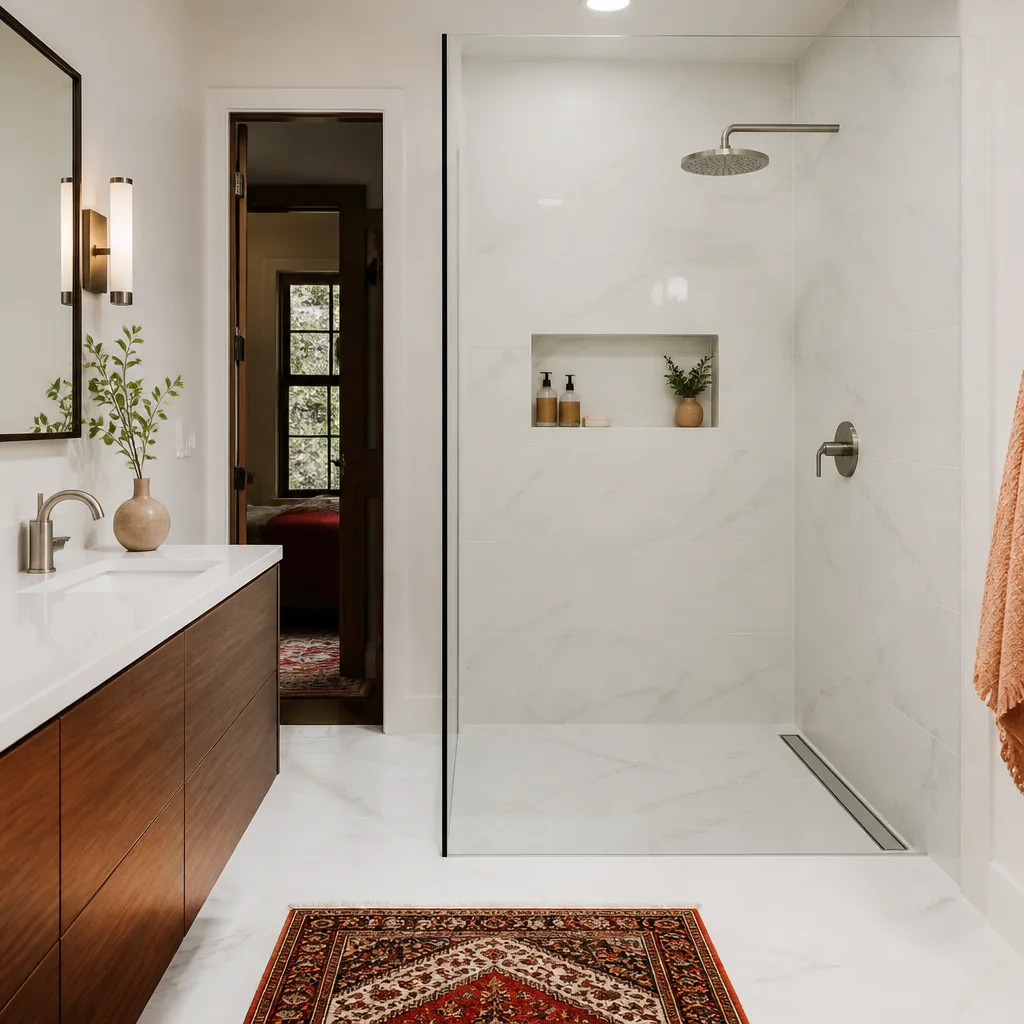
If you’re going to decide between repair and replacement with real numbers, the estimate has to show you what’s behind each number. A verbal ballpark isn’t a bid. A single line that says “bathroom remodel: $22,000” isn’t an estimate. It’s a guess with your name on it.
Here’s what a written estimate for a bathroom project should break out, line by line:
- Demolition and disposal: including the hourly or flat rate for removal, and where the debris goes.
- Substrate and waterproofing: the cement board, membrane, pan, and sealant. This is the line item that determines whether the job lasts 5 years or 30.
- Framing and structural repair: what gets replaced if the moisture meter or the demo reveals rot.
- Plumbing rough-in: the pipes behind the wall, not the pretty faucet. Old galvanized or polybutylene supply lines in LA bathrooms often need replacing while the wall is open.
- Fixtures and trim: showerhead, valve, tub spout, and handles, with brand names specified. We quote Moen, Delta, and American Standard fixtures by model number so you can verify the price yourself.
- Tile and setting materials: square footage, tile allowance or selected tile, grout, thinset, and labor.
- Glass and enclosure: if you’re replacing a shower door or adding a glass panel.
- Electrical: exhaust fan replacement, lighting, and any GFCI work, because a 1960s bathroom with a single overhead fixture and no fan is a mold factory.
- Permits: LA city permits for plumbing and electrical are a real cost, and any contractor who says you don’t need them is not doing you a favor.
- Contingency: we carry a printed contingency line because bathrooms hide things. You should know the number before the wall opens, not after.
When a written estimate separates repair scope from replacement scope, you can see exactly what you’re paying for. You can also decide to phase the project, pulling replacement work forward and deferring cosmetic pieces, without guessing at the math. If you’re in Los Angeles and want to see what that looks like, our bathroom remodeling service page walks through how we price and what we include.
The Kingswell Way: Why the Paperwork Comes Before the Price Discussion Ends
Penhallow Remodeling operates under The Kingswell Way, a standard that’s been running. It sounds simple because it is: say the price before the work. Show up in the window we gave. Leave the place cleaner than we found it. And back every job with a written guarantee.
For a bathroom project, that means the Done Right Promise applies to every repair and every remodel. If the work fails inside the guarantee period, we come back and fix it at no charge. Not a service call fee, not a re-inspection fee, no argument. It’s in writing on every project, and it’s the reason we’re willing to put a moisture map and a line-item price on paper before we ask you to sign anything.
The number on day one is the number on the invoice. If the scope changes because we find something behind the wall, you’ll see the new number in writing before we touch it, not after.
You’ll also know who’s walking into your home. Every technician is background-checked and arrives in uniform. A live person answers the phone 24/7. Not an answering service, not a callback queue. If your shower pan fails at 11 p.m. on a Saturday, a real person picks up the phone and starts the process. That’s not a marketing line. It’s just how we run the place.
The Bottom Line
In Los Angeles, the repair-or-replace question almost always comes down to what’s behind the tile, not what’s on top of it. Get a moisture meter reading first. If the substrate is dry, repair what’s broken. If it’s wet, the wet area gets replaced, and anything short of that is a temporary patch you’ll pay for twice. A written estimate should show you the repair line items and the replacement line items separately, with real numbers, real brand names, and a contingency that’s stated up front.
If you’re in Los Angeles and you’re not sure which side of the line your bathroom falls on, Penhallow Remodeling offers free estimates. We’ll bring the moisture meter, map the wet spots, and hand you a written number before we leave. Call (936) 259-2607 to schedule yours. And if you’re still deciding, check out our Penhallow Remodeling home page or learn more about what a general contractor in Los Angeles should deliver before you sign. We also handle kitchen remodeling in Los Angeles under the same written-price, written-guarantee standard.
Frequently Asked Questions
How do I know if my bathroom needs a repair or a full replacement? The only honest way is a moisture meter reading on the substrate behind the tile. If the framing and cement board are dry, a repair is reasonable. If they’re wet or crumbling, you need full wet-area replacement. A visual inspection alone is not enough, and any contractor who quotes a repair without checking moisture is guessing.
How much does a bathroom repair cost in Los Angeles? Tile-only repairs on a dry substrate typically run $400 to $1,800. Localized moisture repairs with partial wall replacement run $2,500 to $6,000. Full shower replacement runs $9,000 to $18,000, and a complete bathroom remodel starts around $18,000 and goes up from there. The final number depends on what’s behind the tile and whether you’re moving plumbing.
Can I replace just the shower pan and leave the surrounding tile? You can, but it’s usually a mistake. The new waterproofing membrane cannot properly tie into old, non-waterproofed walls, and the seam becomes the new leak point. You’ll pay for the repair and then pay again when the wall fails. Full wet-area replacement is the only durable fix if the substrate is compromised.
Will the price change once the work starts? It shouldn’t if the estimate is written properly. A line-item estimate includes demolition, waterproofing, fixtures, tile, plumbing, electrical, permits, and a stated contingency for hidden damage. If something is found behind the wall that wasn’t in the scope, you should receive a written change order before any additional work begins. Call (936) 259-2607 for a free estimate and we’ll show you exactly what a written number looks like.
Written by the team at Penhallow Remodeling.
Need Construction Help?
Call Penhallow Remodeling - licensed & insured, here with fast after-hours help in Los Angeles.
(936) 259-2607