
Boxabl General Contractor in Los Angeles: A Homeowner’s Guide
Hiring a Boxabl general contractor in Los Angeles means hiring someone to handle everything Boxabl’s marketing video skips: the foundation, the utilities, the permits, and the site work that makes the Casita legal to live in. In Los Angeles, you should budget $25,000 to $65,000 for site preparation and utility connections before the unit ever arrives, and expect the contractor’s work to take three to six weeks before that satisfying one-day unfold happens. If you’re weighing a Boxabl Casita and want a straight answer on whether your Los Angeles lot can take one, call (936) 259-2607 and we’ll walk you through what we’ve seen on actual jobs.
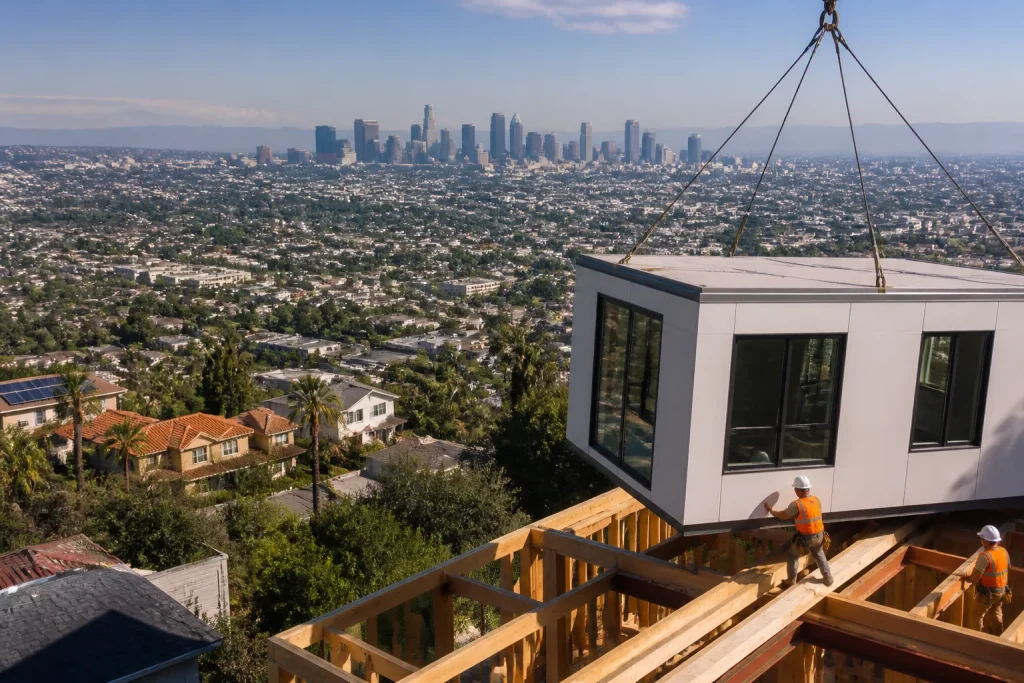
Boxabl’s marketing shows a unit unfolding in hours. What the video doesn’t show is the months of site prep, foundation work, utility rough-ins, and permit processing that happen before that unfold, and that’s all on your general contractor. The truth about Boxabl in Los Angeles is simple: the assembly is the easy part. Your contractor is really a site-prep and compliance specialist, not an assembly crew.
Key Takeaways
- Boxabl’s unit assembly takes one day; your contractor’s site work in Los Angeles takes three to six weeks and represents 70 – 80% of the total project cost.
- Los Angeles lots must meet specific foundation, utility access, and setback requirements before a Casita can be placed, and most existing lots need upgrades.
- Boxabl units move through California factory-built housing pathways, but Los Angeles still requires local plan check, site permits, and utility sign-offs.
- Utility connections, especially electrical panel upgrades and sewer laterals, are the costs homeowners most consistently underestimate.
- A general contractor with ADU or modular experience will save you real money compared to a residential remodeler learning the Boxabl process on your lot.
What Boxabl’s Marketing Shows, and What Actually Happens on a Los Angeles Lot
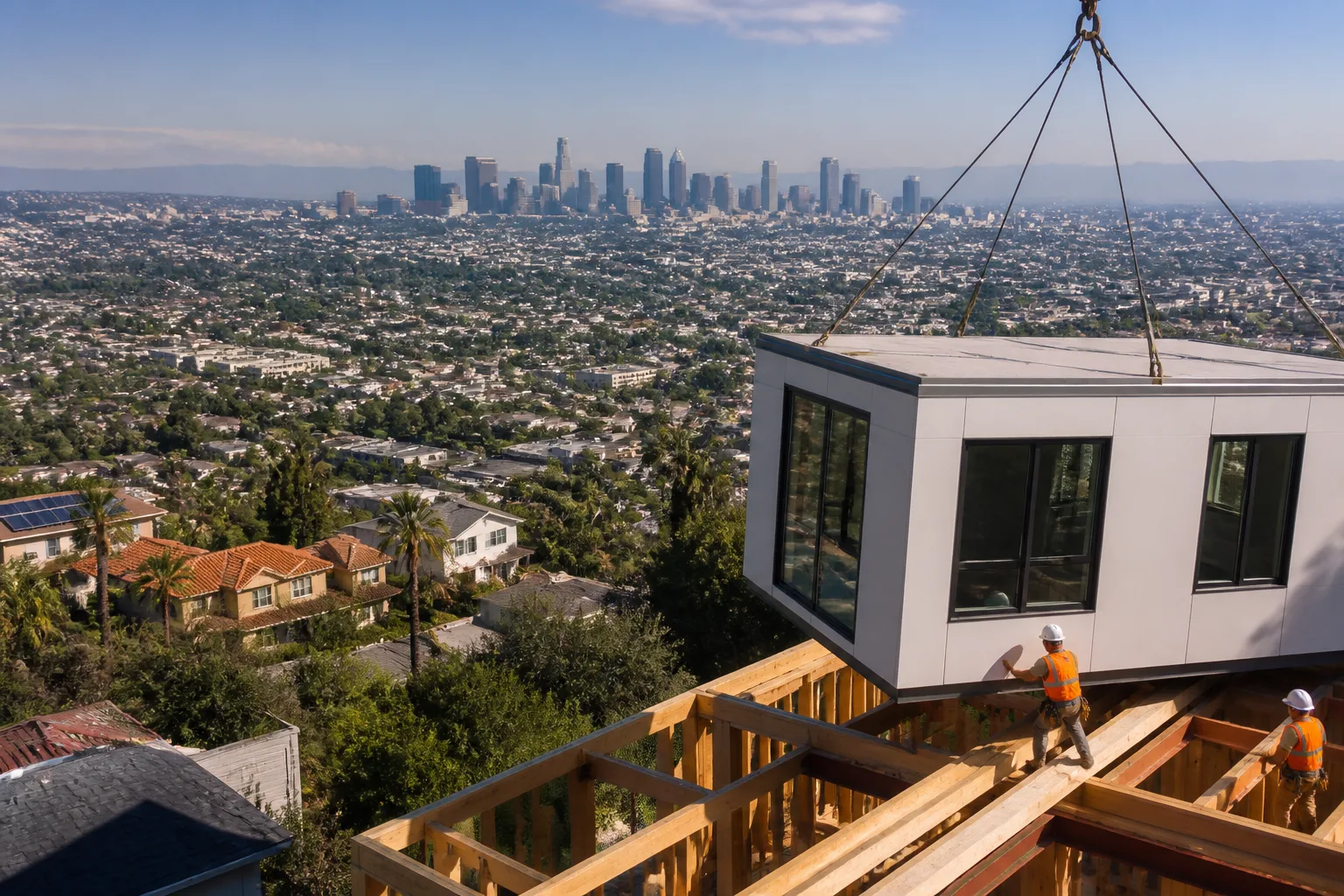
Boxabl’s videos are compelling: a crane lowers a folded Casita onto a pad, the walls unfold, and hours later you’re standing in a finished studio. That part is genuinely real. What isn’t shown is the dirt work, the concrete, the trenching, and the stack of paperwork that precedes it.
On Los Angeles lots, the typical pre-delivery sequence looks like this:
- Site assessment and survey (week 1): We verify lot dimensions, slopes, soil conditions, and where existing utilities enter the property. Hillside lots in Echo Park or Silver Lake add complexity that flat Valley lots in Northridge or Van Nuys simply don’t have.
- Foundation or pad construction (weeks 2 – 3): A Boxabl Casita needs a level, engineered foundation. That’s usually a concrete slab with specific anchoring requirements. Curing time alone can eat ten days.
- Utility rough-ins (weeks 3 – 4): Electrical conduit, water lines, and sewer connections must be in place before the unit sits on its pad. This means trenching across your yard in most Los Angeles neighborhoods.
- Permit processing (running concurrently, often the longest piece): Los Angeles Department of Building and Safety reviews site plans, checks setbacks, and coordinates with DWP for electrical and LADBS for plumbing sign-offs.
The unit itself arrives on a flatbed, gets craned into place, and unfolds. In our experience, that part is genuinely anticlimactic after weeks of site work. One homeowner in Atwater Village told us the unfold felt like watching a tent pop up after spending a month building the campsite.
If you’re considering a Boxabl Casita as an ADU on your Los Angeles property, understand this before budgeting: the contractor you hire is doing the hard part, and that hard part has nothing to do with the folding walls. Related: see our General Contractor in Los Angeles page for how we approach site prep and compliance work on ADU projects.
Lot Requirements: What Your Los Angeles Property Needs Before a Boxabl Can Sit on It
Not every Los Angeles lot is ready for a Boxabl, and some will never be without significant investment. Here’s what we check on the first site visit:
Foundation Conditions
Boxabl units need a level pad, and Los Angeles has two different soil stories. In the San Fernando Valley, you’re usually working with stable, compactable soil. In hillside areas like Mount Washington, Glassell Park, or Baldwin Hills, you may be looking at pier-and-grade-beam foundations, retaining walls, or soil remediation before a slab can be poured. Hillside foundation work can add $15,000 to $35,000 to your site-prep budget.
Setback Compliance
Los Angeles zoning requires setbacks from property lines for any habitable structure, including a Boxabl Casita. Front, side, and rear setbacks vary by zone, and the Casita’s 19-foot width means many narrow Los Angeles lots need creative placement. We’ve seen Ridgewood Park and West Adams lots where the Casita fits easily, and others where the setback math eliminates the project entirely.
Utility Access
Your Boxabl needs water, sewer, and electrical connections. On most Los Angeles lots, that means trenching from the main house to the Casita pad. The distance matters: trenching across a 40-foot backyard is straightforward. Trenching 100 feet through mature landscaping in Sherman Oaks is a different budget line item.
When to call a pro: if any of this sounds like a foreign language, it’s because site assessment is a specialized skill. A licensed general contractor with ADU experience in Los Angeles can tell you in one visit whether your lot is Boxabl-ready or what it would take to get there. Our advice: get that assessment before you order a unit, not after.
The Los Angeles Permit Pathway for Boxabl: What Actually Gets Approved
Boxabl is chasing the dream of a fully certified factory-built unit that sails through local building departments. The reality in Los Angeles right now is more nuanced. The unit itself may qualify under California’s factory-built housing program through HCD (the Department of Housing and Community Development), which means the core structure has state-level approval. But Los Angeles still requires local permitting for everything that touches the ground.
Here’s the practical breakdown of what the City of Los Angeles will want to see:
- Site plan review by LADBS showing the unit’s placement, setbacks, and relationship to existing structures.
- Foundation plans stamped by a California-licensed engineer, specific to your lot’s soil and seismic conditions.
- Utility connection permits from DWP for electrical service and LADBS for plumbing and sewer connections.
- ADU compliance review if you’re classifying the Boxabl as an accessory dwelling unit under Los Angeles ADU ordinances.
The permit timeline in Los Angeles is not fast. Plan check for an ADU-style project can run four to eight weeks depending on the district office and current workload. We tell clients to plan for at least two months of paperwork between ordering a Boxabl and seeing it craned onto their pad.
Writing a GC Contract That Separates Site Prep from Unit Placement
The biggest mistake we see on Boxabl projects in Los Angeles is a single contract that blurs the lines between what the general contractor does and what Boxabl does. When scopes aren’t separated, costs blur together, and homeowners end up paying for confusion.
Here’s how to structure a Boxabl general contractor contract in Los Angeles:
- Separate the work into two distinct scopes: Scope A covers everything before the unit arrives: site prep, foundation, utilities, permits. Scope B covers everything after: connection, trim-out, inspections, final sign-off. Ask your contractor to price each separately.
- List utility connection costs as line items, not allowances: “Electrical: $X” is a commitment. “Electrical allowance: $X” is a guess that changes at the end. We write the actual number before work starts.
- Identify who pulls which permits: Boxabl handles the factory-side paperwork. Your GC handles LADBS, DWP, and any other local approvals. Get that in writing.
- Define the handoff point: What condition is the site in when Boxabl’s delivery crew arrives? What happens if the unit arrives late? Who’s responsible for what between crane drop and final inspection? Write it down.
At Penhallow Remodeling, every contract includes a written price before work starts on Penhallow Remodeling home projects, including Boxabl site prep. The number on day one is the number on the invoice. If you’re comparing contractors for a Boxabl project in Los Angeles, ask each one how they’d separate the scopes. The answer tells you a lot about whether they’ve done this before.
Why ADU and Modular Experience Matters More Than General Remodeling Experience
A Boxabl Casita is a specific animal, and it isn’t like remodeling a kitchen. A general residential remodeler might be brilliant with tile and cabinetry and completely lost on the factory-built housing approval process. What you need in Los Angeles is a contractor who understands modular and ADU workflows.
Here’s what ADU-experienced contractors bring that general remodelers may not:
- Factory-built permit literacy: Knowing how HCD approval interacts with Los Angeles local plan check, and who to call at LADBS when the plan reviewer has questions about a Boxabl unit they’ve never seen before.
- Utility upgrade forensics: Most Los Angeles homes built before 1980 have 100-amp electrical panels. A Boxabl Casita with a mini-split, water heater, and kitchen appliances will push you past that. ADU-experienced contractors see this coming and price it in.
- Setback and zoning judgment: Knowing which Los Angeles lots will tolerate a 19-foot-wide accessory unit without rezoning nightmares, and which won’t.
- Foundation-to-unit coordination: Boxabl units have specific anchor requirements. The contractor pouring your slab needs to know what’s coming before the concrete sets, not after.
Brands like Cover, Dvele, and Mighty Buildings all compete in the Los Angeles prefab and modular space, and each has its own site-prep quirks. Boxabl’s fold-flat design is unique, but the Los Angeles site requirements share DNA with every other factory-built unit: flat pad, utilities in place, setbacks respected. A contractor who’s done modular work on any of these systems already knows the rhythm.
Our Kitchen Remodeling in Los Angeles and Bathroom Remodeling in Los Angeles teams have worked on homes across the city where a Boxabl or similar ADU was part of the picture, and we’ve learned the same lesson repeatedly: the site work is where the project lives or dies.
Utility Connection Costs Los Angeles Homeowners Consistently Underestimate
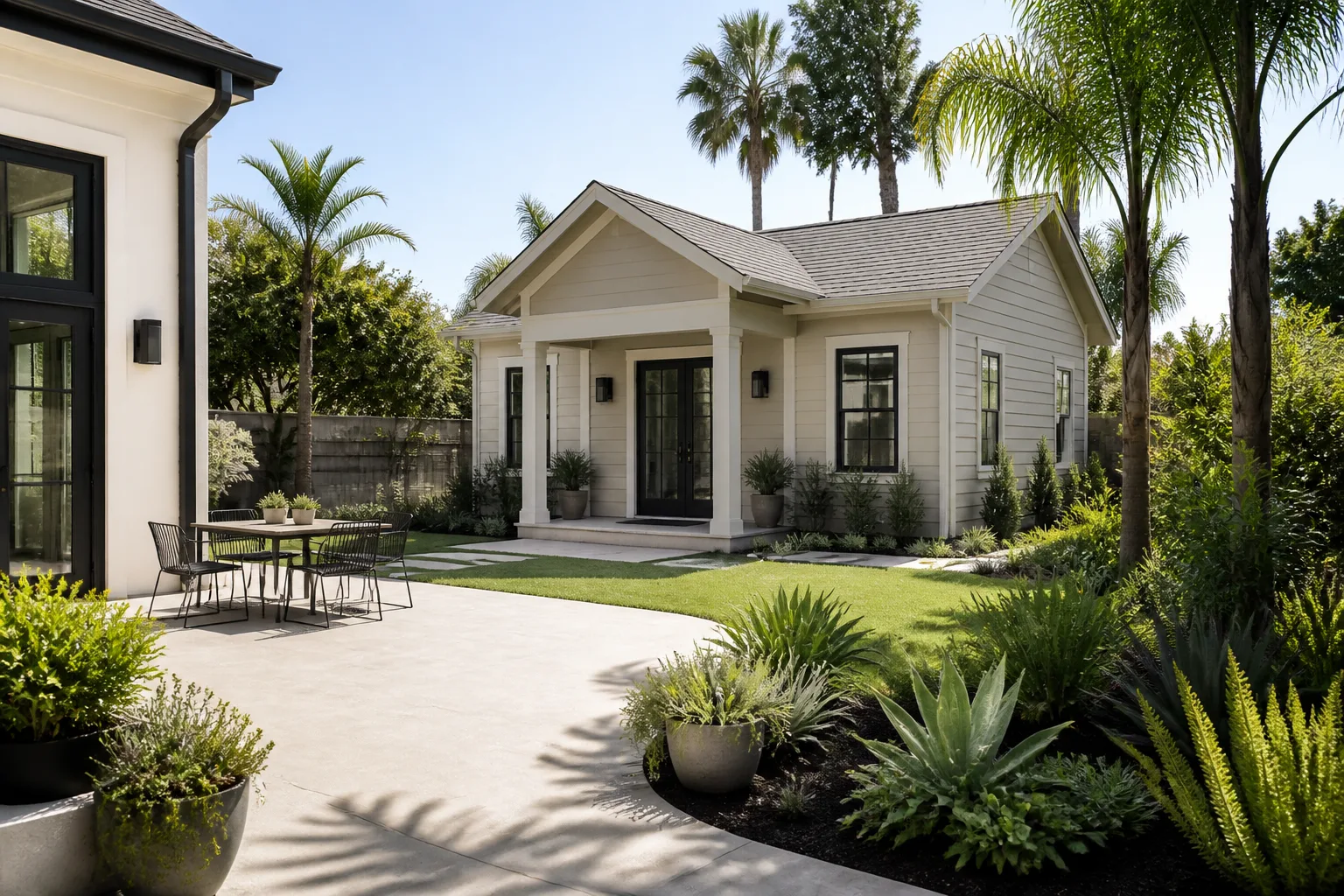
If there’s one line item that surprises Boxabl buyers in Los Angeles, it’s utilities. The unit might cost $50,000, and the site prep might cost $30,000, and then the utility connections arrive and reset everyone’s expectations.
Here’s what you’re actually looking at in Los Angeles, with real ranges based on what we’ve seen on recent ADU and modular projects:
- Electrical panel upgrade: $3,500 to $7,500 if you’re going from 100 amps to 200 amps, which most Boxabl ADUs require. DWP fees, trenching, and new service drops all factor in. Older homes with outdated panels can run higher.
- Sewer lateral connection: $3,000 to $12,000 depending on the distance from the Casita pad to the existing sewer line and whether the city requires a new cleanout. Trenching through concrete or mature roots adds cost.
- Water connection: $1,500 to $4,000 for a standard run. If you’re on a hillside lot requiring a pump or pressure regulator, the number climbs.
- Gas, if applicable: Boxabl Casitas are typically all-electric, but if your unit spec includes gas appliances, add $2,000 to $6,000 for a line extension and meter work.
These are the numbers nobody puts in the Boxabl marketing materials. When we sit with a Los Angeles homeowner and go through a written scope of work, the utility line items are usually the moment the full picture settles in. That’s fine. Better to know before the trench is dug than after.
The Bottom Line
A Boxabl Casita in Los Angeles is not a one-day project. It’s a three-to-six-month project where the actual unfold is one afternoon. Your general contractor is doing the real work: site assessment, foundation, utilities, permits, and the paperwork that makes the unit legal. Plan to spend $25,000 to $65,000 on site work before the unit arrives, and hire someone who’s done modular ADUs before, not someone figuring it out on your lot.
If you’re in Los Angeles and want a straight assessment of whether your property is Boxabl-ready, Penhallow Remodeling offers free estimates. Call (936) 259-2607 and Trevor or someone from our team will tell you what we’d do, what it would cost in writing, and how long the Site Prep scope would take. We’ve been doing Kingswell way work in this city long enough to know that the price in writing is the only price that counts.
Frequently Asked Questions
Site preparation, foundation, utility connections, and permit work for a Boxabl Casita in Los Angeles typically run $25,000 to $65,000, depending on lot conditions, trenching distances, and whether your electrical panel needs an upgrade. The unit assembly itself is handled by Boxabl and is separate from your contractor’s scope. Call (936) 259-2607 for a written line-item scope based on your specific Los Angeles lot.
Boxabl handles the factory build and the on-site unfold. Everything else, the foundation, the utilities, the permits, the final inspection coordination, requires a licensed general contractor in Los Angeles. Skipping the contractor means skipping the part of the project that makes the unit legal to occupy.
Plan for three to six months total. Site prep and permitting take three to six weeks of active contractor work, the unit placement itself takes one day, and final connections and inspections add another two to four weeks. Permits are usually the longest pole in the Los Angeles timeline.
Any licensed general contractor can legally take on the work, but a contractor with ADU or modular experience will save you time, money, and mistakes. Los Angeles permit offices have specific requirements for factory-built accessory units, and a contractor who already knows the pathway will move your project forward faster. Call (936) 259-2607 to ask us directly about your project’s specifics, estimates are free.
Written by the team at Penhallow Remodeling.
Need Construction Help?
Call Penhallow Remodeling - licensed & insured, here with fast after-hours help in Los Angeles.
(936) 259-2607