
General Contractor: Repair or Replace? How Los Angeles Homeowners Decide
A contractor who only offers replacement is upselling. One who only patches is cutting corners. The honest answer is that the right call depends on a single number most homeowners never get in writing before they decide. Here’s the rule we use: if a repair costs more than half of what replacement would cost, replacement usually wins over the long run. That’s the 50% threshold, and it works as well for a kitchen cabinet run in Silver Lake as it does for a bathroom floor in Sherman Oaks. If you’d rather skip the math and just get a straight answer, call (936) 259-2607.
The 50% Rule: A Simple Framework Los Angeles Homeowners Can Actually Use
Most repair-or-replace advice online tells you to trust your gut. That’s useless when the drywall is open and the plumber is waiting. You need a number. Here’s the framework we use with homeowners across Los Angeles:
- Repair makes sense when the repair totals less than 50% of the replacement cost and the surrounding structure is sound.
- Replacement makes sense when repair costs exceed 50% of replacement, or the structural problem causing the damage won’t go away with a patch.
- Get both numbers in writing before you decide. A verbal repair quote and a real replacement quote are not the same comparison.
Let’s put real dollars on that. Say your kitchen cabinets in Los Angeles need work: refacing runs roughly $5,000 to $9,000 depending on cabinet count and finish. Full replacement with new cabinetry typically runs $18,000 to $55,000 depending on layout, cabinet line, and whether you’re changing the footprint. If the cabinet boxes themselves are rotted, warped, or water-damaged, refacing is just makeup on a bad wall. You’d be spending half the cost of new on something that fails again in two years. That’s not saving money. That’s a down payment on a second job.
And here’s what the 50% rule does that a gut check doesn’t: it forces you to sit down with real contractor numbers, not Home Depot shelf prices. A $400 vanity from a big box store isn’t the replacement comparison for a rotted bathroom subfloor in Los Angeles. The number that matters is the written estimate from the same contractor doing both versions of the job.
When Los Angeles Specifically Pushes You Toward Replacement
Los Angeles adds costs to remodeling that a lot of national advice never mentions. Seismic retrofitting requirements. Older plumbing and electrical that get triggered the moment you pull a permit. Neighborhood-specific permitting paths that vary by distance to fault lines. These aren’t hidden fees; they’re the reality of owning a home built in 1962 in the Valley or 1928 in West Adams.
In our experience, Los Angeles homeowners hit the replace decision faster than homeowners in newer metros because the surrounding structure is usually older. We’ve opened bathroom walls in Los Angeles and found cast-iron drain pipes so corroded that the inside diameter had shrunk by half, and we’ve found knob-and-tube wiring behind a kitchen soffit that looked fine from the outside. You can patch the surface. But if the permit inspector is going to require bringing that plumbing or electrical up to current code anyway, the repair now costs the same as replacement, and you still have an old house underneath.
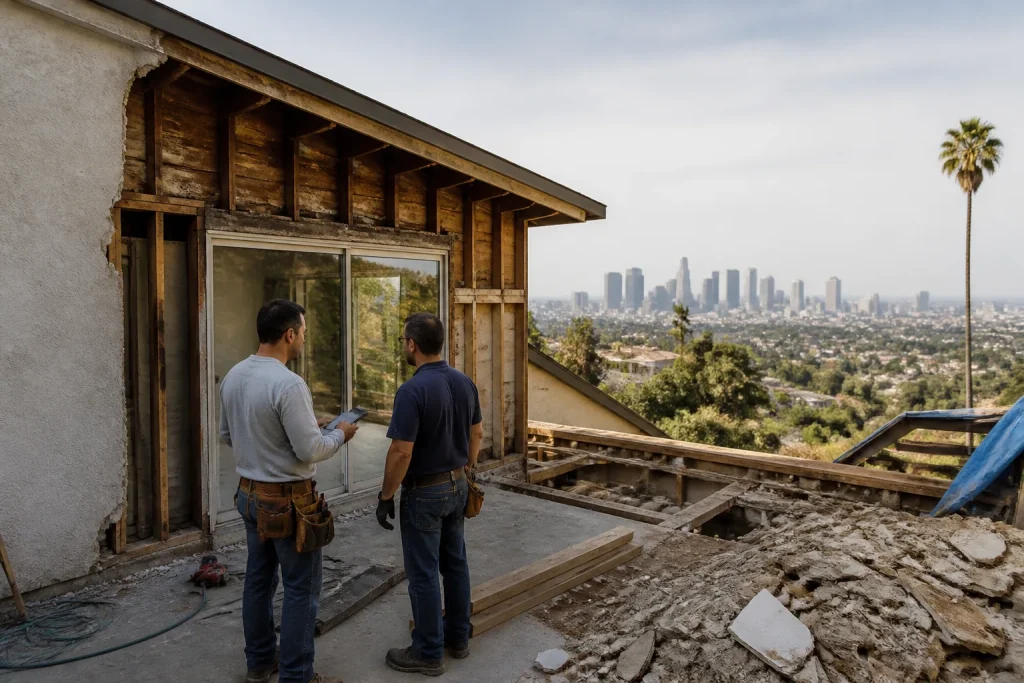
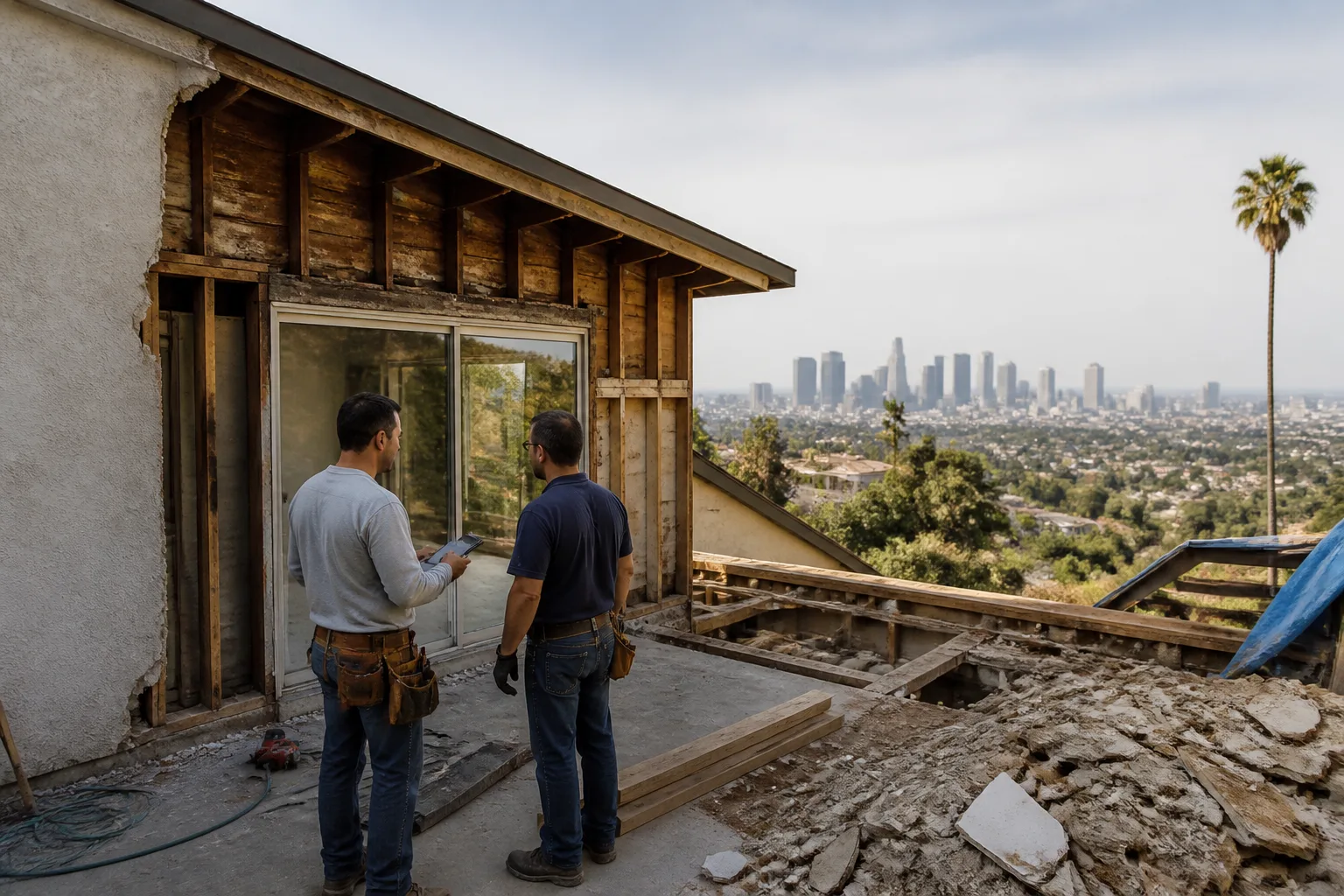
If you’re doing a whole-home remodel or a kitchen replacement in a Los Angeles hillside home built before 1980, plan for seismic strapping and possibly shear wall upgrades as part of the permit process. That’s code-driven cost, not contractor padding. A written estimate should separate the line items so you can see exactly what’s driving the number: materials, labor, code compliance, and permit work.
When a general contractor hands you a replacement recommendation, ask for the code-trigger list in writing. If they can’t tell you what the inspector will require, they’re guessing. And in Los Angeles, guessing gets expensive.
Written Estimates: The Comparison Most Homeowners Never Actually Get
Here’s the single most useful thing you can do when you’re stuck between repair and replace: get both numbers in writing from the same contractor, on the same visit, with the same scope. Most homeowners collect a repair quote from one guy, a replacement quote from another, and a shrug from a third. That’s not a comparison. That’s roulette.
At Penhallow Remodeling, we write both estimates when a homeowner is on the fence. Same visit, same measurements, same material allowances. The discussion becomes simple: the repair number is $11,000, the replacement number is $21,000, and here’s what changes between them. When both numbers come from the same person who has to honor them, the pressure to inflate one or the other disappears. There’s no incentive to steer you toward the bigger job because both are written in front of you.
Make sure every written estimate includes:
- Scope of demolition, if any, and who handles debris removal in Los Angeles, where dumpster permits and street parking can add real cost.
- Permit line items separated from labor and materials, not buried in a lump sum.
- Materials by brand and model where it matters: KraftMaid or Wellborn for cabinetry, Cambria or Silestone for counters, James Hardie for siding.
- Exclusions stated plainly. If dry rot remediation isn’t in the number because they can’t see behind the wall yet, it should say so in writing, not surface as a change order on day three.
A written repair estimate that omits substrate work, code upgrades, or matching discontinued tile isn’t an estimate. It’s a teaser. The real costs show up after demo. And by then, you’re too far in to stop.
Hidden Repair Costs That Don’t Show Up in the Verbal Quote
Verbal quotes are optimistic by nature. They quote the best-case scenario because the contractor hasn’t had to commit to a number. Here’s what typically gets left out of a verbal repair quote in Los Angeles:
- Substrate damage. We use cement board substrate (the moisture-resistant layer behind your tile) on any Los Angeles bathroom or kitchen with water exposure. If the old substrate is water-damaged, it has to come out and be replaced before new tile goes up. A patch quote that skips this skips the part of the job that determines whether the repair lasts.
- Code-triggered upgrades. Pull a permit in Los Angeles and you’ll often be required to bring adjacent plumbing, electrical, or strapping up to code. A $4,000 shower pan replacement can become $11,000 when the permit triggers a drain relocation and a valve upgrade.
- Matching discontinued materials. If the tile, cabinet door style, or flooring product is no longer manufactured, matching a patch is impossible. A verbal quote may say “patch the tile,” but the contract needs to say what product will be used and whether it will match. For homeowners in older Los Angeles neighborhoods like Hancock Park or Los Feliz, original materials are frequently out of production.
- Access and demo labor. In many parts of Los Angeles, dumpster placement, parking permits, and tight property line access add hundreds to a job before a tool is lifted. These line items don’t appear in verbal ballparks.
Ask for a written repair estimate that includes the words “including substrate inspection and replacement as needed.” If the contractor won’t put that in writing, you haven’t gotten a real number.
Questions That Reveal Whether Replacement Is Right or Just More Profitable
Replacement usually costs more, and a contractor who only sells replacement is easier to profit from. That doesn’t make replacement wrong; it makes the recommendation worth testing. Here are the questions that separate a real professional from a salesperson with a framing nailer:
- “Can you put both numbers in writing on the same quote sheet?” If they hesitate, they benefit from keeping the comparison fuzzy.
- “What specifically fails again if we patch this?” A good contractor can point to the exact failure mode: the beam that keeps moving, the wall assembly that keeps wicking moisture, the cabinet face frame that’s delaminating. If they can’t identify what would fail, they don’t actually know the repair won’t hold.
- “What does code trigger if we pull a permit for this scope?” In Los Angeles, the right answer is specific: seismic strapping, AFCI breakers, drain sizing, shear wall requirements. If they wave it off, they’re not planning to permit, which is a different conversation.
- “What’s the material allowance and what brands are included?” A replacement quote that doesn’t specify a cabinet line, countertop material, or fixture finish is a blank check with a number on top.
We’ve had homeowners ask us these questions directly in Los Angeles. A few have told us other contractors walked away rather than answer. That’s your answer.
When to call a pro: if you’re debating repair versus replacement on anything structural, load-bearing, or behind a wall, this isn’t a YouTube tutorial moment, and it isn’t a weekend fix. A licensed general contractor in Los Angeles will bring a trained eye for what’s behind the surface and a written price for both paths. If the thought of making the wrong call on a full kitchen remodel in Los Angeles or a torn-apart bathroom is keeping you up, call us. We’d rather spend 20 minutes on the phone helping you think it through than have you hire the wrong path and pay for it twice.
Related services in Los Angeles: for homeowners closer to the replacement side of the line, we handle general contracting in Los Angeles from the first estimate through final inspection, including bathroom remodeling in Los Angeles and whole-home remodels built around the written price and the written guarantee.
One real job from last year, out in Eagle Rock: a homeowner called us convinced she needed a full bathroom replacement. The shower tile was cracked, the floor felt soft, and two other contractors had quoted her $28,000 and $32,000 for a gut remodel. We pulled the tile, found the substrate was shot in one corner but the framing was solid, and the soft floor was a single rotted subfloor panel near the toilet flange, not a structural issue. We quoted the repair in writing, she approved it, and the repair held. Her repair was $9,400. The replacement she didn’t need would have been $30,000. That’s the 50% rule doing its job: when the repair number came back under half of replacement and the structure was sound, repair was the honest answer.
The Bottom Line
The repair-or-replace decision for a general contractor project isn’t about how the damaged item looks or how much you like the old tile. It’s about whether the structure around the problem can support a repair without hiding a bigger failure. In Los Angeles, where older building stock and seismic code requirements add cost to any permit-triggered scope, the decision tips earlier toward replacement than it does in newer markets. Get both numbers in writing from the same contractor, on the same visit, with the same material allowances. If the repair is under half the cost of replacement and the structure is sound, repair usually wins. If it’s over half, or the code triggers are going to add the same money anyway, replace it once and stop paying for the same wall twice.
If you’re in Los Angeles and need help deciding, Penhallow Remodeling offers free estimates, written pricing before any work starts, and a 365-Day Done Right Promise on every project. Call (936) 259-2607 and we’ll help you figure out the number. No pressure, no verbal ballpark, just a written answer.
Frequently Asked Questions
Get both a written repair estimate and a written replacement estimate from the same contractor, then apply the 50% rule: if the repair is less than half the cost of replacement and the underlying structure is sound, repair usually makes sense. If the repair is more than half of replacement, or the structure can’t support a lasting patch, replacement usually wins. Los Angeles homeowners should also factor in code-triggered work that may be required when permits are pulled. Call (936) 259-2607 for an exact comparison.
Kitchen remodels in Los Angeles typically run $18,000 to $55,000 depending on layout, cabinet line, and countertop material. Smaller scopes like cabinet refacing run $5,000 to $9,000, while full reconfiguration with new cabinetry, counters, and lighting typically starts around $30,000. The range is wide because Los Angeles homes vary dramatically in age, access, and code requirements. Call (936) 259-2607 for a written estimate on your specific kitchen.
It shouldn’t, if the original estimate was written properly. That’s why we give every homeowner a written price before any work starts, not a verbal range. Hidden conditions behind walls can add cost, but a good estimate calls those out in advance as possible scope rather than surprising you with change orders. Penhallow Remodeling puts the number in writing before a single cabinet is pulled, and the number on day one is the number on the invoice. Call (936) 259-2607 to get your written number.
Yes. Permitted work in Los Angeles triggers code compliance for the scope of work being done, including seismic requirements and electrical or plumbing upgrades where applicable. We take care of permit applications, inspections, and final sign-off so the work is done to current code and protected by the written guarantee. If you’re not sure whether your intended repair or replacement requires a permit in Los Angeles, call (936) 259-2607 and we’ll walk you through it.
Written by Trevor Nash, Owner at Penhallow Remodeling, serving Los Angeles since 2004.
Need Construction Help?
Call Penhallow Remodeling - licensed & insured, here with fast after-hours help in Los Angeles.
(936) 259-2607