
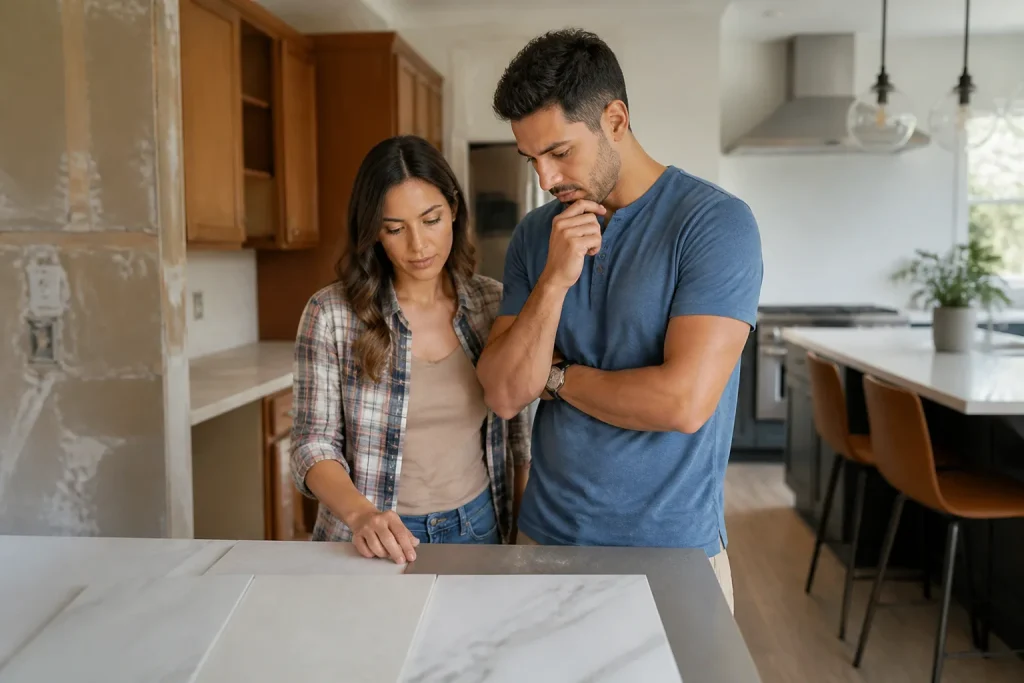

Kitchen Remodeling: Repair or Replace? How Los Angeles Homeowners Decide
In most Los Angeles kitchens, the repair-or-replace decision comes down to the cabinet boxes. If the boxes are square, solid, and in a layout you can live with, refacing and targeted repairs usually make sense. If the boxes are swollen, out of square, or in the wrong place, no amount of new doors or hardware fixes the daily frustration. Most LA homeowners we talk to are genuinely surprised by how simple the box test is, and how clearly it points one way or the other. If you’d rather not sort through this on your own, call (936) 259-2607 and we’ll walk you through it.
The Cabinet-Box Test: The Decision Most LA Homeowners Skip
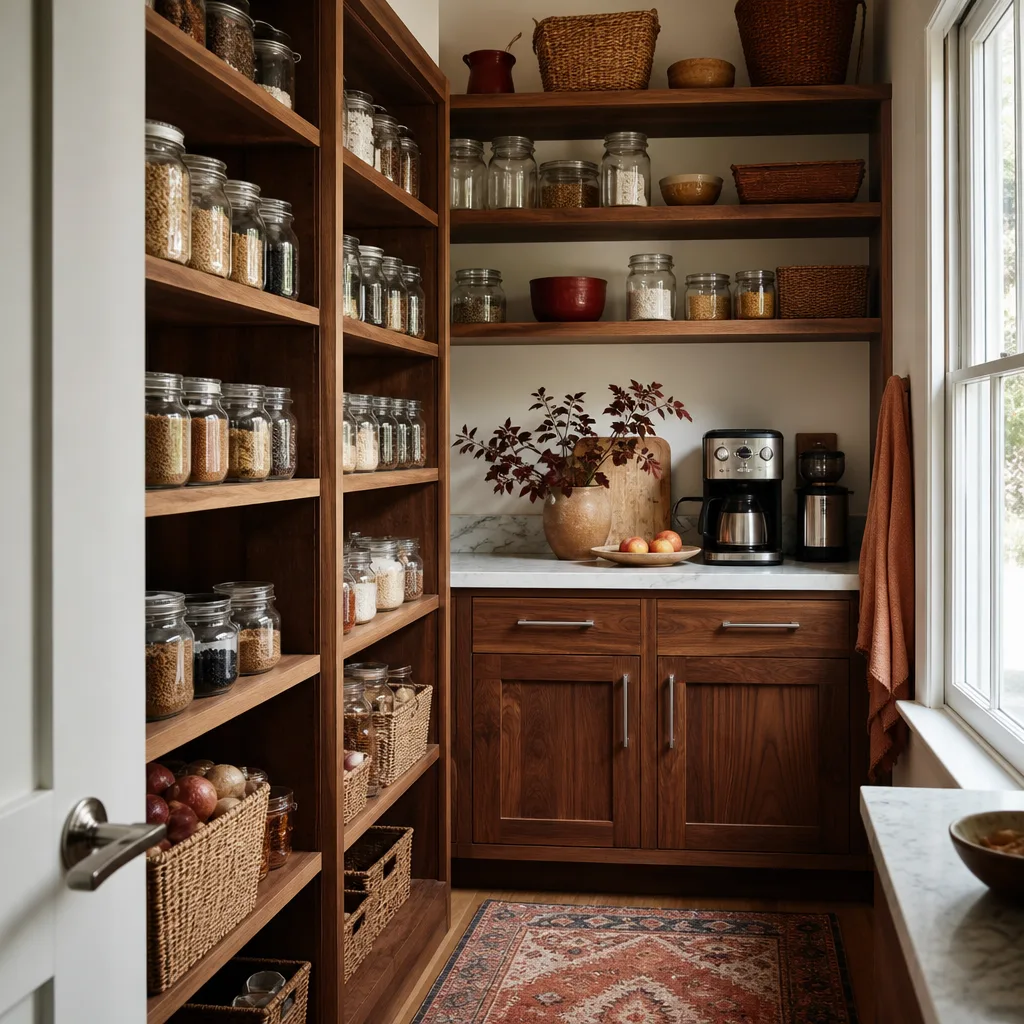
Here’s the core question we ask every Los Angeles homeowner before we talk about doors, counters, or appliances: are the cabinet boxes worth keeping? Not the doors. Not the drawer fronts. The boxes themselves, the plywood or particleboard shells screwed to your studs.
Refacing a kitchen in Los Angeles typically runs $4,000 to $9,000. A full cabinet replacement runs $15,000 to $35,000 depending on cabinet line, kitchen size, and whether the layout changes. That’s a big spread, and the only honest way to decide is to check the structure first.
Here’s the box test we use on our own estimates:
- Open a lower cabinet and push sideways on the side panel. If it flexes more than a hair, the box is losing rigidity. Particleboard boxes that have seen sink leaks or dishwasher steam do this all the time in older LA homes.
- Check the corner joints. Look inside the cabinet where the bottom meets the sides. If you see separation, swelling, or dark water stains, the box is compromised. New doors won’t fix that.
- Look for delamination. Press on the inside back panel and the cabinet floor. If the surface layer peels or feels spongy, the material is breaking down.
- Check the drawer glides’ mounting points. If screws are pulling out of stripped holes or the glide brackets no longer line up, you’re chasing a repair that won’t hold.
- Run a level across the counter. If the cabinets have settled out of plane by more than a quarter inch over four feet, the install was never solid, and the boxes are fighting the counter.
We’ve seen cabinets in Silver Lake and Echo Park that look tired from the outside but pass every one of these checks. Those kitchens are great refacing candidates. We’ve also pulled cabinet doors off in Sherman Oaks and found the boxes so water-swollen the doors were the only thing holding the sink base together. That’s a replacement, full stop.
If you’re not sure what you’re looking at, a good general contractor in Los Angeles will check the boxes before quoting you anything. If they don’t, that’s a red flag.
When a Layout Change Forces Replacement Regardless of Box Condition
Sometimes the boxes are fine and the kitchen still needs to be replaced. That happens when the layout is wrong, and in Los Angeles, it’s usually one of three things.
First, the work triangle is broken. If the sink, range, and refrigerator are more than nine feet apart on average, or if a major traffic path cuts through the middle of them, the kitchen fights you every single day. No reface fixes that.
Second, the sink or range is in the wrong place. Moving a sink in an LA kitchen means moving drain lines, water supply, and often cutting into the slab if it’s on grade, which most Los Angeles kitchens are. That’s not a repair. That’s a re-plumb, a re-permit, and usually a re-layout. The same goes for moving a gas range, which requires a licensed plumber to relocate the gas line and the city to inspect it.
Third, the kitchen doesn’t fit how you actually live. We hear this constantly in Mar Vista and Culver City, where 1950s and 60s galley kitchens were built for one cook and a closed-off floor plan. If you want an island, a pantry, or a sightline to the dining room, you’re not repairing anything. You’re rebuilding.
Here’s the honest cost reality: once you move plumbing, gas, or electrical, the question stops being repair versus replace and becomes replace. The cabinet boxes may be perfectly good, but they’re in the wrong place, and reusing them in a new layout rarely saves money. By the time you pay for careful removal, storage, modification, and reinstallation, you’re within striking distance of new boxes that fit the new plan exactly.
Related services in Los Angeles: kitchen remodeling in Los Angeles covers full layout changes, cabinet replacement, and everything that comes with it.
Countertop Repair vs. Replacement: Cosmetic vs. Structural
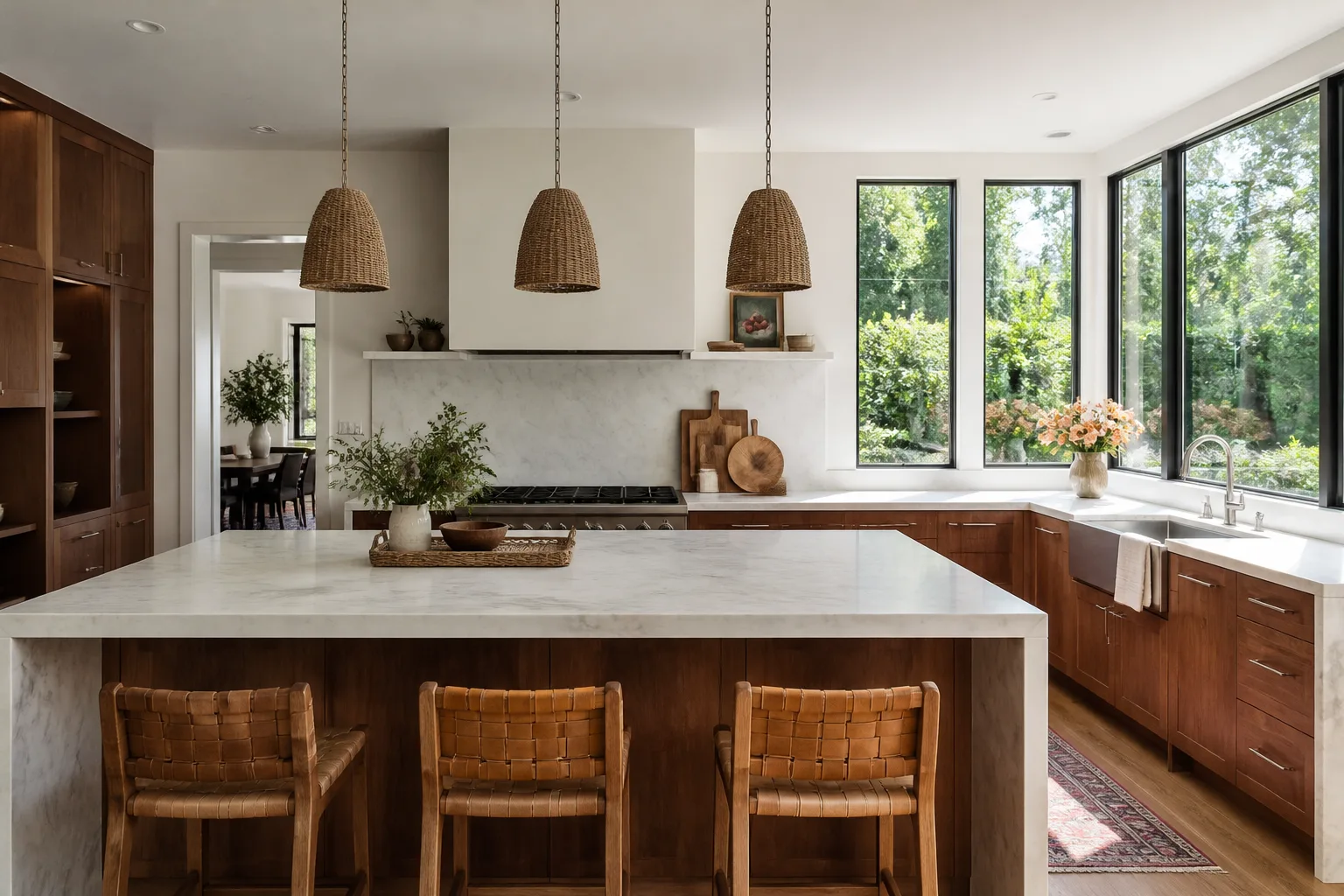
Countertops are the second-biggest decision point after the boxes, and Los Angeles homeowners get this one wrong in both directions. Some people replace a counter over a hairline crack that’s purely cosmetic. Others try to repair a structural failure that’s about to get worse.
Here’s how to tell the difference by material.
Quartz (Cambria, Silestone, Caesarstone): Quartz is an engineered stone, and it’s tough but not invincible. Hairline cracks near the sink cutout or along a seam are usually install issues or thermal shock from a hot pan set directly on the surface. If the crack is stable, doesn’t catch a fingernail, and isn’t near a seam, it’s often repairable with a color-matched epoxy fill. If the crack runs the full depth of the slab or keeps growing, the slab is failed, and you’re replacing it. We install Cambria quartz in some LA kitchens, and Cambria’s own warranty covers manufacturing defects, but it doesn’t cover impact damage or improper install.
Natural stone (granite, marble): Edge chips are common and almost always repairable. A good fabricator can fill and polish a chip so you can’t find it without looking. But a crack that runs across the slab, especially one that opens and closes with the seasons, is structural. In Los Angeles, temperature swings between day and night can cause hairline movement in stone, and a crack that’s active will never hold a repair.
Laminate: Laminate is the cheapest counter to replace, which is good, because it’s also the hardest to repair. Edge chips, peeling seams, and water-swollen particleboard core are all terminal. By the time you pay someone to patch laminate, you’ve spent a meaningful percentage of a new counter. Most LA homeowners with damaged laminate are better off replacing, and if they’re replacing anyway, it’s worth looking at quartz while the counter’s off.
The practical rule: if the damage is at an edge and doesn’t move, repair. If it’s in the field of the slab, follows a seam, or grows over time, replace. And if you’re replacing the counters, check the boxes first. A new counter on failing cabinets is money spent twice.
Appliance Age: The Decision Input Nobody Bakes Into the Budget
Here’s a scenario we see constantly in Los Angeles. A homeowner decides to reface the cabinets and replace the counters, but keeps the 15-year-old refrigerator, range, and dishwasher to save money. Two years later, the dishwasher leaks into the new cabinet bases. The refrigerator, which was built 32 inches wide in a world of 36-inch openings, dies and can’t be replaced without modifying the cabinet run. The range that worked fine during the remodel burns out a control board, and the replacement part costs more than a new range.
This is the hidden cost of remodeling around old appliances. Appliance age is a decision input, not an afterthought.
If your appliances are over 10 years old, especially the dishwasher and refrigerator, factor replacement into the remodel. Not because we sell appliances, we don’t, but because the remodel changes the dimensions the appliances live in. Once the counters are on and the cabinets are set, you’ve locked yourself into the appliance sizes that fit. If a 15-year-old fridge dies six months after the remodel, you’re not just buying a new fridge. You’re potentially reworking the cabinet box above it, the side panels, and the trim.
In our experience with Los Angeles kitchens, the sweet spot is this: if the appliances are under five years old and you like them, work around them. If they’re five to ten years old, replace the ones that are rusting, leaking, or making noise, and build the remodel around the new sizes. If they’re over ten years old, budget to replace them all as part of the project. It’s cheaper to do it while the kitchen is torn apart than to do it later and pay for dismantling twice.
We specify Kohler and Moen fixtures on most Los Angeles remodels, and we’ve found those brands hold up well under daily use and LA’s hard water. Hard water matters: it destroys faucet cartridges and dishwasher pumps faster than anything else in a Los Angeles kitchen. If you’re in an area with especially hard water, like parts of the San Fernando Valley, a water softener is a better investment than an expensive faucet.
How to Get a Written Estimate That Prices Both Options Side by Side
The fastest way to make a real repair-or-replace decision is to get both options priced on paper, in writing, from the same contractor. Not an estimate range. Not a verbal ballpark. A written number for each path.
Here’s what that estimate should include and what to watch for.
Ask the contractor to price these two scopes separately:
- Scope A: Repair and reface. New doors, drawer fronts, hardware, veneer or paint on the boxes that pass the box test, plus any targeted counter or appliance work. Written as a fixed number.
- Scope B: Replace. New cabinets (or re-laid layout if needed), new counters, and any plumbing or electrical changes. Written as a fixed number with a line-item breakdown.
If a contractor won’t do this, walk away. A contractor who only wants to sell you the big job isn’t the right person to trust with either one. The decision should be made on real numbers, not a contractor’s preference.
Look at the line items. In a Los Angeles kitchen remodels, the big swings are cabinet line, countertop material, and plumbing relocation. If Scope B includes moving a sink, the plumbing line should show it. If the countertop line says “quartz” without naming a brand and grade, ask. Different quartz lines vary by 30 to 40 percent in material cost alone.
One more thing: the estimate should have a defined arrival window and a written guarantee. If the contractor can’t put the guarantee in writing, the number doesn’t matter. We write a Done Right Promise into every project: if the work fails inside the guarantee period, we come back and fix it at no charge. Every repair includes a free return visit if it fails. That’s the standard we’re held to as part of Penhallow Remodeling home, operating under the Kingswell Way.
If you’d like both options priced side by side for your Los Angeles kitchen, give us a call. The estimate is free, and it comes in writing.
When to Call a Pro
This is the point where we tell you what not to do yourself. If you’re checking cabinet boxes and you find water damage, mold, or wiring that’s been spliced by someone who definitely wasn’t an electrician, stop. Kitchen water damage in Los Angeles often hides behind cabinets and under floors, and mold remediated wrong becomes a bigger problem than the remodel that uncovered it. High-amperage wiring, gas lines, and anything structural are not DIY territory. A background-checked, uniformed contractor who carries insurance and pulls permits is the right call, and in LA, the permit process for moving a sink or range is not something to skip. The city inspects for a reason.
Related services in Los Angeles: if the kitchen remodel turns into something bigger, general contractor in Los Angeles services cover the full scope, and bathroom remodeling in Los Angeles is a common add-on when homeowners do both rooms in the same year.
The Bottom Line
In Los Angeles, the repair-or-replace decision almost always pivots on the cabinet boxes, secondarily on the counter and appliances, and finally on whether the layout works for how you actually live. If the boxes pass the test and the layout is fine, reface and repair. If the boxes fail or the layout fights you, replace. And get both options priced in writing before you decide.
We pulled a set of cabinet doors off a house in Atwater Village last year where the homeowner had been told by two other contractors that the whole kitchen needed replacing. The boxes were rock solid. The doors were shot. She refaced the kitchen for about $7,000, put the difference into a new quartz counter, and now her kitchen looks like a $40,000 remodel for a third of that. That’s the reason we always check the boxes first.
If you’re in Los Angeles and need help deciding, Penhallow Remodeling offers free estimates. Call (936) 259-2607 and we’ll send someone to check your boxes, price both paths, and put it all in writing.
Frequently Asked Questions
How much does it cost to reface kitchen cabinets in Los Angeles?
Refacing kitchen cabinets in Los Angeles typically costs $4,000 to $9,000, depending on kitchen size, door style, and whether you add new drawer fronts and hardware. This assumes the existing boxes are structurally sound. If the boxes need repair work, the number goes up. Call (936) 259-2607 for an exact quote, the estimate is free.
Is it cheaper to repair or replace kitchen cabinets in Los Angeles?
Repair and refacing is nearly always cheaper, running $4,000 to $9,000, while full cabinet replacement runs $15,000 to $35,000. But cheaper is only the right call if the boxes are solid and the layout works. If the layout needs to change, replacement is the better long-term investment.
How do I know if my kitchen cabinets are worth refacing?
Check the boxes, not the doors. Open a lower cabinet and push sideways on the side panel. If it flexes, the box is failing. Look for separation at the corner joints, water stains, swelling, or peeling inside the cabinet. If the boxes pass and you like the layout, refacing is a solid option. If the boxes fail, replacement is the honest answer.
Should I replace my appliances during a kitchen remodel?
If your appliances are over 10 years old, yes, budget to replace them during the remodel. Once new cabinets and counters are set, you’re locked into the appliance sizes that fit. Replacing an old refrigerator or dishwasher after the remodel means reworking cabinet trim or panels and paying twice for the disruption. Call (936) 259-2607 if you want help thinking through the appliance timing.
Written by the team at Penhallow Remodeling.
Need Construction Help?
Call Penhallow Remodeling - licensed & insured, here with fast after-hours help in Los Angeles.
(936) 259-2607