
Free written scope consultation - allowances, timeline, and change-order rules on paper before a single trade is scheduled
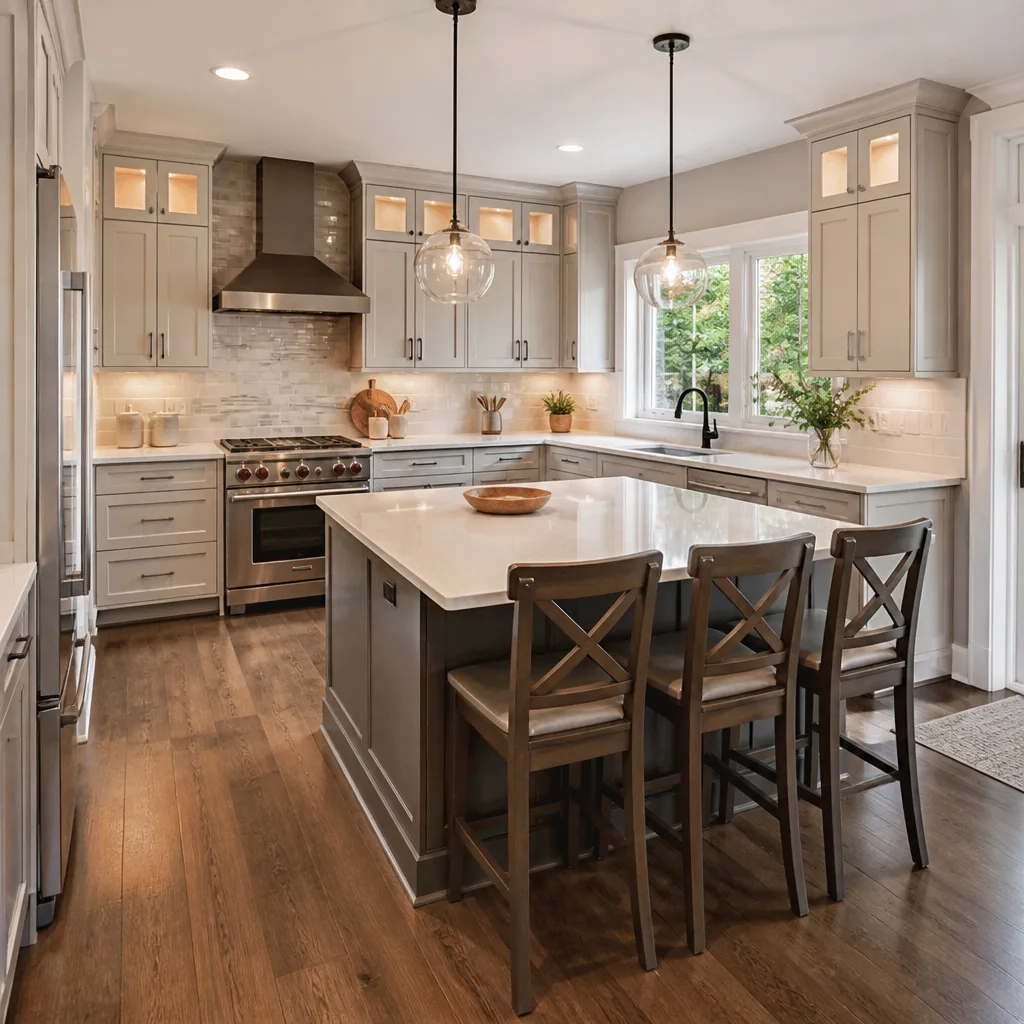
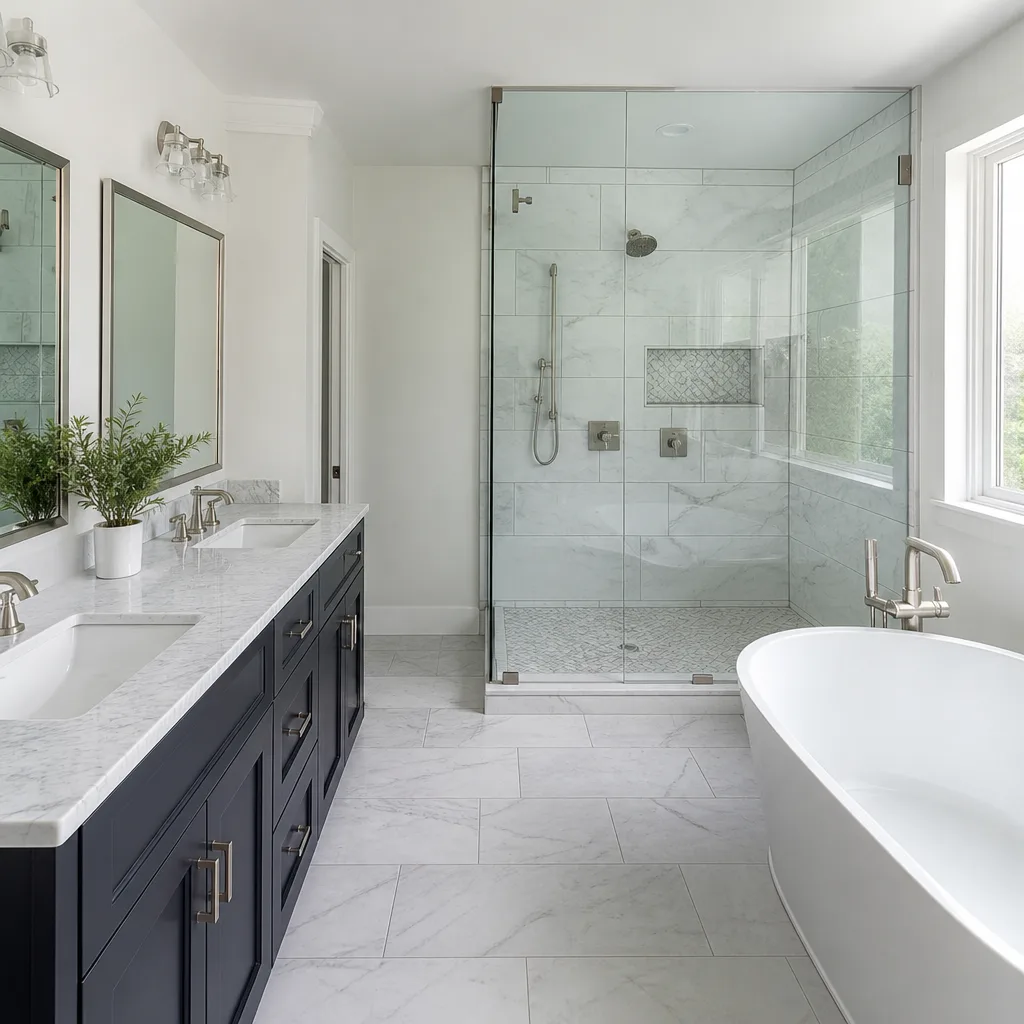
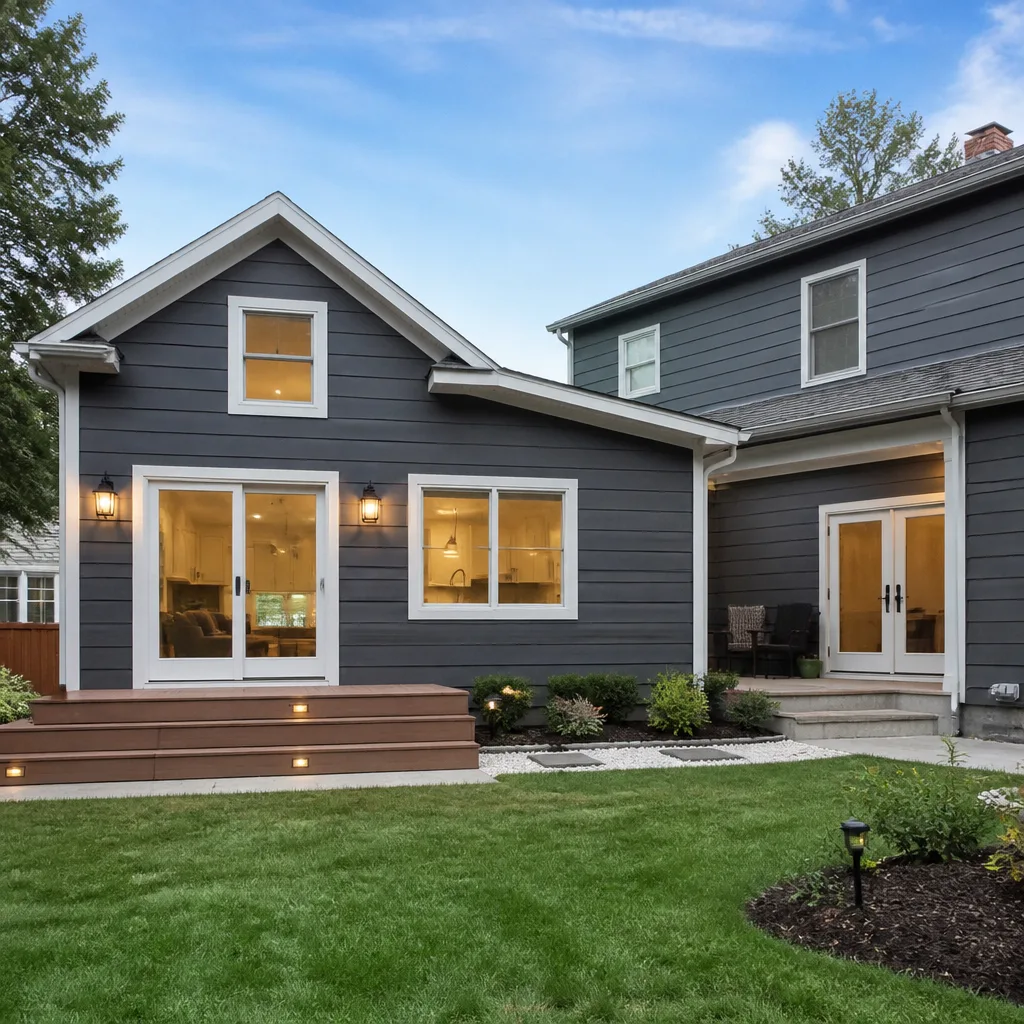
 Before
 After
After Before
 After
After Before
 After
AfterAmerican Standard Roofing: The Los Angeles Owner’s Guide
We stock and install American Standard-compatible roofing parts in Los Angeles, with most replacements running $470 – $2,125 installed depending on the section and material. If you’ve got a stain spreading across the ceiling after last week’s rain, or granules collecting in your gutter every time the wind picks up, you’re likely looking at a failed section of your American Standard roof system. Most Los Angeles homeowners catch it the same way: a dark patch on the drywall, a damp spot in the attic insulation, or a shingle that peeled loose and left bare underlayment exposed to the sun.
How You Probably Found This Page
You searched for American Standard roofing because that’s the name on your warranty or your original build sheet. Maybe a roofer told you the part failed, and now you want to know what it actually costs to fix before you call anyone back. That’s the right instinct. We’re a Los Angeles remodeling contractor that works with American Standard-compatible roof systems, and we’ll give you a written price for the replacement before any work starts. That’s just how we operate.
Which American Standard Models This Applies To
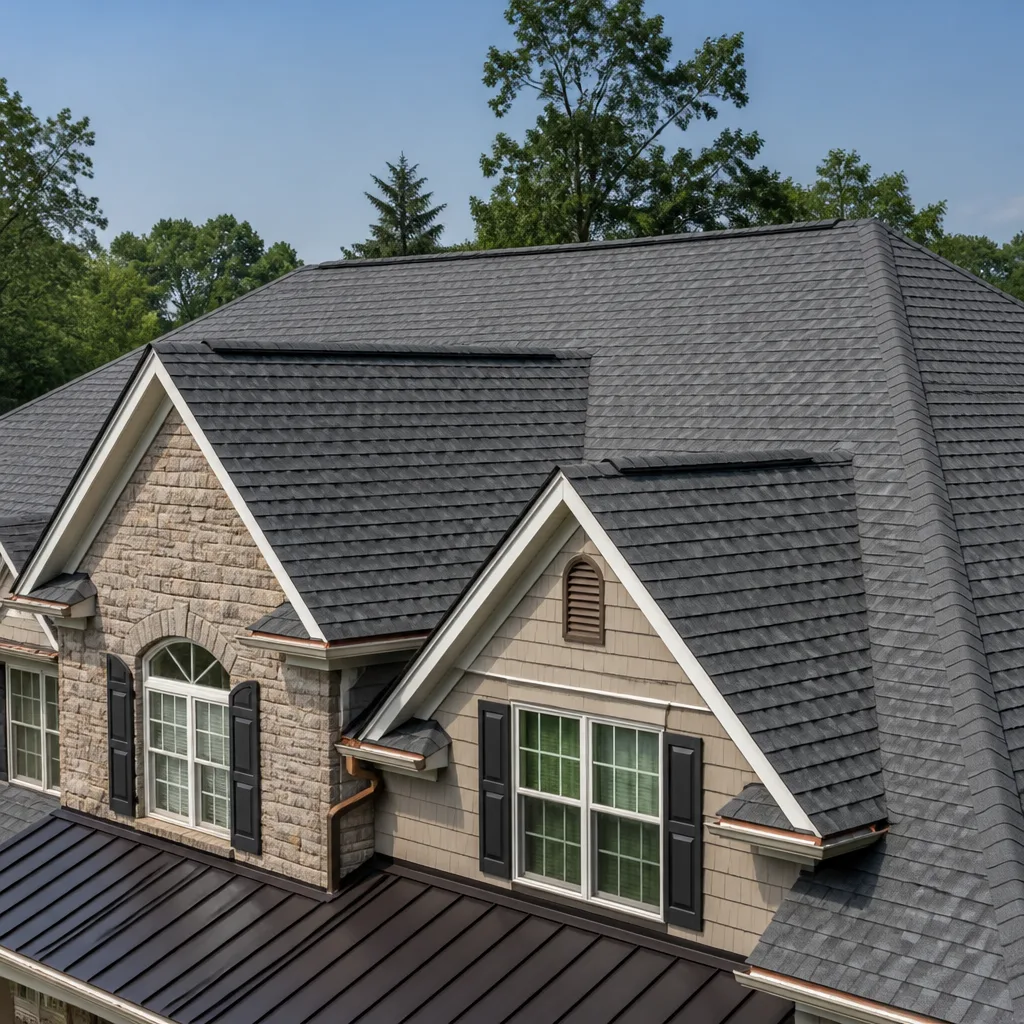
American Standard doesn’t manufacture its own shingle line the way it does HVAC equipment, but its roof-integrated products, most commonly ridge vent systems, underlayment, and flashing kits tied to American Standard warranty packages, appear across a wide range of Los Angeles residential builds from the mid-2000s onward. The parts you’ll most likely need are the vented ridge cap assemblies, the synthetic underlayment rolls, and the galvanized or aluminum step flashing that American Standard packages with its roof system warranties.
The compatibility gotcha we run into constantly: American Standard ridge vent systems use a 9-inch external baffle profile that doesn’t match the 12-inch profile on most generic big-box ridge vents. If you or a previous contractor swapped in an off-brand ridge cap, you’ll get wind-driven rain intrusion at the peak even though everything looks sealed from the ground. You’ll find the model number on the aluminum end cap of your ridge vent, or on a label under the first course of shingles near the eave. Write that number down before you buy anything.
For the underlayment, the American Standard spec calls for a synthetic 60-mil sheet with reinforced fiberglass matting. That’s thicker than the 30-mil felt most roofers in Los Angeles still use as a cheap substitute. The heavier material matters here because our summer attic temperatures regularly hit 140°F, and thin felt becomes brittle and cracks along the seams within five to seven years. The American Standard-compatible synthetic underlayment runs roughly $0.65 – $0.90 per square foot installed, which is worth every cent when the Santa Ana winds blow rain sideways for three days straight.
On the OEM-versus-aftermarket question: we’ll install genuine American Standard-spec parts when the roof is still under warranty, because using non-spec parts can void what’s left of the manufacturer’s coverage. Once the warranty period has lapsed, which is usually 15 years on the ridge vent components and 30 on the underlayment, quality aftermarket equivalents from Malarkey and GAF perform nearly identically and cost about 15 – 20% less. We’ll show you both numbers in writing and let you decide.
Signs Your American Standard Roofing Is Failing
- Granules in the gutters or at the downspout elbows. Asphalt shingles shed granules constantly, but if you’re seeing a quarter-inch pile after every dry spell, the shingle’s UV protective coating is gone. In Los Angeles, that’s accelerated by the relentless sun on south-facing slopes, and once the granule layer goes, the asphalt underneath starts cracking within a year or two.
- A water stain on the ceiling that grows after rain. This usually means a failed underlayment seam, not a missing shingle. The underlayment is the actual waterproof barrier, the shingles are mostly UV protection. If water’s hitting your drywall, the barrier has a hole somewhere upslope, and replacing just the visible shingles won’t stop the leak.
- Curling shingle edges along a ridge line. When the ridge vent underneath stops breathing due to a blocked baffle or a failed internal dam, heat and moisture build up at the peak. The shingles there curl first. You can see this from the ground with a pair of binoculars on most one-story Los Angeles homes.
- Rust streaks under the flashing at the chimney or pipe boots. American Standard flashing kits include both galvanized and aluminum options, but on older installs where a contractor used galvanized against aluminum siding, you get galvanic corrosion. The streak itself isn’t the leak yet, but the pinholes behind it will be within months.
- A musty, asphalt-heavy smell in the attic on hot days. This means your underlayment is cooking, literally. Once synthetic underlayment exceeds its heat tolerance on repeated 100°F+ days, it off-gasses a smell that’s hard to confuse with anything else. If you smell it, the material has already lost its flexibility and is cracking around fasteners.
Replacement Cost & What’s Included
In Los Angeles, American Standard roof replacement work runs $9,440 – $23,600 for a full roof replacement on a typical single-story home of 1,500 – 2,200 square feet. Targeted repairs, like a failed ridge vent section or a torn underlayment patch, fall in the $470 – $2,125 range. What drives the number up or down: single-story versus two-story (access and staging), roof pitch (anything steeper than a 6:12 adds labor), and whether the decking underneath needs replacement once we pull the old layers off.
Every replacement quote from us includes the parts, the labor, the tear-off and haul-away of the old material, the new underlayment, the flashing inspection and replacement as needed, and a written workmanship warranty. We don’t hand you a parts-only number and then hit you with “unexpected” disposal fees on invoice day. The number we write down before work starts is the number on the invoice at the end. Materials come from trade suppliers we’ve ordered from for years, not from whatever’s on sale at the supply house that week.
What About Just the Part, Without Installation?
We’ll sell American Standard-compatible ridge vent sections and underlayment rolls directly if you’re a licensed contractor or a very determined homeowner. For the vented ridge cap, expect $18 – $26 per 4-foot section. Underlayment runs $0.50 – $0.80 per square foot for the material alone. But honestly, if you’re on this page, you probably want the leak stopped, not a pallet on your driveway. Call us and we’ll give you both numbers.
DIY or Call Us?
Roof work in Los Angeles sits at the intersection of two things that don’t mix well: steep slopes and gravity. We’ve fixed enough homeowner DIY roof patches to say this plainly: if the repair involves you standing on the roof, especially on a two-story home with a 7:12 pitch or steeper, call a professional. The hospital bill for a fall dwarfs any savings from doing it yourself, and that’s before we talk about the fact that a poorly lapped underlayment seam leaks worse than the original tear.
What you can safely check from the ground or from inside: the attic insulation for damp spots, the gutter granules, the visible shingle condition with binoculars, and the ridge vent end caps for missing or cracked pieces. That information helps us quote the job accurately when you call (936) 259-2607. What you shouldn’t do: climb onto a wet roof in work boots, peel back shingles to “see what’s under there,” or apply tar or caulk to a leak as a permanent fix. That tar patch becomes the thing that traps water against the decking and rots it out from the inside.
FAQs
A properly installed American Standard-compatible asphalt shingle roof in Los Angeles lasts 18 – 25 years, though south-facing slopes in the Valley often wear out five to seven years faster than north-facing ones due to constant UV exposure. The underlayment, if it’s the proper 60-mil synthetic, should last 30 years, but if a contractor substituted 30-mil felt, you’ll be looking at underlayment failure in seven to ten years. Call (936) 259-2607 and we’ll inspect what you actually have and tell you the real remaining lifespan.
Yes, if the damage is limited to a single area: one ridge vent section, a torn underlayment seam, a failed pipe boot, or a cluster of broken shingles. The repair runs $470 – $2,125 in Los Angeles depending on what we find once we open it up. If the failure has spread across multiple sections, or the decking underneath is rotted, a partial replacement becomes more expensive than doing the whole thing correctly. We’ll show you the repair price and the replacement price side by side and let you choose.
A ridge vent section swap takes one to two hours. A torn underlayment repair takes half a day. A full roof replacement on a typical Los Angeles home takes two to four days depending on size, pitch, and whether we need to replace decking. We give you a real arrival window before we start, and the written quote includes the timeline.
We stock the common failure items on our service vehicles: vented ridge cap sections, pipe boot flashing, step flashing, and underlayment in both 30-mil and 60-mil. For anything model-specific that we don’t have on hand, we can usually source it from our Los Angeles suppliers the same day. We also stock parts for KraftMaid, Cambria, and Silestone projects for our remodeling clients. Call (936) 259-2607 and tell us what you need, we’ll tell you if it’s on the shelf.
Because we put the price and the guarantee in writing before anything gets pulled off your roof. Say the price before the work. Show up in the window we gave. Leave the place cleaner than we found it. That’s The Kingswell Way, it’s how we’ve operated since 2004, and it’s backed by our 365-Day Done Right Promise: if the work fails inside the guarantee period, we come back and fix it at no charge. Trevor Nash grew up in Reseda watching his uncle rebuild Valley ranch houses, and he started Penhallow because he kept seeing homeowners handed vague estimates and vaguer timelines. Give us the whole picture first, then we pick up the tools.
If you’ve got a ceiling stain, a granule pile, or a ridge vent that’s seen better days, call us at (936) 259-2607 for a free estimate. We’ll send a background-checked, uniformed technician to your Los Angeles home, inspect the failure, and hand you a written price before any work starts. No pressure, no vague numbers, no surprises on invoice day.
Written by Trevor Nash, Owner, Penhallow Remodeling at Penhallow Remodeling, serving Los Angeles and nearby areas.