
Free written scope consultation - allowances, timeline, and change-order rules on paper before a single trade is scheduled
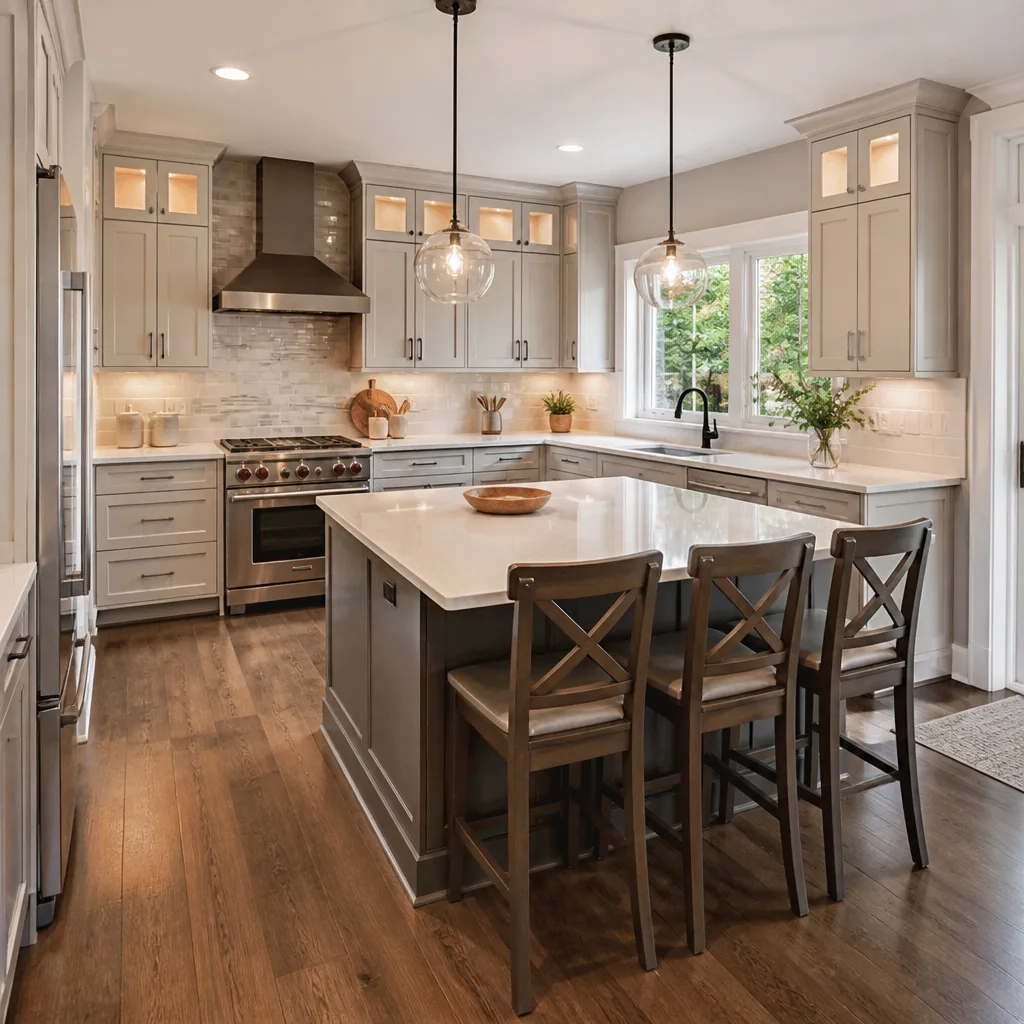
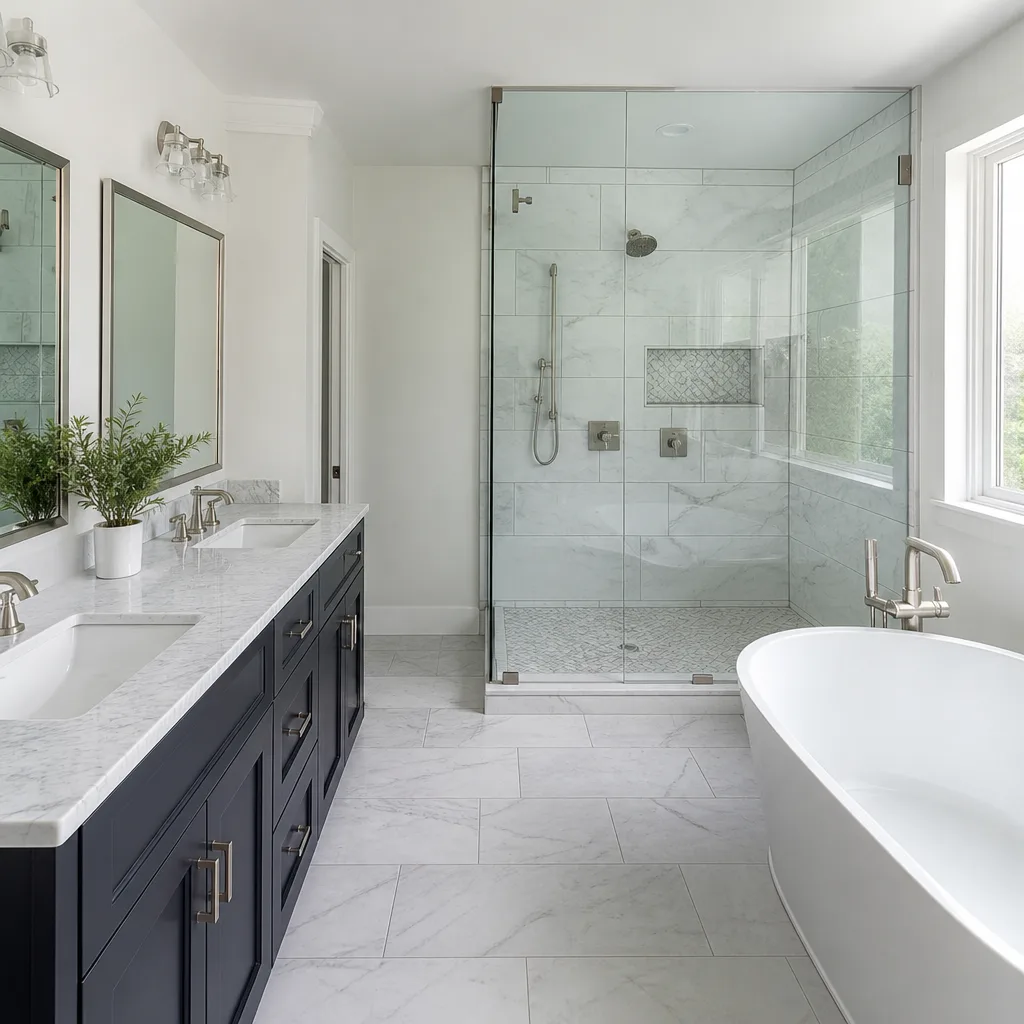

 Before
 After
After Before
 After
After Before
 After
AfterCambria Kitchen Remodeling: The Los Angeles Owner’s Guide
If you have a Cambria kitchen and something’s failed, you’re likely looking at one of three things: a seam that’s opened up, a sink that’s separated from the quartz, or cabinetry that’s shifted under the weight of the stone. A full Cambria kitchen remodel in Los Angeles typically runs $16,520 to $53,100 depending on cabinet line, layout changes, and how much of the existing structure we can save. We stock Cambria-compatible hardware, mounting systems, and seam repair materials, and we can usually get a crew to your home within a week.
Most homeowners discover a failing component the same way: they notice a hairline gap where the quartz meets the backsplash, or a drawer starts sticking that never stuck before, or the sink drops a quarter inch and suddenly there’s silicone peeling away in one corner. These aren’t cosmetic annoyances. Stone that shifts puts pressure on everything around it. We’ll walk you through what’s actually happening below.
Which Cambria Models This Applies To
Cambria is a specific brand of quartz surfacing, and it’s made in thicker, denser slabs than most competitors. Standard Cambria thickness runs 2cm and 3cm, and in Los Angeles kitchens we mostly see 3cm installed directly over cabinetry without a plywood subtop. That’s important because it changes how the stone behaves when something underneath fails. Cambria doesn’t have “models” in the traditional sense. The design lines (Brittanicca, Torquay, Summerhill, and dozens of others) share the same composition and install specs. The variation is in your cabinets, your sink mount, and your seam placement.
Here’s the compatibility gotcha most sites won’t tell you: if you bought a Cambria top in the last five years through a big-box retailer, the fabricator who cut it may have used a standard undermount sink bracket. Those brackets hold most of the sink’s weight. If they corrode or loosen, the sink separates from the quartz, and water gets into the cabinet box. We replace those with stainless brackets rated for 3cm stone. If your label is worn off the slab underside, you can still identify Cambria by its thickness and the fine grain pattern: Cambria slabs are 92% quartz by weight, noticeably denser and less “sparkly” than entry-level quartz brands.
OEM vs aftermarket: Cambria doesn’t sell installation components directly to homeowners. The mounting adhesives, seam epoxies, and sink brackets are sourced by the fabricator. We use aftermarket products from the same manufacturers most Cambria fabricators use (Integra adhesives, Hercules bracket systems), and they match or exceed what your original installer used. We also stock KraftMaid and Wellborn cabinet hardware, plus replacement Silestone and Caesarstone seam kits when a neighbor’s matching counter needs work after ours. Kohler sink strainers and Moen faucet adapters are on the truck, too.
Signs Your Cambria Kitchen Remodeling Is Failing
- A visible gap between the quartz and the backsplash. This almost always means the cabinet run has settled or the adhesive bead has broken down. LA-spec slab foundations move more than homeowners realize, and that movement telegraphs straight into the counter.
- The sink rim feels loose or you can wiggle the faucet base. Sink brackets have fatigued or the faucet was mounted with the wrong gasket for 3cm stone. Every wiggle widens the breach and feeds water into places you can’t see.
- Drawers or doors near the sink stick, scrape, or won’t close square. Moisture intrusion from a failing sink mount swells MDF cabinet boxes fast. Once swollen, the box doesn’t return to spec, and the fix usually means replacing that cabinet section.
- A seam you barely noticed before now catches your fingernail. Cambria seams are factory-tight when installed right. A seam that’s opened up means the two slabs are shifting independently. That pressure doesn’t reverse itself.
- Dark staining along the underside edge where quartz meets cabinet. This is water wicking into the cabinet rail, and in Southern California kitchens it’s usually slow leak from the disposal flange or a failed faucet cartridge dripping down the underside.
Replacement Cost & What’s Included
In Los Angeles, a Cambria-focused kitchen remodel with new cabinet boxes, seam repair or full countertop replacement, sink remount, and backsplash runs $16,520 to $53,100. The biggest cost drivers are whether we’re keeping your existing quartz or replacing it, what cabinet line you choose (KraftMaid stock vs Wellborn semi-custom changes the number by thousands), and whether the layout stays put or moves plumbing and electrical.
For a narrower picture: countertop installation alone runs $2,360 to $7,670, cabinet installation $4,720 to $15,340, and a kitchen island replacement $3,540 to $11,800. Every Penhallow quote is a written line-item price before any work starts. That means the number on the estimate is the number on the invoice, no change orders unless you add scope. The 365-Day Done Right Promise covers the work in writing for a full year after completion.
DIY or Call Us?
What you can safely do: tighten visible cabinet hinge screws, wipe down the underside of your sink to identify where water is coming from, and take photos of any gaps with a quarter held alongside for scale. Those photos help us quote accurately over the phone. What you should not do yourself: attempt to lift or shim quartz, remove a sink mount, or re-epoxy a seam. Quartz slabs weigh 20 to 30 pounds per square foot, and a 3cm island top can easily exceed 400 pounds. If a slab shifts while you’re working under it, this stops being a Saturday project and becomes a hospital visit.
Also, anything involving the sink connections and the cabinet underneath means you’re dealing with water lines and possibly electrical for the disposal. Treacherous enough that we recommend a trained professional for that. Give us the symptoms, send a few photos, and we’ll tell you whether it’s worth a service call. Reach us at (936) 259-2607.
FAQs
A properly installed Cambria top over stable cabinetry should last 20-plus years; the quartz itself carries a lifetime warranty from Cambria, but the installation components (adhesives, brackets, seam epoxy) typically last 10 to 15 years in Los Angeles before environmental stress starts showing. The dry heat and hard water in the Valley accelerate bracket corrosion faster than coastal homes see. Call (936) 259-2607 and we’ll inspect what’s actually failing before you spend money replacing what isn’t broken.
Yes, a separated seam can usually be repaired if the stone hasn’t chipped along the edges; we open the seam, clean out the failed adhesive, and re-epoxy using a color-matched compound, and the repair is covered under our written workmanship warranty. If the seam separated because the cabinet structure is failing, the repair won’t hold until the structure is fixed, which is why we check underneath before touching the stone. Call us for a free estimate on seam work.
Most Cambria-focused kitchen remodels in Los Angeles take 2 to 6 weeks from demo to final walkthrough, depending on whether we’re keeping existing quartz, replacing cabinet boxes, and whether permits are required for plumbing or electrical changes. A simple countertop replacement with sink remount can be done in 3 to 5 days. We’ll give you a written timeline with the written price.
Yes, our trucks carry stainless undermount sink brackets, seam epoxies, cabinet hardware, faucet adapters for 3cm stone, and disposal flange seals specifically matched to Cambria’s slab depth. If your part is exotic or discontinued, we source it through the same trade suppliers that serve Los Angeles fabricators, usually within a few business days.
Written by Trevor Nash, Owner, Penhallow Remodeling at Penhallow Remodeling, serving Los Angeles and nearby areas.