
Free written scope consultation - allowances, timeline, and change-order rules on paper before a single trade is scheduled
 Before
 After
After Before
 After
After Before
 After
AfterCambridge Pavers Driveway & Pavers: The Los Angeles Owner’s Guide
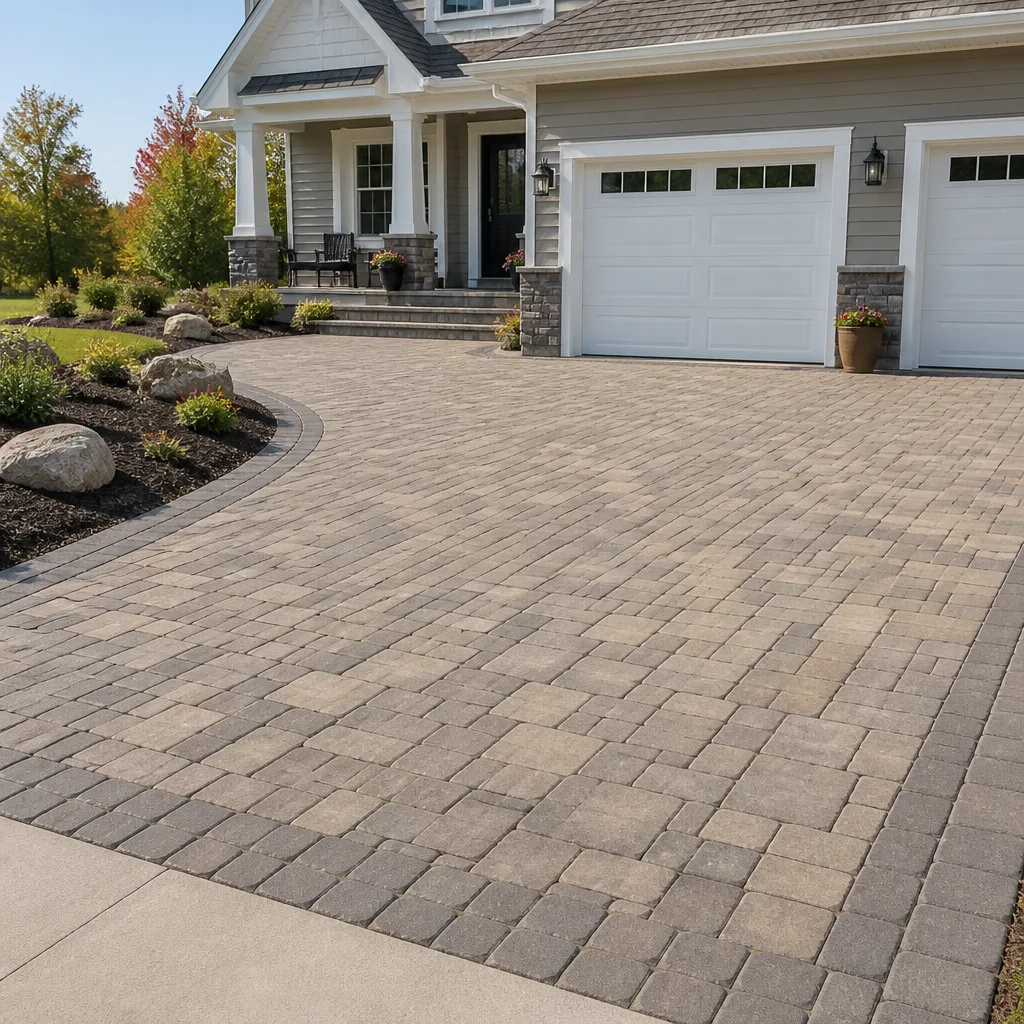
If your Cambridge Pavers driveway has shifted, cracked, or started sinking in one corner, we stock and install Cambridge Pavers-compatible pavers throughout Los Angeles, and a typical repair or replacement section runs $4,130 to $12,980 depending on square footage and base condition. Most homeowners discover the problem after a winter rain, when water pools in a low spot or a paver edge crumbles under a car tire. You’ll want to address it sooner than later because a failed base under one section usually spreads to the pavers around it within a season or two.
Here’s what surprises most Los Angeles homeowners: the pavers themselves rarely fail. What fails is the base underneath them, or the sand joints between them, or the edge restraint that was never installed correctly. Cambridge Pavers are dense, color-through units, but they’re only as stable as what’s beneath them. We’ll walk through what actually goes wrong, what it costs to fix, and when it’s a simple re-level versus a full section rebuild.
A note for clarity: Penhallow Remodeling is an independent contractor. We are not affiliated with Cambridge Pavers, but we work with their products regularly and match existing installations by series, size, and color blend.
Which Cambridge Pavers Models This Applies To
Cambridge Pavers produces several paver lines that show up on Los Angeles driveways, and the compatibility picture matters more than most homeowners expect. The three series we see most in LA are the Ledgestone, RoundTable, and Maytrx lines, plus the older Cambridge Cobble units that predate some of the current series naming. Each line has its own dimensional profile, and they do not mix cleanly in a running bond pattern unless you’re deliberately creating a border or accent band.
The fastest way to identify your paver is to lift one from an edge and look at the underside. Cambridge stamps a product code and sometimes a lot number into the bottom face of most units. If that’s worn off, measure the paver: Ledgestone XL runs about 16 inches by 16 inches with a tumbled edge, Maytrx is a modular 3-piece system with a smaller square and rectangle, and RoundTable has a distinctive radiused edge that’s hard to confuse with anything else. Color matters too. Cambridge uses a color-through process, which means the color goes all the way through the unit, not just on the surface. So if you’re matching a 10-year-old Onyx/Navy blend, a new unit from a fresh manufacturing lot will be a shade or two off, even in the same named blend. We often pull from multiple lot samples to get the closest visual match, and we’ll tell you plainly if a perfect match isn’t realistic.
On aftermarket versus OEM: Cambridge doesn’t restrict distribution the way some appliance brands do. The pavers you buy through a legitimate LA masonry supply yard are the same units the manufacturer produces. The risk isn’t counterfeit pavers. It’s a yard selling you a look-alike from another manufacturer and calling it “Cambridge-style.” Different density, different efflorescence behavior, different thickness. If a quote seems unusually low, ask which series and which manufacturing lot the yard stocks.
Signs Your Cambridge Pavers Driveway & Pavers Is Failing
- Water pooling in one or more low spots after rain. This is almost always a base failure underneath, not a paver problem. Los Angeles clay soil expands and contracts with moisture, and a base that wasn’t compacted in proper lifts will settle unevenly. You’ll see the puddle before you feel the dip underfoot.
- A paver or section that rocks when you step on it. That’s a sand joint failing. The polymeric sand between units has washed out or broken down, and the pavers are now moving independently. Left alone, the edges start chipping against each other.
- Cracked pavers along the driveway edge, especially near the curb or garage apron. This points to missing or failed edge restraint. Without a solid plastic or concrete edge holding the outside row, those pavers take every bit of lateral force from a turning tire and eventually split.
- Efflorescence, a white chalky film, appearing across the surface. Not structural, but it signals moisture moving through the paver body. In LA’s dry climate, efflorescence often burns off in a season, but persistent blooms can mean trapped water in the base.
- Ant colonies or soil washing up between joints. Ants love a broken-down sand joint, and their excavation removes base material from below. If you see fine soil mounded between pavers after a rain, something underneath is moving out.
Replacement Cost & What’s Included
In Los Angeles, repairing or replacing a section of Cambridge Pavers driveway typically runs $4,130 to $12,980 installed. A small repair, say 100 to 150 square feet at the driveway edge, lands on the lower end: pull up the affected pavers, re-grade and re-compact the base, reset the units, and re-sand the joints. A full paver driveway replacement, where we remove everything down to the soil and rebuild the base properly, runs $8,260 to $21,240 depending on total square footage, access, and whether the old base material can be salvaged or must be hauled away.
What drives the number: base depth (LA driveways on clay do better with 6 to 8 inches of compacted base rather than the 4 inches some installers use), paver series and thickness, whether we’re matching existing color blends, and access for a plate compactor. We don’t give verbal ballparks and hope for the best. You get a written price before any work starts, and that number is the number on the invoice. If it’s not done right, the 365-Day Done Right Promise means we come back and fix it, in writing, at no charge.
DIY or Call Us?
There’s one job a homeowner can do safely: sweep new polymeric sand into joints that have mostly washed out, then mist it with water per the bag instructions. That’s maintenance, not repair. Anything involving re-leveling, pulling pavers, or rebuilding a base means hauling out a plate compactor and knowing what “compaction in lifts” actually requires. And a driveway that looks flat at the surface can hide a base that’s crumbling four inches down. If you re-sand over a failing base, you’ve bought yourself six months, not a fix.
Trevor Nash puts it this way: “Give me the whole picture first, then we pick up the tools.” That means we’ll look at the base, the slope, the edge restraints, and the drainage before we quote you a single paver. If the repair is genuinely a two-hour sand-and-sweep job, we’ll tell you that too. Call (936) 259-2607 and we’ll put a real number on it.
FAQs
A properly installed Cambridge Paver driveway in Los Angeles will last 25 to 40 years before the base needs major work, and the pavers themselves often outlast that. The variable is the base, not the paver. Clay soil movement and poor original compaction are what shorten the lifespan here. Call (936) 259-2607 if you want us to assess whether your base is still doing its job.
Yes, in most cases we remove only the affected section, re-grade and re-compact the base, and reset the same pavers if they’re intact. If the pavers are cracked or heavily chipped, we replace those units with the closest matching Cambridge series and color blend. The repair is warrantied in writing, same as a full replacement.
A typical section repair runs one to two days, including base work, compaction, paver reset, and joint sanding. A full driveway replacement on a standard LA lot usually takes four to seven working days. You’ll get a defined arrival window and a written timeline before we start, not a vague “sometime next week.”
We source Cambridge Pavers through our local masonry supply yards in Los Angeles, and we can typically have the right series and color blend on site within a few business days. We also work with other recognized trade brands, including KraftMaid, Cambria, and Silestone, on the interior side of our remodeling work. You won’t be sent on a scavenger hunt for your own materials. Call (936) 259-2607 and we’ll handle sourcing, delivery, and installation as one written quote.
Written by Trevor Nash, Owner, Penhallow Remodeling at Penhallow Remodeling, serving Los Angeles and nearby areas.