
Free written scope consultation - allowances, timeline, and change-order rules on paper before a single trade is scheduled
 Before
 After
After Before
 After
After Before
 After
AfterJames Hardie Fence Installation: The Los Angeles Owner’s Guide
James Hardie fence installation in Los Angeles typically runs $4,130 to $10,620 for a complete HardiePlank fence system, including materials, hardware, and labor. We stock Hardie-compatible fence boards, trim, and fasteners on our trucks, so most installations begin within a week of your written estimate. The most common way owners discover they need this service is when a section of their existing Hardie fence starts warping away from the rails, or when the bottom edge of the boards begins to crumble after years of sprinkler contact.
James Hardie makes fiber cement siding, and while they do not manufacture a dedicated fence panel, their HardiePlank lap siding and HardieTrim boards are widely used for fence construction across Southern California. The material holds up remarkably well to Los Angeles sun and dry heat, but improper installation can cut that lifespan short. If your Hardie fence is failing, it is almost always a fastener or clearance problem, not a material problem.
Which James Hardie Models This Applies To
The two James Hardie products we install in fence applications are HardiePlank lap siding in the 8.25-inch exposure profile and HardieTrim boards in the 5/4-inch thickness. These same boards are used for horizontal and vertical fence faces across neighborhoods from Studio City to Woodland Hills, and the product labels will show either “HardiePlank” or “HardieTrim” along with a lot number on the back side of each board.
One compatibility gotcha we see often: Home Depot and Lowe’s in the Los Angeles area stock HardiePlank in smooth finish, while many existing fences were built with the cedar-texture version. The two textures do not match when you patch a section, even if the profiles are identical. If you are replacing a few boards rather than the whole fence, we verify the texture and the color before ordering. James Hardie also requires painted edges on every cut, and if the previous installer skipped that step at the ends of each board, that is where moisture gets in and the board starts to swell and delaminate within three to five years.
Signs Your James Hardie Fence Installation Is Failing
- Boards pulling away from the rails. Fiber cement expands and contracts less than wood, but it still moves. If the original installer used standard roofing nails instead of corrosion-resistant screws, the board wiggles loose over time and hangs off the rails. In the Santa Ana wind season, those loose boards become a real hazard.
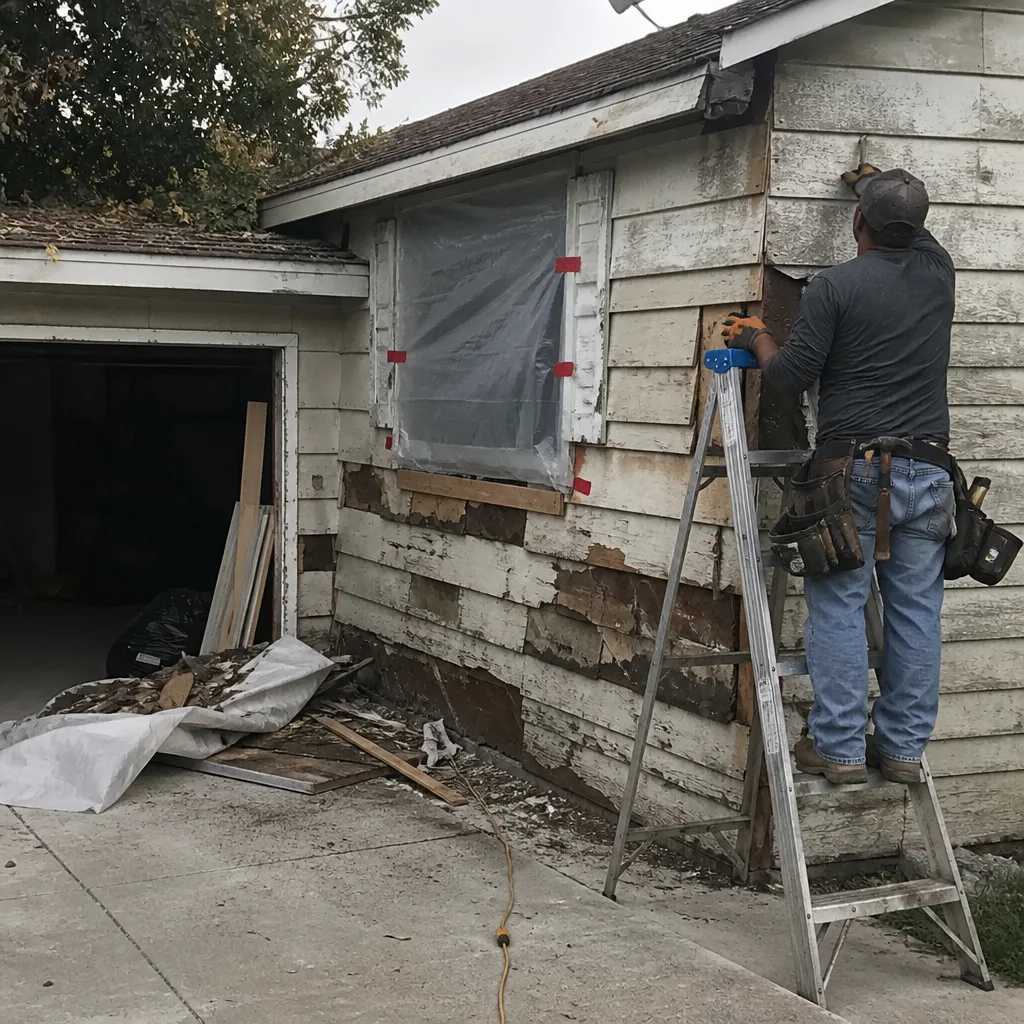
- Crumbling bottom edges. HardiePlank should never sit in standing water or touch soil directly. Los Angeles irrigation overspray keeps the bottom edge wet, and after enough wet-dry cycles, the corner starts to disintegrate. We see this constantly in Mid-Wilshire and Pasadena yards with automatic sprinklers aimed too close to the fence line.
- Fading beyond normal, with chalky dust on the surface. Southern California UV is rough on any painted surface, but Hardie’s factory finish usually holds up ten years or more. If you see chalky residue on your hand after touching the fence and the color has gone flat in under five years, the wrong primer was used or the boards were not properly cured before painting.
- Rust staining at every fastener. If you see brown streaks running down from the nails or screw heads on each board, the original fasteners were not stainless or double-hot-dipped galvanized. In coastal Los Angeles areas like Playa del Rey and San Pedro, marine air accelerates that rust, and the fastener eventually fails entirely.
- Cracks running horizontally through the board, not at the cut edges. This is almost always a sign that the installer over-drove the fasteners or placed them too close to the board end. Once a crack forms mid-board, the board is done, and the only real fix is replacement.
Replacement Cost & What’s Included
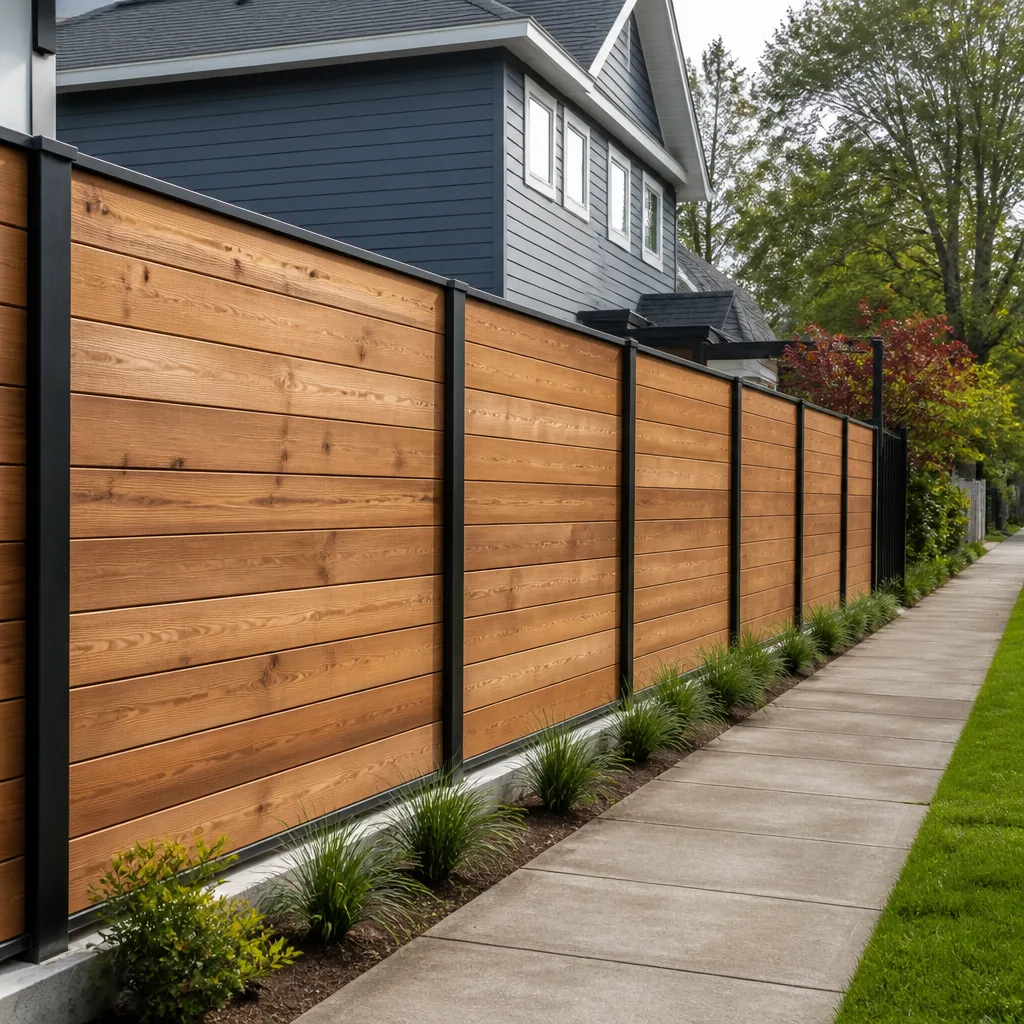
For a standard six-foot privacy fence using James Hardie HardiePlank at 8.25-inch exposure, the installed range in Los Angeles runs $4,130 to $10,620. A shorter 50-foot run with a single gate typically lands at the lower end, while a full yard perimeter with double gates, steel posts, and painted trim boards pushes toward the top.
What drives the number: linear footage, post material (wood vs. galvanized steel), whether we are reusing existing concrete footings or pouring new ones, and whether the fence needs prep and paint after install. Every Penhallow Remodeling estimate is a written number before any work starts. That number includes removal and haul-away of the old fence material, all fasteners and hardware, and a written 365-Day Done Right Promise. If anything on that fence fails inside a year, we come back and fix it at no charge.
For exact pricing on your fence line, call (936) 259-2607. The estimate is free, and it is a real number you can hold us to.
DIY or Call Us?
You can safely inspect your Hardie fence yourself. Look for the symptoms above, check the gap between the bottom of the boards and the soil (it should be at least two inches), and see whether the fasteners are rusting. That tells you what you are dealing with.
Where DIY goes wrong: fiber cement weighs about 2.6 pounds per square foot, so a full six-foot board is heavy and brittle. Dropping one or over-bending it during install cracks the board, and cracked Hardie is not repairable. Cutting it also produces silica dust, which requires a respirator and dust control, not a standard dust mask. Most homeowners we talk to in Los Angeles decide they would rather have a written price and a warranty than a three-weekend project with no guarantee. If you want us to handle it, call (936) 259-2607 and we will put the number in writing.
FAQs
A properly installed HardiePlank fence with sealed cut edges and stainless fasteners typically lasts 20 to 30 years before the boards need replacement. The limiting factor is usually the paint film, not the fiber cement itself, and repainting every 8 to 12 years will extend the life of the boards well past what wood fences in Los Angeles deliver.
Individual boards can be replaced if the damage is confined to a few pieces and we can match the texture and color. If multiple boards are cracked, pulling off the rails, or crumbling at the bottom edge, a section replacement or full reinstall is usually the better investment. We will tell you honestly which route makes sense after a site visit. Call (936) 259-2607 to schedule a look.
Most Hardie fence installations in Los Angeles take two to four working days from removal of the old fence to final cleanup, depending on the length of the run and whether new footings are required. We will give you a defined arrival window in writing before the first day, and our background-checked, uniformed technicians do the work.
We stock standard HardiePlank 8.25-inch boards, HardieTrim, stainless fasteners, and color-matched caulk on our trucks, so most installations and repairs do not wait on materials. For custom textures or less common profiles, we order directly from our James Hardie distributors in the Los Angeles area, which usually adds two to three business days.
Written by Trevor Nash, Owner, Penhallow Remodeling, serving Los Angeles and nearby areas.