
Free written scope consultation - allowances, timeline, and change-order rules on paper before a single trade is scheduled
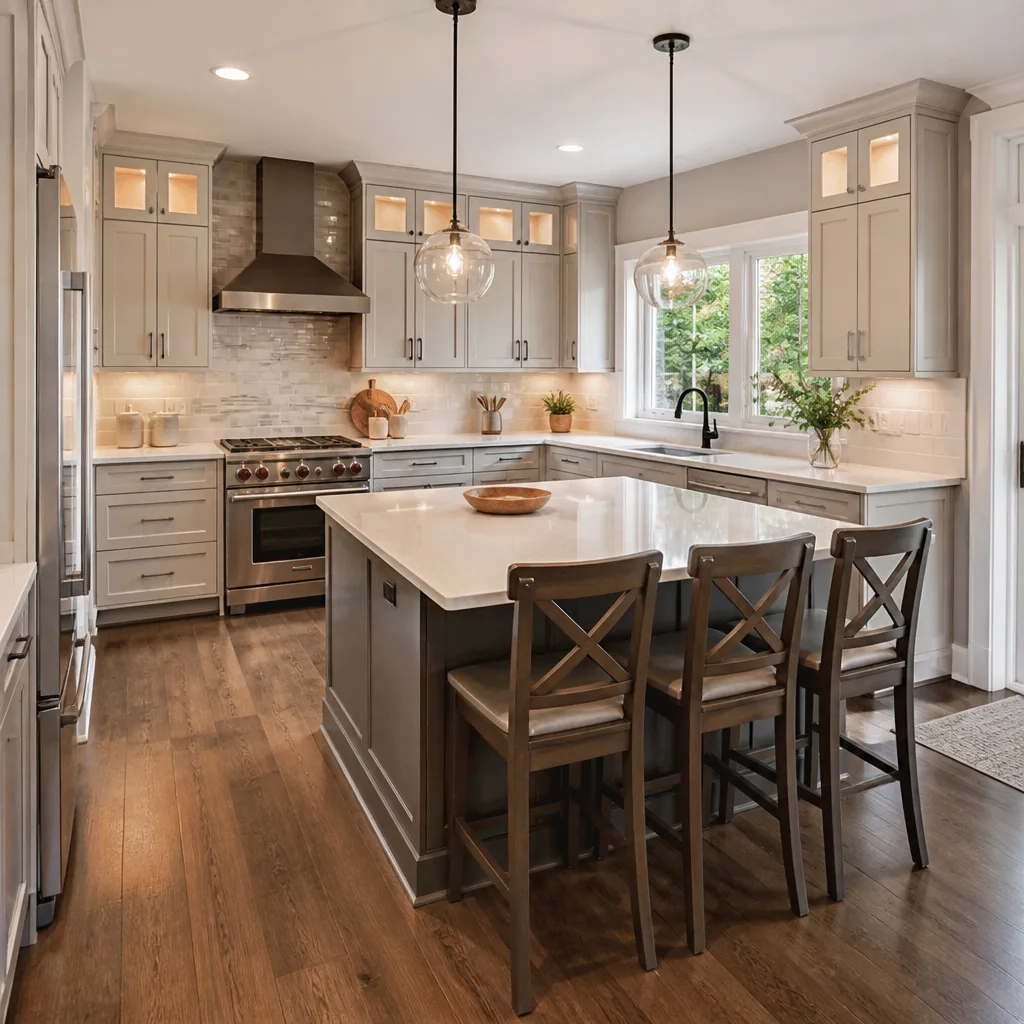
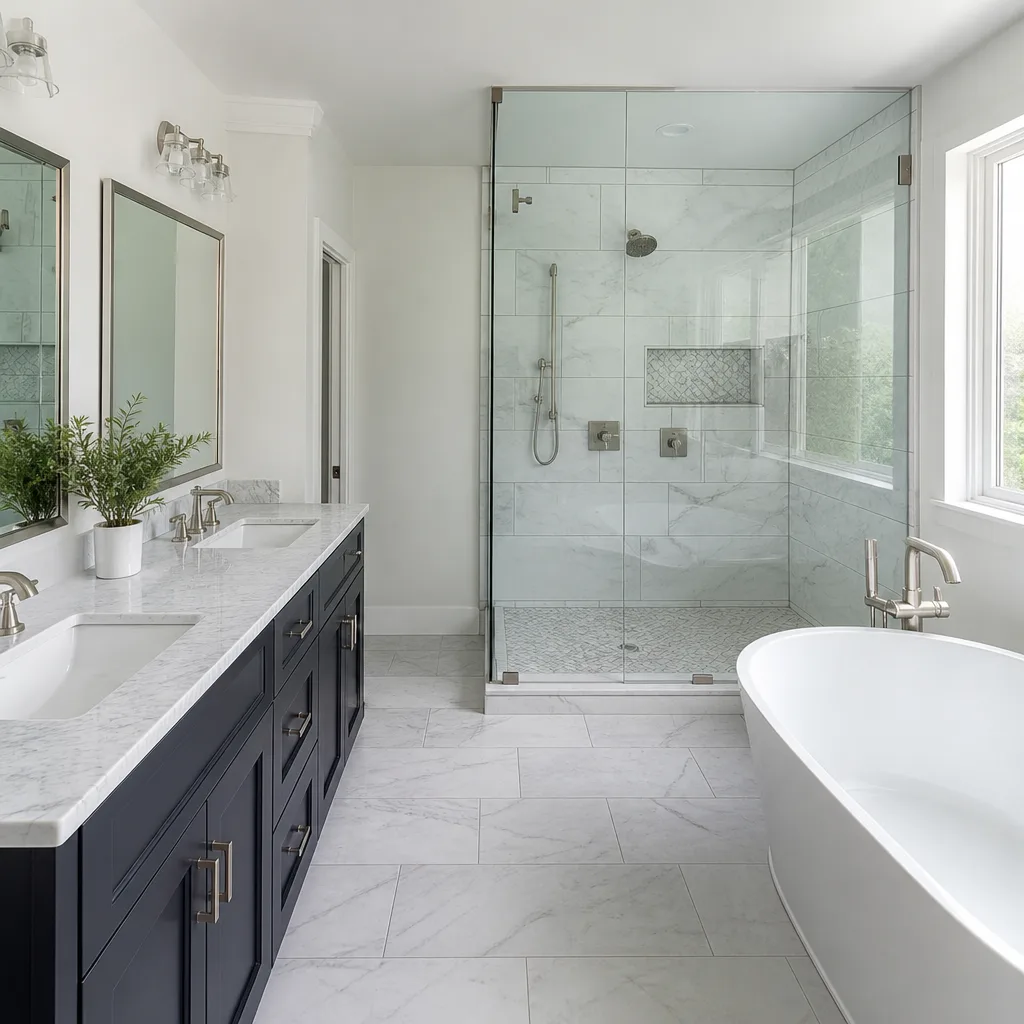
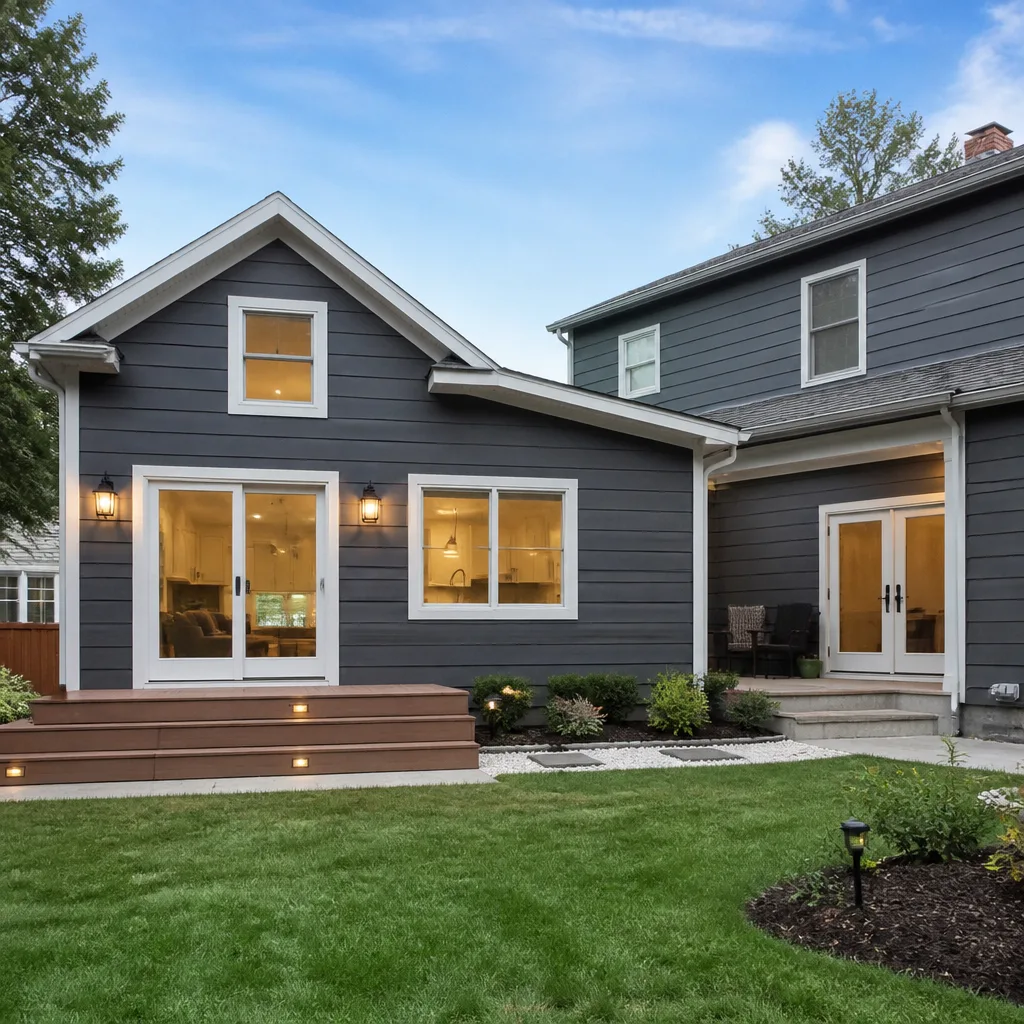
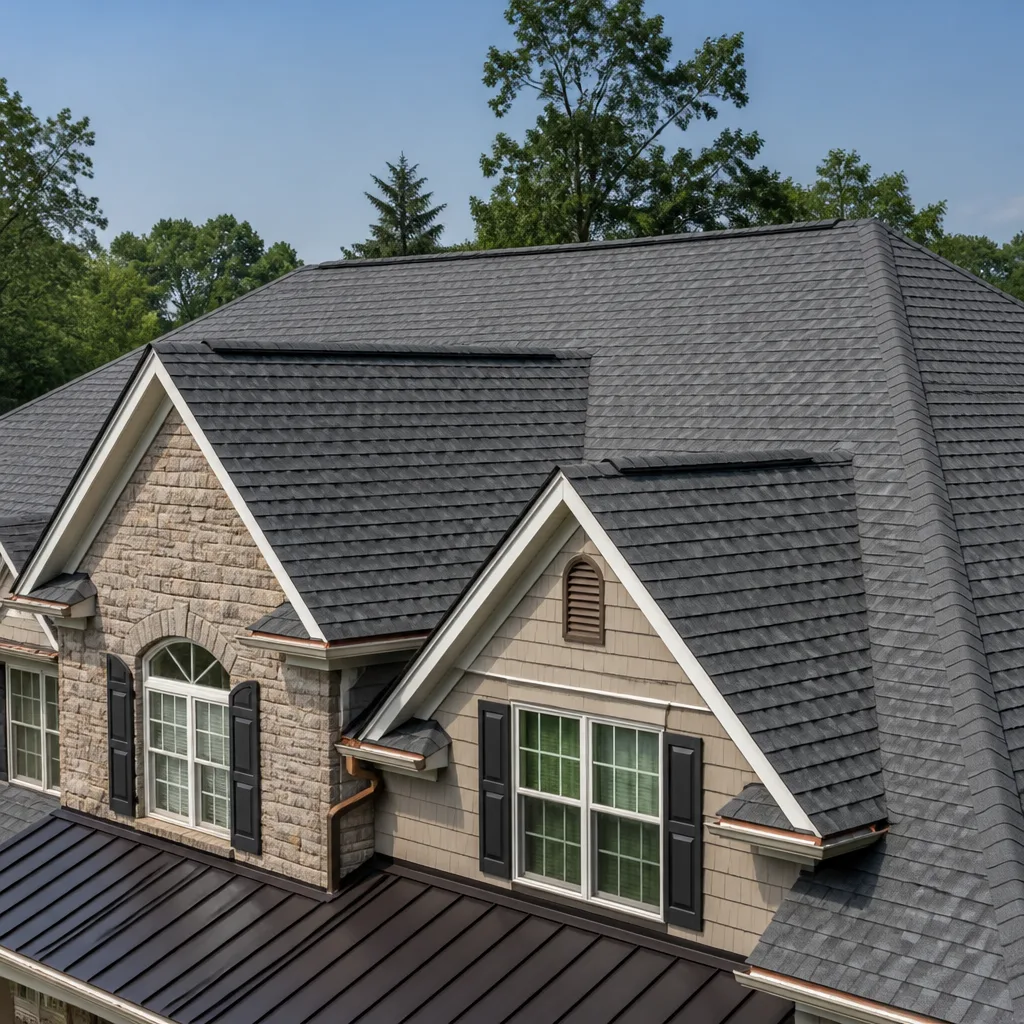
 Before
 After
After Before
 After
After Before
 After
AfterJames Hardie Kitchen Remodeling: The Los Angeles Owner’s Guide
If you’re remodeling a Los Angeles kitchen with James Hardie products, a full project typically runs $16,520 – $53,100 depending on cabinet line, countertop material, and how much of the room’s shell gets rebuilt. We carry and install James Hardie-compatible materials on nearly every kitchen we touch in Los Angeles, and we can usually start a project within two to three weeks of a signed written quote. Most Los Angeles homeowners call us because their kitchen has one failing element, a cracked countertop, a water-damaged cabinet run, a backsplash pulling away from the wall, and they want to know if it’s worth repairing that one piece or pulling the whole room together.
Here’s what we tell them: if the problem is isolated and the rest of the kitchen is sound, targeted work makes sense. If the substrate (the structural layer behind your tile and counters) is compromised, fixing one piece often means opening up everything behind it anyway. Either way, the price goes in writing before we pick up a tool.
Which James Hardie Models This Applies To
James Hardie doesn’t make kitchen cabinets or countertops. They make fiber cement siding, trim, and backer board, and that backer board matters more in a Los Angeles kitchen than most homeowners realize. If your walls are clad in HardieBacker cement board, the half-inch version is rated for walls, the quarter-inch for floors and countertops. Getting that backward is a common failure point we see in older Los Angeles remodels.
The compatibility question that actually matters for your kitchen: which generation of HardieBacker board is inside your walls? Older boards, installed before roughly 2010, lack the EZ Grid scoring system and have a different density than current production. That matters when we’re tying new tile work into existing sections. We match the board thickness and density so the seam between old and new doesn’t telegraph through your tile as a hairline crack six months later.
For the products around the backer board, cabinets, counters, fixtures, we work with KraftMaid and Wellborn cabinetry, Cambria and Silestone countertops, and Kohler and Moen fixtures. Penhallow Remodeling is an independent contractor, not affiliated with James Hardie, but we specify and install their products daily because the material holds up in coastal Los Angeles humidity and the dry heat of the Valley.
Signs Your James Hardie Kitchen Remodeling Is Failing
- Grout cracking along the countertop-to-backsplash seam. This usually means the counter substrate is flexing or the cabinet beneath has settled. In Los Angeles, we see it most in older homes on hillside lots where the foundation shifts seasonally.
- Tile sounding hollow when tapped. The thinset bond has failed, usually because the HardieBacker wasn’t properly moistened before tiling. Cement board draws moisture out of thinset fast, and if the installer skipped that step, the tile loses its grip over time.
- Swelling or staining at cabinet bases. Water finds the lowest point. A slow leak under the sink or at the dishwasher connection wicks into the particleboard cabinet boxes, and by the time you see it, the box is usually compromised.
- Caulk pulling away around the sink or cooktop. If the caulk bead was applied over a dirty or damp surface, it never bonds properly. In Los Angeles kitchens without enough ventilation, the constant heat-humidity cycle works the bead loose within a season.
- Doors and drawers that stick in summer. Los Angeles coastal areas carry enough airborne moisture that wood cabinet components swell, especially in homes without air conditioning running consistently. If the problem disappears in winter, it’s humidity, not hinge failure, but repeated cycles will fatigue the joinery.
Replacement Cost & What’s Included
In Los Angeles, a kitchen remodel with James Hardie substrate work and mid-range finishes runs $16,520 – $53,100. The spread comes down to three things: cabinet line (stock vs. semi-custom from KraftMaid or Wellborn), countertop material (laminate at the low end, Cambria quartz at the high end), and whether we’re replacing the backer board or building on what’s already there. A smaller kitchen with stock cabinets and a laminate top can come in around $10,620 – $23,600. Cabinet installation alone lands at $4,720 – $15,340, and countertops run $2,360 – $7,670.
Every price we give includes the written number, the labor, the materials, and the cleanup. No change orders because we forgot a line item. No verbal ballpark that becomes a surprise at the door. The number Trevor Nash gives you before work starts is the number on your invoice, and the 365-Day Done Right Promise backs it in writing: if something fails inside a year, we come back and fix it at no charge.
DIY or Call Us?
You can safely check for the water source yourself: run the dishwasher, run the sink, look under the cabinet with a flashlight. But once you’re talking about pulling tile off HardieBacker, cutting out sections of cement board, or shimming cabinets to stop countertop flex, that’s a job for a trained crew. Cement board dust is silica-based and bad for lungs without a proper respirator, and a tile saw will throw that dust through a Los Angeles kitchen fast. Structural wall work, any wall bearing load from above, is not a weekend project.
We’re an independent contractor, and our techs are background-checked and uniformed on every job. Call (936) 259-2607 and give me the whole picture first, then we pick up the tools.
FAQs
HardieBacker cement board itself doesn’t degrade from moisture the way drywall does, so it typically lasts the life of the kitchen, 30 to 50 years, in a properly installed Los Angeles remodel. What fails first is usually the tile bond, the grout, or the cabinet substrate beneath it, not the board itself. If the board is failing, it’s almost always because water has been sitting against a seam or a fastener for years. Call (936) 259-2607 and we’ll tell you what’s actually failing before we talk price.
Individual cracked or hollow tiles can often be popped off and reset without touching the surrounding field, provided the HardieBacker underneath is still intact and bonded. If the substrate is compromised, a patch job will fail again in six to eighteen months, and that’s when replacement becomes the honest answer. Penhallow Remodeling gives you a written repair quote and a written replacement quote side by side so you can decide with the numbers in hand.
A full kitchen remodel with substrate work, cabinet replacement, and new countertops typically runs four to eight weeks in Los Angeles, depending on cabinet lead times and whether we uncover hidden damage once the room is opened up. The written timeline we give you includes the arrival window, and the 365-Day Done Right Promise covers what happens after we leave. Call (936) 259-2607 for a project timeline on your specific kitchen.
We keep quarter-inch and half-inch HardieBacker board in stock on our trucks for repairs and smaller projects, and we order project-specific James Hardie materials for full remodels. Countertops and cabinetry are ordered per job because the material needs to be fabricated to your exact layout. For brands like KraftMaid, Cambria, and Silestone, we order from regional suppliers to keep lead times short in the Los Angeles market.
Ready to price your James Hardie kitchen remodel in Los Angeles? Call (936) 259-2607 and we’ll schedule a free estimate. The price goes in writing before the first cabinet gets pulled.
Written by Trevor Nash, Owner, Penhallow Remodeling at Penhallow Remodeling, serving Los Angeles and nearby areas.