
Free written scope consultation - allowances, timeline, and change-order rules on paper before a single trade is scheduled
 Before
 After
After Before
 After
After Before
 After
AfterOldcastle Roofing: The Los Angeles Owner’s Guide
Oldcastle roofing replacement in Los Angeles typically runs $470 – $2,125 for a repair and $9,440 – $23,600 for a full reroof, depending on which part of the system failed and how much of the roof is involved. Most homeowners find us the same way: an attic stain after a hard rain, a tile that slid out of place during Santa Ana winds, or a section of underlayment that finally gave out after years of direct sun on the Westside. And when that happens, you want someone who knows Oldcastle’s product line well enough to match the part correctly the first time.
We’re an independent Los Angeles remodeling and repair contractor, not an Oldcastle-owned company, but we install and spec Oldcastle-compatible roofing components regularly. That independence matters because we don’t have to sell you a brand-specific expensive replacement when an honest aftermarket equivalent will do the same job for less. We’ll tell you the difference straight, so you can decide with a written price in front of you. Give me the whole picture first, then we pick up the tools.
Which Oldcastle Models This Applies To
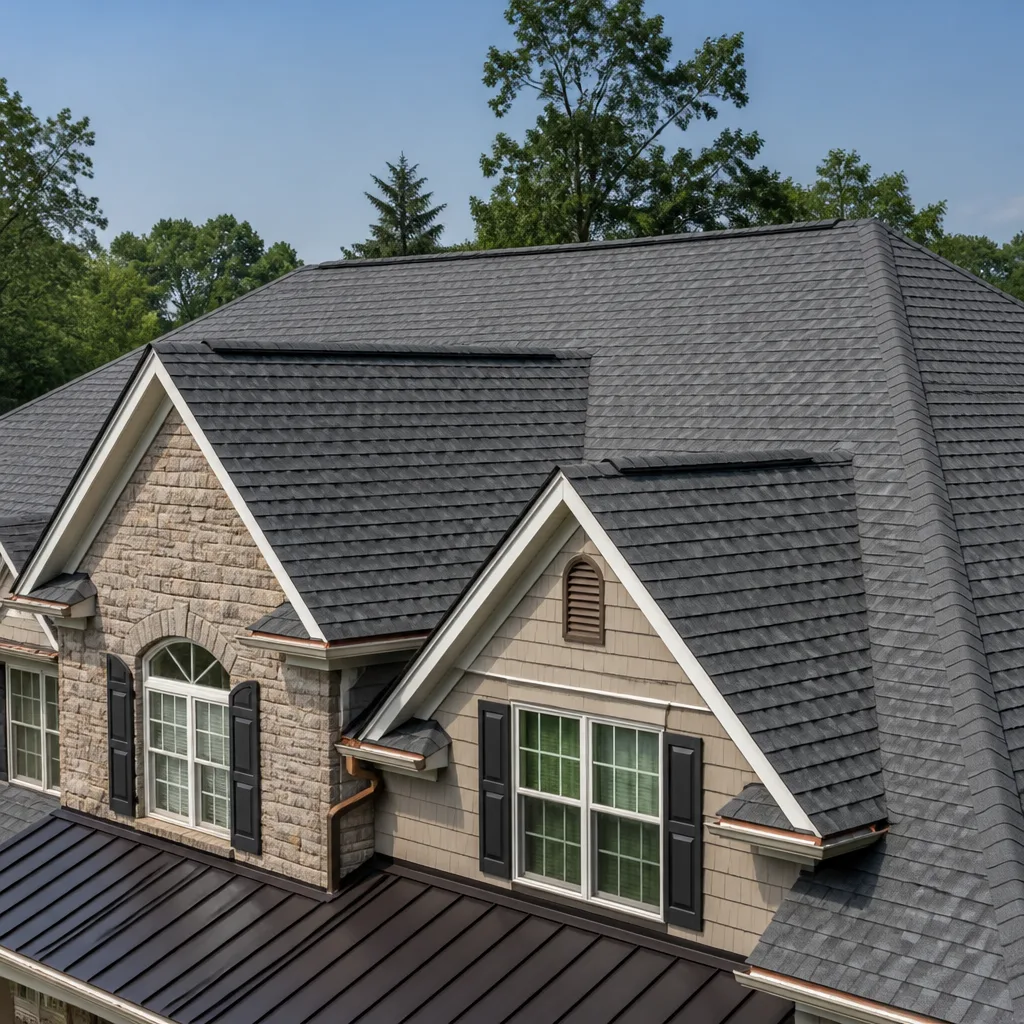
Oldcastle produces roofing materials under several product lines that show up across Los Angeles homes, from the steep clay-tile roofs of Toluca Lake to the flat modified-bitumen systems common in Mid-City duplexes. The most frequent Oldcastle parts we match are barrel and flat profile clay or concrete roof tiles, ridge caps, hip starters, and the pre-formed flashing components that go with them. Compatibility is rarely as simple as “one tile fits all” because Oldcastle’s clay tile profiles are manufactured with specific water channel depths, side-lock geometry, and a weighted butt measurement that varies between their two-piece and one-piece systems.
The reliable way to identify the right oldcastle-compatible part is to look at the back of an existing tile: Oldcastle stamps a plant code and sometimes a profile designation into the clay before firing. A tile from their Corona, CA plant will have a different stamp than one from their Texas facility, and the clay color will shift slightly by production run. If the stamp is weathered away, we measure the flat width, water channel depth, and the nose-to-butt radius with calipers. That spec detail matters because a tile that is 3/8″ too shallow will allow wind-driven rain to enter the underlayment, and no amount of roof cement will fix that. We also match OEM ridge caps by their radius profile. If a true Oldcastle clay tile is no longer in production for your specific profile, we’ll recommend a quality aftermarket replacement from a brand like US Tile that matches both the profile geometry and the fired color within tolerance, and we’ll show you both options before you commit.
Signs Your Oldcastle Roofing Is Failing
- Broken or slid clay tiles along the eaves. Southern California’s freeze-thaw cycle is less frequent than people assume, but it still happens, especially in the canyons around Sherman Oaks and Studio City. When water gets under a tile and the temperature dips, the ice expands and fractures the tile from the underside. The same expansion eventually loosens the tile from its fastening and it slides, especially on any roof pitch steeper than 4:12.
- Dark water stains or drips on the plywood sheathing you can see from the attic. In Los Angeles, this almost always traces back to a torn or brittle underlayment, not the tile itself. Clay and concrete tiles shed water, but the underlayment is the actual waterproof layer. Once it tears at a tile nail or shrinks at a pipe boot, water has a direct path to the decking.
- Cracked ridge caps or missing mortar at the hip lines. Ridge caps take the most expansion movement on any roof because they sit at the apex and are bedded in mortar that hardens and spalls over time. The mortar cracks, the cap shifts, and wind gets under the cap and lifts it. Once one cap lifts, the rest along that line loosen in sequence.
- Visible daylight through the tile gaps when you’re in the attic on a sunny day. That means a tile has fractured or a side-lock has broken completely. If you can see light, you can see rain. One broken tile along a valley is enough to start water collecting in the underlayment below it, and by the time a ceiling stain appears in the living room, the sheathing has been wet for weeks.
- Tile granules or clay chips in the gutters and downspouts after every rain. This is not normal wear. It’s spalling – the fired clay surface breaking away because water has been trapped against it for too long. Spalling usually points to a blocked water channel behind the tile or failed flashing upslope that is keeping the tile wet after every storm.
Replacement Cost & What’s Included
For a targeted oldcastle roofing repair in Los Angeles, you can expect to pay between $470 and $2,125. That covers a site visit, the replacement tile or cap matched to your profile and color, the fastening and bedding materials, and the labor to set it correctly. When the repair involves replacing a larger section – a full slope, a valley, or a ridge line – that range climbs into the $2,000 to $4,500 territory depending on how many tiles are involved and whether the underlayment below must be opened and replaced. A complete reroof with oldcastle-compatible materials runs between $9,440 and $23,600 in Los Angeles, and the spread is driven by roof pitch, tile count, tear-off of the old system, and whether the existing decking is still sound.
What you get with us, on any oldcastle roofing repair, is a written price before work starts. Not a range on a voicemail. Not a verbal estimate that changes when the crew arrives. A written number that you can hold us to the day the work is done. The labor is covered by our 365-Day Done Right Promise: if the repair fails within a year of the original work, we come back and fix it at no charge, and there is no service call fee for that return visit.
DIY or Call Us?
There are a few things you can safely check from the ground or a ladder placed against the gutter without putting weight on the tile. Binoculars work well for this. You can count the number of broken or slid tiles you can see. You can note whether the ridge caps sit straight or are shifted. You can take photos of the stamp on the back of any tile that has already fallen into your yard, so you have it ready when you call. What you should not do is climb onto the tile itself. Clay and concrete tile roofs are load-limited: walking on a tile roof without using tile steps or walking boards will crack tiles underfoot, and the tiles you break will not be apparent until the next rain. More important, a tile roof on any Los Angeles house with a pitch steeper than 4:12 is a fall hazard, and the underlayment below becomes slippery with dust and moisture.
If you’ve already got multiple broken tiles, the damage under them is the part you cannot see from below. The repair starts with a close inspection. Call (936) 259-2607 and we’ll send someone out who knows what a broken oldcastle tile means for the layers underneath it – and who carries the matching parts on the truck to fix it in one visit.
FAQs
In the Los Angeles climate, an Oldcastle clay tile roof typically lasts 50 to 70 years on the tile surface, while the underlayment below it lasts 25 to 40 years depending on sun exposure and ventilation. Most “tile roof failures” we see in Los Angeles are actually underlayment failures happening below tiles that are still in good shape. The tiles outlast the waterproofing layer beneath them, which is why a mid-life underlayment replacement is often the right call instead of a full reroof. Call (936) 259-2607 for an honest assessment of which layer is failing before you pay for anything.
A hairline crack in a flat concrete roof tile can sometimes be sealed from underneath with a repair adhesive, but any clay tile with a full fracture or a broken side-lock should be replaced rather than patched. Adhesive repairs on clay tiles in Los Angeles fail within a season or two because the thermal expansion cycle between 50-degree winter mornings and 105-degree summer afternoons works the patch loose. We’ll only recommend a repair when it will actually hold – otherwise we’ll quote you the replacement, with a written price before any work begins.
Most single-part oldcastle roofing replacements – a tile, a ridge cap, a section of flashing – take one to two hours once the matching part is confirmed on site. Larger section replacements are typically one to two working days. What adds time in the Los Angeles market is not the labor, it’s the part match: finding a tile with the right profile and the right fired color can occasionally take a few days if the production run is out of stock. We carry the most common Los Angeles oldcastle profiles on the truck, which resolves most visits in a single trip. Call (936) 259-2607 and we’ll tell you over the phone whether your part is one we already have.
We stock a range of oldcastle-compatible tiles, ridge caps, and flashing profiles that appear on the majority of Los Angeles tile roofs, and we source OEM or aftermarket matches for everything else the same week. Because we’ve handled roof repairs across the Valley and the Westside for years, we know which oldcastle profiles are common in different neighborhoods – certain barrel tile shapes dominate in Silver Lake and Echo Park while flat shake profiles show up more in Pacific Palisades and Brentwood. We keep the high-frequency parts on the truck and have a short-order path for the rest.
Written by Trevor Nash, Owner, Penhallow Remodeling at Penhallow Remodeling, serving Los Angeles and nearby areas.