
Free written scope consultation - allowances, timeline, and change-order rules on paper before a single trade is scheduled
 Before
 After
After Before
 After
After Before
 After
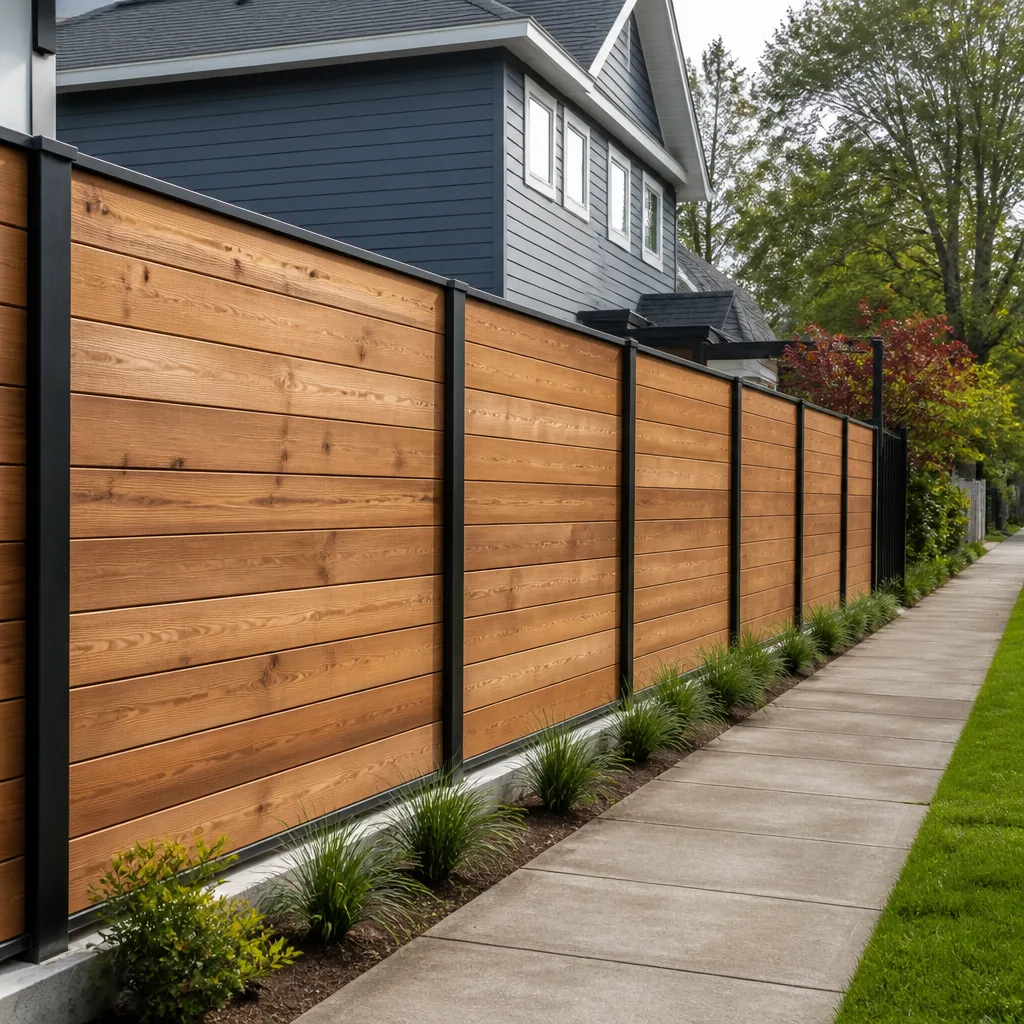
AfterPlant Prefab Fence Installation: The Los Angeles Owner’s Guide
If your Plant Prefab fence panel has cracked, warped, or pulled loose from its post, we can match it and install the replacement in Los Angeles, typically for $4,130 to $10,620 depending on linear footage, post condition, and whether we’re reusing the existing concrete footings. Most owners discover the problem the same way: a panel that looked fine last season suddenly shows a split down the face, or a gate that dragged all winter has finally pulled its hinge screws out of the post. We stock common Plant Prefab-compatible fence hardware on our trucks, and we’re an independent service provider, not affiliated with Plant Prefab.
Before we get into the details, here’s what you’ll want to remember if you’re skimming: the installed cost runs $4,130 to $10,620 in LA, the panel itself is rarely the only failed component (posts and hardware matter just as much), and most fence installations we handle go in within one to two days once materials are on site. Call (936) 259-2607 for a written price before any work begins. You’ll get a real number, not a ballpark.
Key Takeaways
- Installed Plant Prefab-compatible fence installation in Los Angeles: $4,130 – $10,620
- We stock common panel sizes and fence hardware on the truck for faster service
- Every job gets a written price before work starts and a 365-Day Done Right Promise in writing
- Warped panels are usually a drainage problem, not a materials-only problem
- Call (936) 259-2607 for a free estimate
Which Plant Prefab Models This Applies To
Plant Prefab has produced several fence and screen panel systems over the years, and not all of them use the same post profile or rail spacing. The two we see most often around Los Angeles are the horizontal-slat style panels with aluminum top and bottom rails, and the vertical-board privacy panels that use steel post inserts. If you can find the product label on the back face of a panel or on the inside of the gate frame, that number tells us exactly what we’re matching. No label? We can usually identify the panel by measuring the board width, the gap spacing, and the rail-to-rail distance.
One compatibility gotcha worth knowing: Plant Prefab’s earlier panels used a 4-inch-wide slat with a 3/8-inch reveal, but later production switched to a 4-1/2-inch slat with a 1/2-inch reveal. That quarter-inch difference means a replacement board from the wrong series will throw off the entire visual rhythm of the fence. We measure before we order.
On the OEM-versus-aftermarket question: for composite slats and grooved boards, we order Plant Prefab-spec material whenever it’s still produced and in distribution. For hardware like gate hinges, post caps, and rail brackets, quality aftermarket equivalents in stainless or powder-coated steel are often better in the long run, especially in the marine layer corrosion zones from Santa Monica up through Malibu. We’ll tell you which makes sense for your project and why, and the price difference is in writing before we start.
We’re not a Plant Prefab dealer and we’re not affiliated with them. We’re a Los Angeles general contractor who works on a lot of prefab and panelized homes, which means we know how these fence systems integrate with the house, the hardscape, and the property line.
Signs Your Plant Prefab Fence Installation Is Failing
Fences fail slowly, then all at once. Here are the five symptoms we see most on Plant Prefab-style installations in Los Angeles, and what’s actually going on underneath each one.
- Splits running vertically through the panel boards. This is usually moisture cycling. LA’s dry summers and damp winters push and pull on wood and composite alike. Once a split opens, it widens every season until the board lets go at the rail.
- Gate sagging and dragging on the latch side. The top hinge post has shifted or the post itself has settled. Tightening the hinge screws won’t fix a post that’s moving in the soil. The post needs re-setting in new concrete or the gate needs a proper structural frame behind it.
- Panels pulling out of the post channels. The original install likely relied on small clips or friction-fit channels that have loosened over time. High winds through the San Fernando Valley can work a panel loose in a single season if the fasteners weren’t sized for wind load.
- Bottom boards swelling, cupping, or discoloring. Sprinkler overspray and soil contact are the usual culprits. Composite panels hold up better than wood, but even composite doesn’t love sitting in standing water after every irrigation cycle.
- Rust streaks below fasteners or post caps. In coastal Los Angeles neighborhoods, salt air eats through cheap hardware in a few years. We replace the rusted hardware before the corrosion spreads into the panel itself.
Replacement Cost & What’s Included
In Los Angeles, Plant Prefab-compatible fence installation typically runs $4,130 to $10,620. That’s the installed price, not just the materials. On the lower end, you’re looking at a partial panel replacement on sound posts, maybe 30 to 50 linear feet, with new hardware and a straight swap of the failed boards. On the upper end, you’re replacing most or all of the fence line, setting new posts in concrete, rebuilding the gate, and addressing drainage so the next fence doesn’t fail the same way.
| Scope | Typical LA Installed Range |
|---|---|
| Partial panel replacement (reuse sound posts) | $4,130 – $6,500 |
| Full panel replacement, existing posts re-set | $6,500 – $8,900 |
| Complete fence line including new posts and gate | $8,900 – $10,620 |
What drives the number: total linear footage, post condition, whether we’re pouring new footings or re-using the old ones, site access for digging, and the panel series you’re matching. Fences on sloped Los Angeles lots with retaining walls run higher because the post depths and drainage work are more involved.
Every estimate is a written line-item quote. The parts are listed separately from the labor. If the number changes, you’ll know exactly why before we pick up a tool, not after. And every fence installation carries our 365-Day Done Right Promise: if something we installed fails inside a year, we come back and fix it at no charge. That’s in writing, on every job.
DIY or Call Us?
There are a few things you can safely check yourself: whether the posts are plumb, whether the gate hinges have visible rust or loose screws, whether irrigation heads are spraying directly onto the boards. If the issue is a single loose hinge screw, tighten it. If the panel itself is cracked, warped, or pulling out of its channel, you’re past the hand-tool stage.
Fence post removal in Los Angeles soil is not a weekend project. Our ground swings between clay that grabs a post like concrete and sandy fill that lets posts lean with the first Santa Ana wind. Digging out a rotted post and setting a new one properly means getting below the frost line (not deep here, but deep enough for wind loading), plumbing it true, and giving the concrete a full cure before hanging panels. Most failed DIY fence repairs we see are posts that weren’t deep enough or concrete that never had time to set. Give me the whole picture first, then we pick up the tools. Call (936) 259-2607 and we’ll look at what you’ve got, tell you what it needs, and put the number in writing.
FAQs
In Los Angeles, expect 15 to 25 years from a well-installed composite or treated panel system with proper drainage, and 10 to 15 from wood if it’s getting hit by sprinklers or sitting against soil. The posts usually fail before the panels do, which is why we focus on footing depth and water management on every install. If you’re seeing signs of failure, call (936) 259-2607 for an inspection and written estimate.
Sometimes, if the damage is limited to one board or a single split and the rails and posts are still sound. But a cracked composite panel usually signals a larger movement issue, and a repair that doesn’t fix the movement only buys you a season. We’ll tell you honestly which direction makes sense for your fence, and the estimate covers both options when it applies.
Most partial panel replacements in Los Angeles are done in one working day. A full fence line with new posts and a gate typically runs two days: day one for demolition and new footings, day two for panel installation, gate mounting, and cleanup. The concrete needs time to cure before we put full load on the posts, which is why we don’t rush the second day.
We stock common rail brackets, post caps, gate hinges, and stainless hardware on our trucks. Slats, grooved boards, and full panels are ordered per project so the color and series match your existing fence exactly. That ordering lead time is built into the estimate, so the schedule we give you is the schedule we keep.
Written by Trevor Nash, Owner, Penhallow Remodeling at Penhallow Remodeling, serving Los Angeles and nearby areas.