
Free written scope consultation - allowances, timeline, and change-order rules on paper before a single trade is scheduled
 Before
 After
After Before
 After
After Before
 After
AfterTuff Shed Driveway & Pavers: The Los Angeles Owner’s Guide
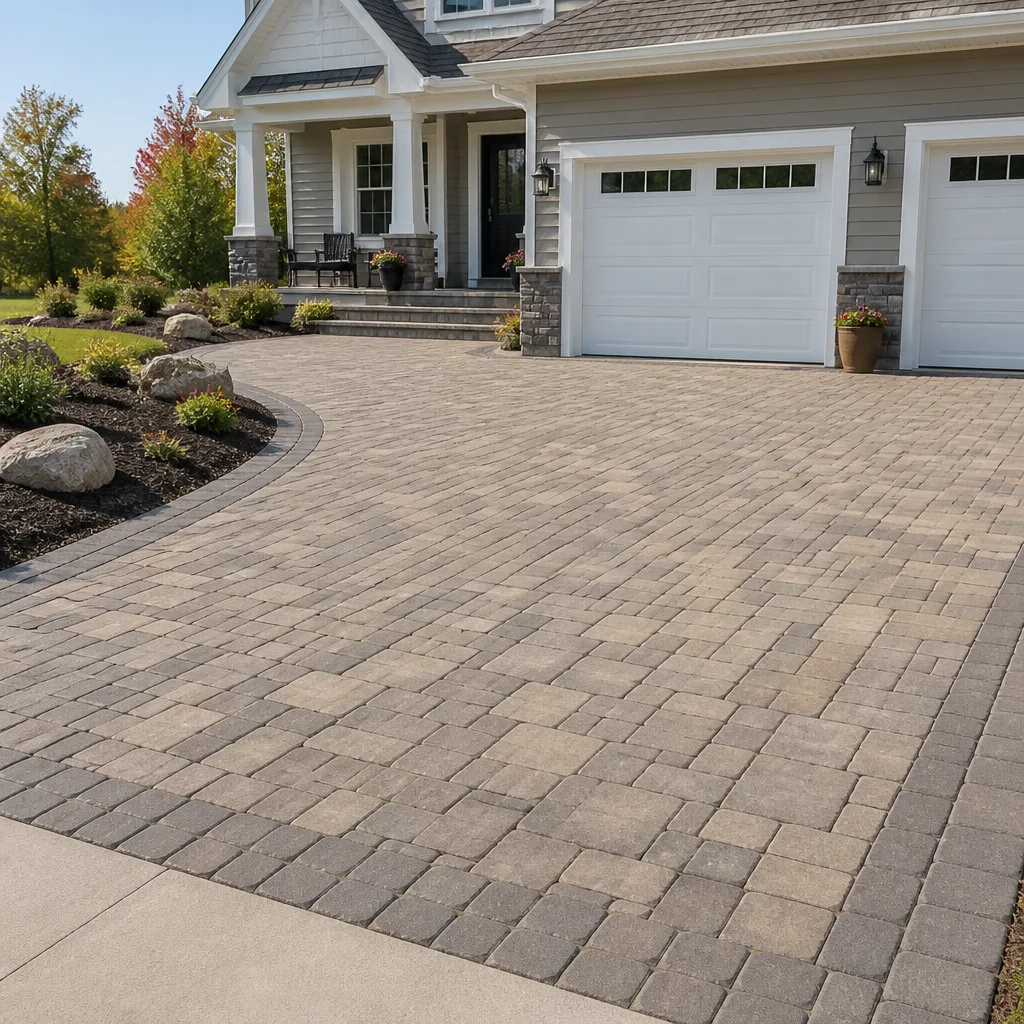
If the driveway or paver walk-up leading to your Tuff Shed has cracked, sunk, or shifted, we install Tuff Shed-compatible driveways and pavers throughout Los Angeles, with most paver driveway jobs running $8,260 to $21,240 depending on square footage, base condition, and paver style. We keep common paver units and base materials stocked locally, so a typical repair or replacement can start within days, not weeks. Most owners discover the problem when the shed door binds against the ground, when water pools against the foundation plates, or when the pavers that once sat flush now wobble underfoot.
We’re an independent Los Angeles contractor, not affiliated with Tuff Shed, but we’ve worked on enough of their outbuildings to know what the driveway and paver approach demands: a flat, stable surface that drains water away from the shed floor and doesn’t shift in our wet-dry clay cycles. This page covers which Tuff Shed setups we can match, what a failed paver base actually looks like, what replacement costs in Los Angeles, and whether you should attempt the fix yourself. Trevor Nash founded Penhallow Remodeling to put the price in writing before the first paver gets pulled, and this page does the same.
Which Tuff Shed Models This Applies To
Tuff Shed builds its sheds and garages on a few standard foundation systems, and the driveway or paver approach you have depends on which system the original installer used. We work with sheds built on concrete slabs, on treated wood floor systems, and on gravel or crushed stone pads. The paver driveway leading to the shed almost always sits on one of two bases: a sand-and-gravel compacted base (common for older installations) or a concrete slab base with pavers mortared on top (more common in newer Los Angeles installations, especially on sloped lots). Knowing which one you have changes the entire repair strategy.
Here’s the compatibility gotcha most owners miss: Tuff Shed’s standard door threshold sits at a very specific height above the pad, typically between 1/2 and 3/4 inches. If you lay new pavers at a different height than the original approach, the door either scrapes the pavers or leaves a gap that lets water and rodents in. We match the finished paver height to the threshold before laying anything, so the walk-up stays flush and functional. For paver selection, you don’t need anything branded by Tuff Shed itself. Quality aftermarket pavers from Belgard or Unilock, which we also source for paver patios, hold up better in Los Angeles heat and UV than cheaper box-store units, and they give us more size and color options to match an existing driveway or walkway.
Signs Your Tuff Shed Driveway & Pavers Is Failing
- Sinking or low spots near the shed door. The base layer under your pavers has likely washed out or wasn’t compacted properly. In Los Angeles, the wet winter followed by long dry stretches cycles the soil under pavers, and any gap in the base settles fast. Water then flows toward the shed instead of away from it.
- Pavers rocking or wobbling underfoot. This usually means the sand bedding between the pavers has eroded, or the edge restraint failed. The pavers still look fine from above, but the support underneath is gone. Walking on them only spreads the damage to neighbors as the load shifts.
- Growing gaps between pavers with weeds or ants. Gaps wider than a quarter inch signal edge drift. Once the outside row spreads, every row behind it follows. Ants excavating the sand below make the eventual settlement worse.
- Water pooling against the shed’s foundation or floor plate. The driveway or walk-up should pitch slightly away from the shed, usually a quarter inch per foot. When the paver surface goes flat or reverses pitch, water sits against the shed and starts working on the floor framing or the bottom wall plates.
- Cracked pavers near a path edge or wheel line. If you’re running a mower, wheelbarrow, or small tractor up to the shed door, the pavers along that line take repeated point loads. A cracked paver can usually be swapped, but if the base under it is soft, the replacement will crack the same way within a year.
Replacement Cost & What’s Included
For a full paver driveway installation serving a Tuff Shed in Los Angeles, we price the job at $8,260 to $21,240. The spread comes from three things: the square footage you need, the condition of the base (full excavation and recompaction costs more than a base that’s still solid), and the paver style you choose. Basic concrete pavers sit at the low end, while thicker modular units or a mixed paver and border pattern push toward the upper end.
What’s included: we remove and haul away the old pavers and base material, regrade and compact the new base for proper drainage, lay edge restraints so the field doesn’t drift, install the pavers, and sweep in joint sand. The number we give you before work starts is the number on the invoice, no change orders because we discovered a surprise halfway through. If a repair area is smaller, say 100 square feet of sunken walk-up, you’re looking at a fraction of the full driveway price, and we can usually write that line-item quote on the first visit. Every job carries our 365-Day Done Right Promise in writing: if the pavers shift or fail inside the guarantee period, we come back and fix it at no charge, and if a repair fails, the second visit is free too.
DIY or Call Us?
There are a few things you can safely check yourself. Walk the approach and note which pavers rock, where water drains, and whether the shed door clears the surface. If you see a single cracked paver in an otherwise flat field, you can often horse that one unit out and set a replacement on the same sand bed. That’s a two-hour Saturday owner project, and it works as long as the base underneath is still firm.
Where DIY goes wrong for most Los Angeles homeowners is the base. A sunken or drifted paver field means the problem is below the visible surface, not at it. Re-leveling a big area means pulling the pavers, excavating the failed base, recompacting with the right material in lifts, and re-setting with proper edge restraint. Do it halfway and you’ll be back out there in eighteen months, looking at the same low spot. If the drainage pitch has reversed toward your shed, that’s structural water management, and it’s worth a pro. Call us at (936) 259-2607 and we’ll come look, write up the exact scope, and put the price in writing before any tools come off the truck.
FAQs
A correctly installed paver driveway in Los Angeles typically lasts 25 to 40 years, but the base matters more than the paver itself. Our clay-heavy soil shrinks and swells seasonally, and any base undercompaction shows up in the first two rainy seasons after installation. We build to prevent that first failure.
Call (936) 259-2607 if your pavers are still shifting after someone else’s install, and we’ll tell you honestly whether it’s a repair or a redo.
Yes, if the sinkage is localized. We lift the affected area, recompact the base in that zone, and relay the same pavers if they’re not cracked. If more than a third of the field has settled, replacement usually costs less than chasing patches. Call (936) 259-2607 for an exact take after we see it.
Most full replacements run three to five working days in Los Angeles, including removal, base work, installation, and compaction. Small repair patches are often done in a single day. We’ll give you a written window before we start, and we show up inside it.
We stock common paver sizes, joint sand, and base rock for Los Angeles Tuff Shed jobs, and we can order Belgard or Unilock units in one to two days for color-matched work. If you’re matching an existing driveway, we’ll pull a sample and order to match. Estimates are free, and the price on your quote is the price you pay.
Written by Trevor Nash, Owner, Penhallow Remodeling at Penhallow Remodeling, serving Los Angeles and nearby areas.