
Free written scope consultation - allowances, timeline, and change-order rules on paper before a single trade is scheduled
 Before
 After
After Before
 After
After Before
 After
AfterUnilock Driveway & Pavers: The Los Angeles Owner’s Guide
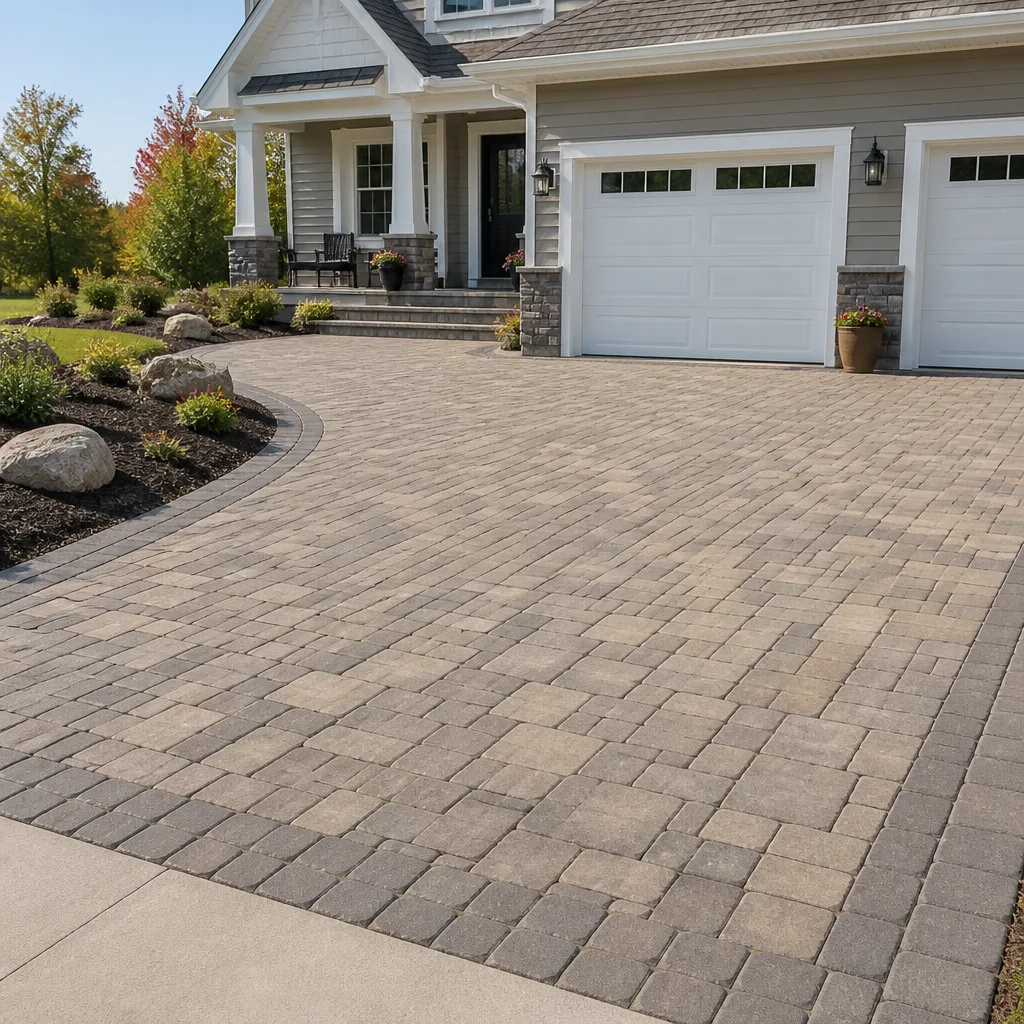
We stock and install Unilock-compatible driveway and paver materials throughout Los Angeles, with full paver driveway installations typically running $8,260 – $21,240 depending on square footage, paver line, and what’s underneath your existing surface. Most homeowners discover a problem the same way: a paver sinks into a soft spot after winter rain, edges start drifting apart, or a section of the driveway settles enough that the car bottoms out pulling in. If you’re seeing any of that, the paver itself usually isn’t the failure point. The base underneath has given way, and that’s where the repair has to start.
We’re an independent Los Angeles service provider, not a Unilock dealer or affiliate. That matters because we don’t have a brand agenda. If your existing pavers are still in solid shape, we’ll tell you that and quote you for base repair and re-installation of the same stones. If they’re cracked or heavily worn, we’ll walk you through replacement options from Unilock’s current catalog plus what we keep locally sourced from trade distributors in the LA basin.
Which Unilock Models This Applies To
Unilock splits its paver and driveway products into several series, and the compatibility question is usually the first thing we sort out on a call. The three lines we see most often on Los Angeles driveways are Estate (a mid-range concrete paver with a tumbled or standard finish), U-Cara (a multi-piece system with a face panel that locks onto a backing block), and Richcliff (a larger format, architectural paver that mimics cut stone). Within each series, colors and sizes vary. A Richcliff paver is a completely different animal from an Estate paver: different thickness, different joint spacing, different base requirements.
Here’s the compatibility gotcha that trips up a lot of LA homeowners. If your driveway was installed before roughly 2015, the exact Unilock color batch may no longer be produced. Concrete colors shift over manufacturing years, and Unilock retires certain color lines entirely. That means a mid-driveway repair with new pavers can look noticeably different from the surrounding stone. When that happens, we match as closely as current production allows, and we’ll level with you about whether a partial repair makes sense or whether the visual break is bad enough that full replacement is the better call. In some cases we can pull matching pavers from less visible areas (behind a planter, under a side gate) and use the new pavers in that low-visibility spot. It’s a small trick, but it keeps the driveway looking uniform where it actually matters.
On the OEM versus aftermarket question for Unilock specifically: Unilock manufactures its own pavers, so there isn’t a traditional aftermarket equivalent like you’d find with appliance parts. What exists instead is a range of other manufacturers (Belgard, Calstone, Angelus) producing pavers with similar dimensions and prices that are sometimes 10 – 20% lower. We’ll quote Unilock by name when that’s what you want, but we also stock Belgard and Calstone for clients who want a premium look at a slightly softer price. You decide based on the written estimate, not on a sales pitch.
Signs Your Unilock Driveway & Pavers Is Failing
- Sunken or depressed sections, especially near the street or garage apron. In Los Angeles, this almost always traces back to base compaction. The native soil here is a mix of expansive clay and decomposed granite, and when the clay gets wet and dries repeatedly, it moves. A paver driveway installed over an uncompacted or thin base will sink within the first few winters.
- Pavers rocking when you step on them. This is usually a sand bedding issue. The bedding sand layer underneath the pavers has washed out through the joints or eroded after heavy irrigation. Once the sand goes, the pavers lose their seat and start rocking.
- Widening gaps or drift at the edges. Edge restraint failure. The plastic or concrete border that pins the outer pavers in place has cracked or pulled away, and the whole field starts creeping outward. You see this a lot on driveways where car tires repeatedly bear down on the outside edge.
- White chalky film or flaking on the paver surface. Efflorescence and surface spalling. Efflorescence is a cosmetic salt deposit that cleans up with the right treatment. Spalling (the top surface flaking off in thin layers) is a materials problem, often from freeze-thaw cycles that are rare in Los Angeles but do happen at higher elevations, or from pavers that were improperly sealed years ago.
- Weeds pushing up through joints constantly. This tells you the joint sand has washed out and likely some of the bedding sand along with it. The weeds aren’t just a nuisance; they’re a symptom that water is getting under the pavers and carrying the base away.
Replacement Cost & What’s Included
For Los Angeles homeowners, a full paver driveway replacement runs $8,260 – $21,240 installed. A partial repair or section replacement, where we pull up a failed area, re-compact the base, and reinstall pavers, typically lands between $1,800 and $6,500 depending on how many square feet and how deep the base failure goes. If you’re looking at a paver patio rather than a driveway, that range is $4,130 – $12,980.
What drives the number most is the depth of the excavation and what we find underneath. If the original installer poured a proper base of 4 – 6 inches of compacted aggregate with geotextile fabric, a repair is cheaper. If we open it up and find pavers sitting on two inches of sand over bare clay, the fix means digging deeper, adding proper base material, compacting in lifts, and then reinstalling. The paver itself is often the smaller line item. Labor, base materials, and haul-away of the old surface are what move the total.
Every estimate we write includes the full scope in writing: excavation depth, base material type and thickness, paver line and color, edge restraint, joint sand, and cleanup. You get that number before we start, and the number on day one is the number on the invoice. The work carries our 365-Day Done Right Promise, which is written into the contract: if something fails in the first year, we come back and fix it at no charge.
DIY or Call Us?
You can safely check a few things yourself. Look at your edge restraints: if you can see plastic border pulled away from the pavers, that’s a smoking gun. Check for standing water or soft spots after rain. Note where the sunken areas are so you can describe them accurately on the phone. What you shouldn’t do is start pulling pavers. Once the edge restraint is compromised, removing pavers without a plan can make the drift worse, and re-compacting a base properly takes plate compactors and a decent understanding of drainage slopes. The other danger we’re honest about: pavers weigh between 15 and 30 pounds each, and a full driveway project moves several tons of material. It’s back-breaking work if you’re not set up for it.
If you want an honest assessment of whether your existing pavers can be saved, call (936) 259-2607. We’ll schedule a time, walk the driveway with you, and tell you what we’d do if it were our house. The estimate is free, and it’s in writing.
FAQs
A properly installed Unilock paver driveway in Los Angeles lasts 25 to 40 years on the surface, with the base lasting longer if drainage is handled correctly. What shortens the lifespan here isn’t the paver, it’s the water. LA’s clay soil expands and contracts with moisture, and any base that wasn’t compacted properly will start failing in the first 3 to 5 years. If you’re seeing failure that early, the problem is almost always installation, not the paver. Call (936) 259-2607 and we’ll tell you what’s actually going on underneath.
Yes, in most cases. If the pavers themselves are intact and the sinking is limited to a defined area, we lift the affected pavers, excavate and re-compact the base, add fresh bedding sand, and relay the same pavers. This runs significantly less than full replacement. The caveat: if the entire field has dropped because the original base was too thin everywhere, a patch repair won’t hold long-term. We’ll tell you straight which situation you have before quoting anything.
A standard two-car paver driveway replacement in Los Angeles takes 3 to 5 working days from demolition to final compaction and joint sand. Partial repairs are usually done in a day. Weather is rarely a delay in LA, but scheduling around your access needs (you won’t be able to drive on it for 24 – 48 hours after compacting) is part of the plan we write into the estimate.
We keep common Unilock-compatible pavers available through our trade distributors in the LA area, which means most standard lines can be sourced within a few days. Specific colors and larger-format lines like Richcliff sometimes take a week or two. We also stock Belgard and Calstone pavers for clients who want options at a different price point. When we write your estimate, we’ll include the exact paver line, color, and lead time so there are no surprises.
If your Unilock driveway is failing, don’t wait until the next rain season makes it worse. Call (936) 259-2607 or reach out through our site and we’ll schedule a free estimate. Trevor Nash will walk the job with you, answer the hard questions, and put the price and the promise in writing before any work starts. Give me the whole picture first, then we pick up the tools.
Written by Trevor Nash, Owner, Penhallow Remodeling at Penhallow Remodeling, serving Los Angeles and nearby areas.