
Free written scope consultation - allowances, timeline, and change-order rules on paper before a single trade is scheduled
 Before
 After
After Before
 After
After Before
 After
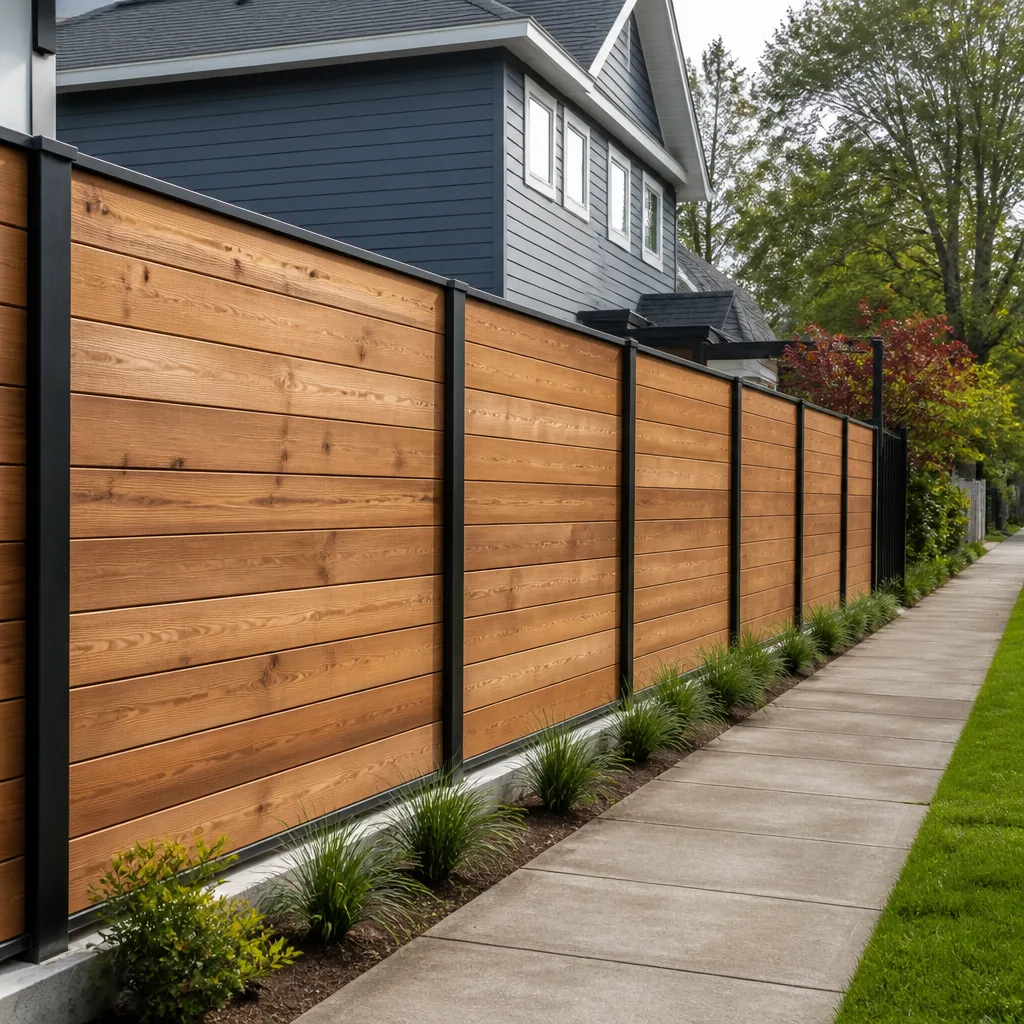
AfterUnilock Fence Installation: The Los Angeles Owner’s Guide
Unilock fence installation in Los Angeles typically runs $4,130 – $10,620 for a complete project, depending on linear footage, fence style, and whether we’re working with existing Unilock posts or starting fresh. Most owners call us because a section has started leaning after a rain, a gate won’t latch, or the original install simply didn’t hold up to our clay soil and hillside drainage. We stock Unilock-compatible fence components on our trucks and can usually schedule an assessment within days, not weeks.
Here’s what we see most often: a homeowner had a Unilock fence put in five or ten years ago, loved the look, then watched a post shift after a wet winter. The concrete footer cracked, water got in, and now the whole section pulls away from the gate. It’s not a full replacement every time, but when the base is compromised, patching rarely buys more than a season. We’ll tell you which one you’re dealing with before we quote anything.
Key Takeaways
- Installed Unilock fence pricing in Los Angeles runs $4,130 – $10,620 for typical projects.
- We are an independent installer, not a Unilock-owned service, and we source genuine Unilock components plus proven compatible hardware.
- Most failures trace back to the post footing, not the panel or cap itself.
- We put a written price in your hand before any work starts, and every install carries our 365-Day Done Right Promise.
Which Unilock Models This Applies To
Unilock’s fence systems fall into a few broad families, and the part you need depends on which one you have. The Artline series uses modular posts and panels with a clean, modern face. The Estate Wall line pairs larger blocks with fence sections, often used for property borders in neighborhoods like Porter Ranch, Chatsworth, and La Cañada Flintridge. The U-Cara panel system uses mechanical fasteners rather than glue, which matters when a section fails: you can often replace one panel without rebuilding the post, if the post is still sound.
Identifying your exact part starts with the post. Look for a molded stamp on the back or underside of the block, usually a small code near the bottom edge. Measure the post’s width and the panel’s length in inches, not feet, because Unilock manufactures to metric tolerances that convert awkwardly. A 4-inch post from another brand won’t interchange with a Unilock 100-millimeter post, even though they look close at a glance. That’s the most common buying mistake we see: someone grabs a “similar” block from a big-box store, then wonders why the cap sits proud or the gate hinge binds.
For most Los Angeles installations, we recommend genuine Unilock components where the fence is load-bearing or supports a gate. For non-structural accents and cap replacements, proven aftermarket equivalents can save real money without compromising the look. We’ll tell you which is which on the estimate, and we never mix part qualities to shave a few dollars on the back end.
Signs Your Unilock Fence Installation Is Failing
- The gate drags or won’t latch. Usually the post the gate hangs from has settled or rotated. In Los Angeles clay, a post set in a shallow footer will move every wet-dry cycle until the gate hardware can’t align.
- A section leans away from the rest of the fence. This is a footing failure, not a panel problem. The original install may have used too little concrete or skipped rebar, and now the weight of the fence is working against gravity.
- Caps are popping off or sitting uneven. Thermal expansion and UV exposure degrade construction adhesive over time. Loose caps signal that water has been getting into post cores, which accelerates block spalling.
- You see hairline cracks running vertically through posts. In freeze-thaw zones this is classic water expansion, but in Los Angeles it’s more often caused by a bent rebar or the post being forced out of plumb and carrying load it wasn’t built for.
- White mineral staining near the base of the fence. Efflorescence isn’t structural by itself, but it shows water is moving through the block. On a hillside lot in Studio City or Baldwin Hills, that water movement is what eventually undermines the footing.
Replacement Cost & What’s Included
Installed Unilock fence replacement in Los Angeles runs $4,130 – $10,620, with most full-perimeter projects landing between $5,900 and $8,260. The range breaks down by how many linear feet you’re doing, whether the existing posts can be reused, and whether the job involves a gate or a corner that needs stepped footings on a slope.
| Scope | Typical Installed Range |
|---|---|
| Replace 25 – 40 linear feet, reuse sound posts | $4,130 – $5,310 |
| Replace 40 – 60 linear feet, new posts and panels | $5,900 – $7,670 |
| Full fence rebuild with gate and slope work | $8,260 – $10,620 |
Every number we quote includes parts, labor, haul-away of the old material, and a written guarantee on the work. You get the line-item price before we start, not after the old fence is in a pile. If a repair fails inside 365 days, we come back and fix it at no charge. That’s the Penhallow promise, and it’s in writing on every project.
DIY or Call Us?
You can safely check a few things yourself: mark a leaning section with a line level to see if it’s moving further over a week, dig down beside a post to check whether the footer is intact, and measure your post and panel dimensions before buying anything. Those are useful diagnostics that help us quote faster, and you should feel free to gather them before you call.
Where DIY goes wrong is the footing. Re-setting a Unilock post so a gate carries weight without sagging requires a deeper footer than most hand-dug holes, proper rebar placement, and patience with cure time. Get it wrong and you’ll pay twice: once for the materials, once for us to remove the patch job and redo it correctly. For a fence that borders a neighbor’s slope or supports a heavy gate, the risks stack up fast. Call (936) 259-2607 and we’ll take a look. You’ll get a written number before anything gets touched.
FAQs
A properly installed Unilock fence should last 25 to 40 years in Los Angeles, with the block itself outlasting most components. What shortens that lifespan here is footing movement in expansive clay and hillside drainage, so we set posts deeper than minimum code and add drainage gravel where water tends to collect. Call (936) 259-2607 and we’ll quote your specific situation.
Yes, if the block and panel are intact and only the footing has shifted, we can remove the section, re-set the posts on a proper base, and reinstall the same materials at about 40 – 60% of full replacement cost. If the block is cracked or spalled, patching looks wrong and fails quickly. We’ll tell you which category you’re in when we inspect it.
Most residential Unilock fence replacements in Los Angeles take 3 to 5 working days from removal of the old section to final cap placement, with a day of cure time before gates receive their full load. Larger slopes, stair-stepping, and custom gate hardware extend that. We’ll give you a defined arrival window and keep the job site clean each day.
We carry the most common Unilock post caps, panel connectors, and gate hinge sets on our service trucks, and we can order exact-match block and panel replacements for any current Unilock line, usually within a week. If you need a discontinued part, we’ll tell you honestly whether it’s still obtainable or whether a compatible substitute will look right. Call (936) 259-2607 for exact availability.
If your Unilock fence is leaning, cracking, or just doesn’t shut the way it used to, let’s get the whole picture first. Call (936) 259-2607 and we’ll schedule an assessment. You’ll get a written price before any work starts, a defined arrival window, and a 365-day promise that if it’s not done right, we’ll make it right.
Written by Trevor Nash, Owner, Penhallow Remodeling at Penhallow Remodeling, serving Los Angeles and nearby areas.