
Free written scope consultation - allowances, timeline, and change-order rules on paper before a single trade is scheduled
 Before
 After
After Before
 After
After Before
 After
AfterUnilock Home Additions & ADU: The Los Angeles Owner’s Guide
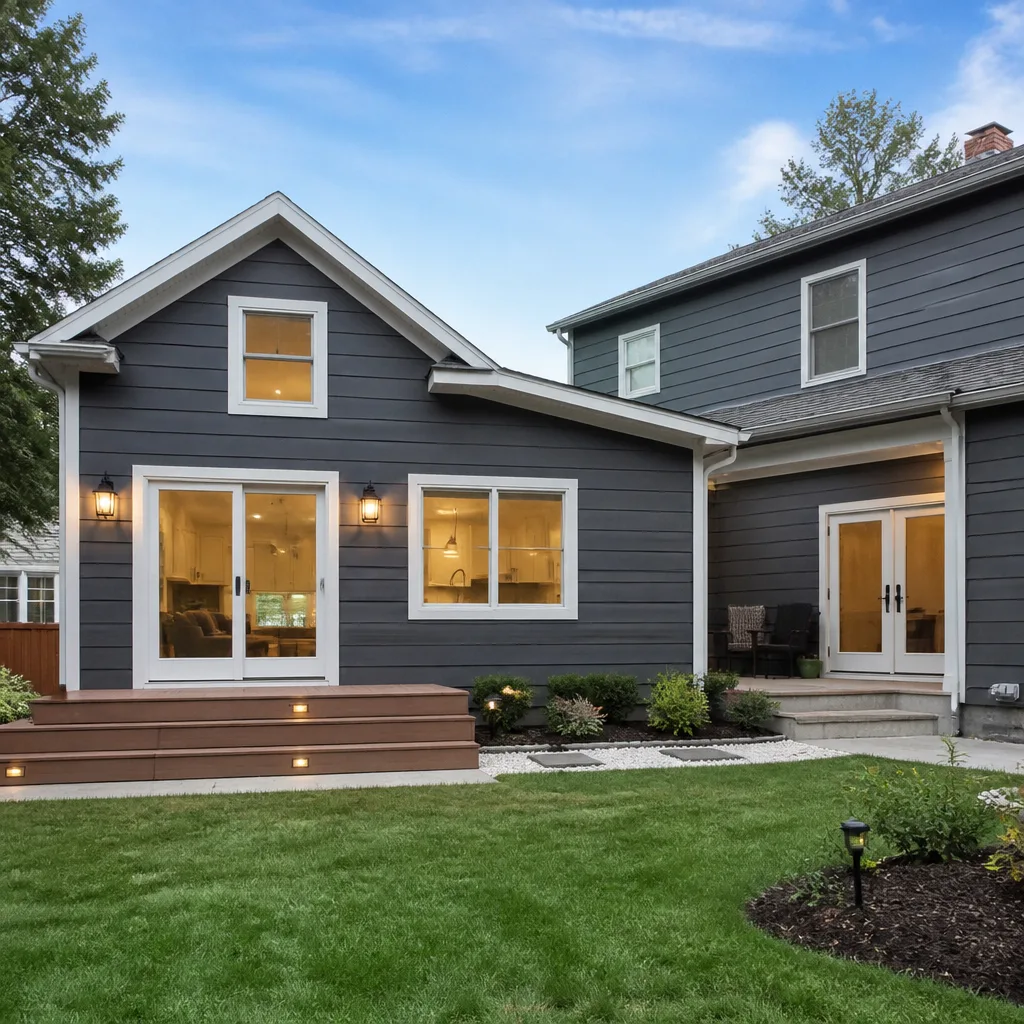
If you’re planning a home addition or ADU in Los Angeles using Unilock paver and wall systems, you’re looking at an installed project cost of $53,100 to $153,400 for a full home addition, or $106,200 to $259,600 for a detached ADU. That’s the honest range we quote across LA neighborhoods, from Studio City to West Adams, and it includes the Unilock materials, site work, and the structural build. We’re Penhallow Remodeling, and we install Unilock-compatible systems on additions and ADUs throughout Los Angeles – and before you ask, yes, we put that number in writing before anything gets dug.
The Part Nobody Thinks About Until It Fails
Most homeowners come to us thinking about the big stuff: the roof line, the foundation, the ADU’s kitchenette. What catches them off guard is the hardscape interface, the Unilock retaining walls, paver transitions, and step units that tie the new structure to the existing grade. In Los Angeles, where clay-heavy soil in neighborhoods like Los Feliz and Silver Lake expands with winter rain and shrinks through dry summers, a poorly prepared base under Unilock pavers will heave within two seasons. What fails first isn’t usually the paver itself, it’s the base layer beneath it, or the edge restraint that was never pinned correctly. That’s the part we get called back to fix, and it’s the part we build differently from the start.
What’s less visible is the connection between your Unilock hardscape and the new structure’s drainage. An ADU slab poured too close to a Unilock retaining wall without an adequate drainage column behind it will trap water against the wall. Give it a few wet LA winters and you’ll see bulging, cracking, and eventually wall failure. We see it regularly in hillside neighborhoods like Echo Park and Mount Washington, where the grade pushes water straight toward the new build.
Which Unilock Systems This Applies To
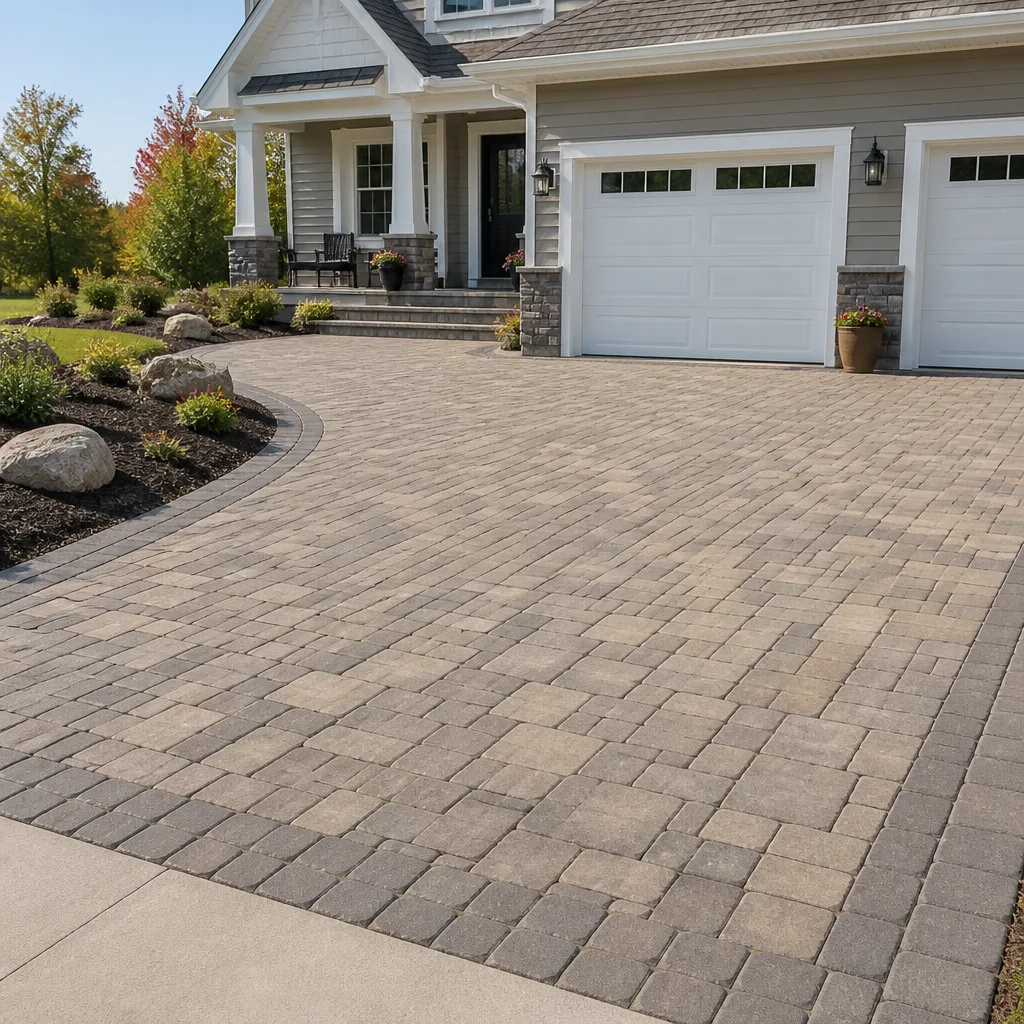
We work with the full range of Unilock product lines used in Los Angeles additions and ADU projects: Beacon Hill flagstone-style pavers for patios and walkways, Brussels Block and Courtstone for driveways and transitional areas, and the U-Cara multi-face wall system when the addition needs a finished retaining wall that reads as architecture rather than cinder block. The compatibility point that trips up most owners is this: Unilock paver thickness varies by application. A 60mm paver rated for pedestrian use will not hold up under vehicle traffic, and we see DIYers mix them up all the time. For any driveway approach to an ADU or addition, you need the 80mm product, not the 60mm version. That’s a specific, checkable spec that matters on day one.
When it comes to OEM versus aftermarket, here’s where we land with Unilock. For the pavers and walls themselves, we install genuine Unilock product, sourced through authorized local distributors in the Los Angeles market. Aftermarket equivalents rarely match Unilock’s color consistency, and color mismatch across a single patio or retaining wall looks like a repair job from the day it’s installed. For the below-grade components – the geotextile fabric, the drainage aggregate, the edge restraint pins – we use trade-grade materials from local LA supply houses. The performance difference there is negligible, and it keeps your project cost in line with the range we quoted. We also stock Unilock polymeric sand for jointing, which prevents weed growth and ant intrusion between pavers, which matters a lot in warm Los Angeles neighborhoods like Atwater Village where irrigation runoff keeps joints damp.
One more fitment note: Unilock’s U-Cara wall system uses a patented locking lip on the back of each facing panel. If you or a previous contractor mixed U-Cara panels from different production runs, the color variance can be subtle in the yard but obvious on a sunny Los Angeles afternoon. We check lot numbers before a single panel goes up.
Signs Your Unilock Hardscape Is Failing
- Pavers rocking underfoot. This means the bedding sand has migrated or eroded beneath the surface. In Los Angeles, the usual culprit is water running off a downspout or an improperly pitched slab, washing fines out over time. If you can feel a paver shift when you step on it, the base is failing, not the paver.
- Widening gaps between pavers. When joints open past about a quarter inch, the edge restraint has likely failed or was never installed. Without edge restraint on an LA hillside lot, the whole field can slowly creep downhill. You’ll see it happen first along the lowest edge of a patio or walkway.
- Retaining wall starting to lean or bulge. A Unilock U-Cara wall leaning out means the drainage column behind it is clogged or was skipped. The water pressure building up behind a wall in a wet Los Angeles winter is enormous, and a bulging wall is not a cosmetic problem. It needs attention before it fails.
- Efflorescence that keeps coming back. A white, chalky film on Unilock pavers is efflorescence, mineral salts drawn to the surface by moisture. A one-time appearance is normal. If it recurs after cleaning, you have a drainage problem pushing water through the product continuously, common in courtyard-style LA additions with poor sheet flow.
- Joint sand washing out after every rain. If you see sand fanning across your patio after a Los Angeles storm, the joints are not being fed by a proper drainage plan. Polymeric sand helps, but if the water is moving too fast across the surface, the sand will wash regardless. The fix is usually a grade adjustment, not more sand.
Replacement Cost & What’s Included
For a failing Unilock installation on an existing Los Angeles home addition or ADU, full tear-out, base reconstruction, and reinstallation of a typical 200 to 400 square foot hardscape area runs $8,260 to $21,240, depending on access, grade, and whether the underlying base material is salvageable. If we’re doing the hardscape as part of the original addition or ADU build, the costs fold into the larger project ranges above. What you’re paying for breaks down into three parts: the Unilock product itself, the base and drainage materials, and the labor to prep, set, and joint correctly. We itemize every line so you see the whole picture before we start.
Everything we install is covered under our 365-Day Done Right Promise: if the pavers shift, the wall moves, or the joints fail inside a year, we come back and fix it at no charge. That promise is in writing on every project. And the Unilock product carries its own manufacturer warranty on top of ours.
DIY or Call Us?
Here’s the honest split. A homeowner can clean efflorescence, refill joint sand, and check that downspouts are directed away from the hardscape. Those are maintenance tasks. What a homeowner should not do is tear out a retaining wall, rebuild a paver base, or restructure the drainage around an ADU slab. A failing retaining wall is holding back soil and water, and the forces involved are not forgiving. If the wall lets go during a rebuild attempt, you’re looking at a slide, not a repair. The same caution applies to any work near the ADU’s foundation or gas and electrical lines, which are often buried shallow around Los Angeles additions. Before you dig, call 811 to have lines marked. Then call us at (936) 259-2607 for a written estimate. Give me the whole picture first, then we pick up the tools.
FAQs
With a properly built base and drainage, Unilock pavers last 25 to 40 years in the Los Angeles climate. The pavers themselves are concrete and extremely durable; what shortens their life is base failure, soil movement, or water damage, which is why the prep work matters more than the product choice.
Yes, in many cases. If the issue is localized, a few sunken pavers or a short section of failing edge restraint, we can pull and reset just that area. If the base has failed across the entire field, patching will only buy you a season or two. Call (936) 259-2607 and we’ll give you an honest read on repair versus replacement.
A typical Unilock patio, walkway, and retaining wall package for a Los Angeles ADU takes 5 to 10 working days from excavation to final jointing. Weather delays, which happen between December and March, can stretch that. We give you a defined arrival window and a completion date before we start.
We don’t stock full pallets of finished pavers on our trucks, since every Los Angeles project has different color and product requirements. We do stock base materials, edge restraint, drainage aggregate, and polymeric sand. Unilock pavers and U-Cara panels are ordered per project and arrive from the distributor in 3 to 5 days. We also work with KraftMaid, Cambria, and Silestone products for the interior side of your addition or ADU.
If you’re planning a home addition or ADU in Los Angeles and want the Unilock hardscape done right the first time, call (936) 259-2607 for a free estimate. We’ll put the price in writing before any work starts, and we’ll stand behind it.
Written by Trevor Nash, Owner, Penhallow Remodeling at Penhallow Remodeling, serving Los Angeles and nearby areas.