
Last updated October 8, 2026
Free written scope consultation - allowances, timeline, and change-order rules on paper before a single trade is scheduled
 Before
 After
After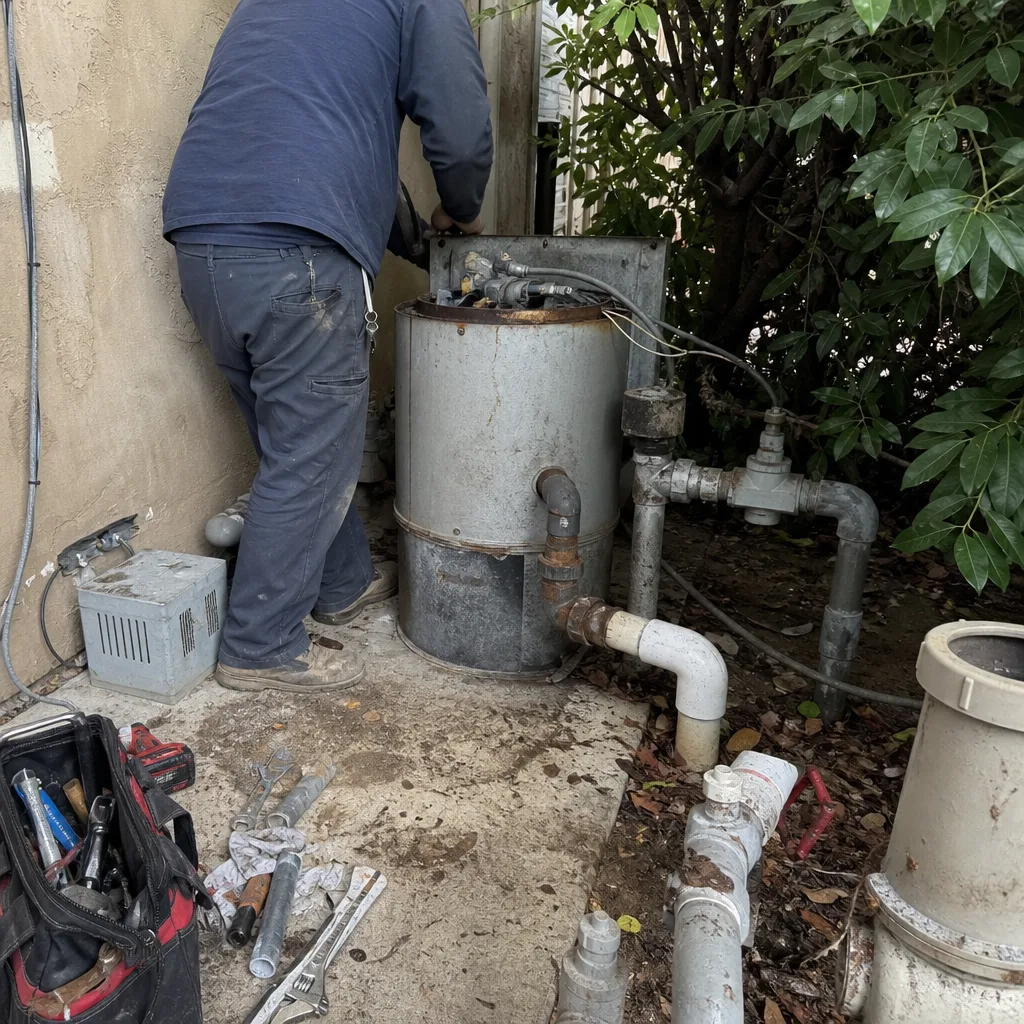 Before
 After
After Before
 After
AfterDIY vs Professional Construction: The Los Angeles Homeowner’s Decision Guide
Here’s something most national DIY guides won’t tell you: Los Angeles has one of the most restrictive residential permit structures in the country, and it changes the math on what “do it yourself” actually means. A homeowner in Dallas can rewire a garage with a homeowner permit and never think twice. A homeowner in Los Angeles attempting the same work faces LADBS seismic bracing requirements, CSLB trade licensing rules, and an insurance disclosure burden that follows the house to resale. In our experience as a general contractor in Los Angeles, the honest answer isn’t “hire a pro for everything.” It’s knowing exactly where the legal line sits, why it’s there, and how to protect yourself on both sides of it. This guide walks you through that line project by project.
Quick Answer
DIY construction in Los Angeles works well for cosmetic finish work like painting, trim, and non-structural landscaping. It stops working the moment a project touches load-bearing walls, electrical panels, plumbing lines, or anything governed by seismic code, where California’s licensed-trade requirements and LADBS permit rules either prohibit the work outright or expose you to insurance and resale liability. The smart middle path is using a professional’s written scope for planning and inspection, whether or not you swing the hammer yourself-something we explore in our DIY vs Professional General Contractor breakdown.
Table of Contents
- Where the Legal Line Actually Sits: What LA Homeowners Can and Cannot DIY
- The Insurance Gap: What Happens When DIY Work Fails
- The Real Cost of DIY Construction in Los Angeles
- Where DIY Makes Sense: Finish Work, Paint, and Cosmetic Tile
- The Professional-Only List: Structural, Electrical, Plumbing, and Seismic
- The Hybrid Approach: Using a Contractor for Planning and Inspection Only
- Los Angeles Project Budget Map: What to Expect at Each Tier
- When to Call a Professional
- Frequently Asked Questions
Where the Legal Line Actually Sits: What LA Homeowners Can and Cannot DIY
The Los Angeles Department of Building and Safety (LADBS) allows homeowners to pull permits for work on a property they own and occupy. That’s the headline. The fine print is where the trouble starts. Homeowner permits are limited to work that does not require a licensed trade signature, and in Los Angeles, that restriction eliminates most of the jobs that national DIY content treats as beginner-friendly.
Here’s the working list, based on what we see approved and rejected at the LADBS counter and in the field:
What Los Angeles homeowners can legally DIY (with a homeowner permit):
- Interior and exterior painting, including prep and minor drywall patching
- Trim carpentry: baseboards, crown molding, door casing, wainscoting
- Finish flooring: laminate, vinyl plank, engineered wood (not subfloor replacement or structural floor repairs)
- Cosmetic tile: kitchen backsplash, bathroom wall tile over an existing sound substrate
- Base and wall cabinets, as long as mounting does not involve moving load-bearing walls or relocating plumbing or electrical rough-ins
- Landscaping and hardscape that does not alter drainage patterns or connect to the storm drain system
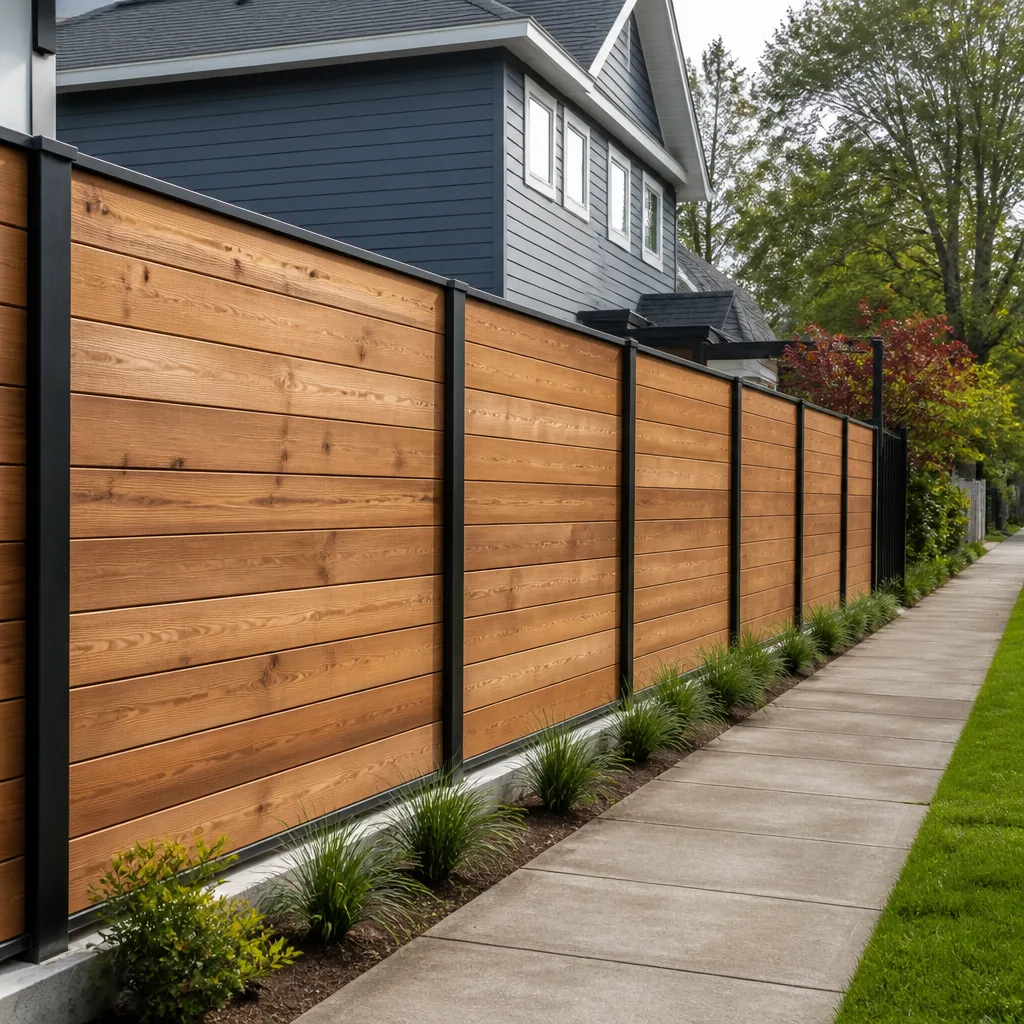
- Fencing under 42 inches in most single-family residential zones, with a permit
What legally requires a licensed California contractor:
- Any structural framing: load-bearing wall removal, beam installation, foundation work
- All electrical work beyond device replacement: new circuits, panel changes, any wiring inside walls
- All plumbing beyond fixture swap-out: drain line relocation, supply line work, water heater installation from a fuel source or tankless unit
- HVAC installation, ducting, and gas line work (governed by the CSLB for licensing and the City of LA mechanical code for permits)
- Roof replacement and any roofing work involving sheathing or structural decking
- Window and exterior door replacement that changes the rough opening size or involves structural headers
- Stucco and exterior cladding work on multi-story buildings, and all siding installation in wildfire hazard zones with specific assembly requirements
The reason for the hard split isn’t protectionism. It’s the seismic retrofit overlay that runs through nearly every LADBS code chapter. Wood-frame houses built before 1995 in Los Angeles are subject to mandatory retrofit requirements when work expands existing opuses. If your homeowner-permitted bathroom addition triggers a seismic review and you can’t produce the engineering, the permit stalls and your project dates crumble.
The Insurance Gap: What Happens When DIY Work Fails
Here’s the sentence every Los Angeles homeowner should hear before buying a sledgehammer: your homeowner’s insurance policy has a clause that excludes coverage for damage caused by unpermitted work performed by the policyholder. Read that twice. It does not matter that the work looked fine. It does not matter that the failure happened six years later. If a loose connection you made inside a wall caused a fire, the adjuster’s first question is who signed the inspection card. If the answer is you, the claim gets denied.
And the exposure continues past the living room. California’s real estate disclosure requirements, specifically C.A.R. Form TDS and the supplemental disclosure tied to the Natural Hazards Disclosure Act, require you to disclose unpermitted work and any work performed without a licensed contractor when you sell. Buyers in Los Angeles are increasingly requesting the permit history pull from LADBS before closing. A missing permit for a remodeled bath that you did yourself can shave real money off the sale price, or kill the deal entirely.
We have seen the follow-up personally. A homeowner in the San Fernando Valley spent eleven months and $28,000 on a DIY primary bathroom. The LADBS inspector red-tagged the shower pan for failed flood-test after the fact, and the homeowner had to have the entire pan removed and reinstalled by a licensed plumber to get the permit closed. The insurance company noted the correction on the property record. The resale disclosure became a negotiation anchor for the buyer’s agent.
The Real Cost of DIY Construction in Los Angeles
The beginner cost model for DIY compares material cost at Home Depot against a contractor’s bid and calls the difference “savings.” That model ignores the three LA-specific costs that routinely eat the margin:
- Permit correction fees. LADBS charges a penalty for work begun without a permit. The fee is typically the cost of the original permit plus 50% to 100%, depending on the scope. A 200-amp panel upgrade that was done unpermitted can generate a correction fee north of $3,000 before the work is even inspected.
- Licensed remediation costs. When a DIY project fails inspection or fails physically, the repair has to be done by a licensed trade to clear the permit. Licensed trades in Los Angeles charge market rate, and they charge more for remediation because the first step is undoing the failed work. You pay to undo your own labor, then pay again for the professional’s.
- Inspection re-scheduling in a backlogged system. LADBS inspection demand in the 2020s has run hot, particularly for residential additions and ADUs. A missed inspection because the work wasn’t ready costs you a re-scheduling fee and a 2-4 week window reset. Miss it twice and the project timeline doubles.
The honest number most LA homeowners should put on the table is this: if the job touches any licensed trade system, the expected value of DIY is negative once you factor in correction fees, remediation, and the resale disclosure discount. If the job is purely cosmetic, the expected value of DIY is positive and substantial. The trick is knowing which is which before the first tool comes out.
Where DIY Makes Sense: Finish Work, Paint, and Cosmetic Tile
There is real money to be saved in Los Angeles by doing your own finish work, and we encourage it without reservation. Paint is the best example. A three-bedroom house in Los Angeles will cost $6,500 to $11,000 for a professional full interior paint, depending on ceiling height and trim condition. The material cost for the same job from a quality supplier runs about $1,200 to $1,800 including primer, rafter tape, and roller covers. If you have the weekends and the patience for proper prep, that’s a $5,000 win with essentially zero permit interaction.
Trim carpentry is the second strongest DIY category. Baseboards and crown are not structural. They don’t touch electrical or plumbing. They require patience but no license, and the LADBS has no interest in your miter joints. The same applies to laminate and vinyl plank flooring, which floats over the existing floor and requires no subfloor alterations.
Cosmetic tile: the line that matters
Backsplash tile and decorative wall tile are genuinely DIY-appropriate. The condition is the substrate. If the existing substrate (the layer behind the tile) is intact, you can tile over it. If it’s cracked, spongy, or water-damaged, the substrate repair itself falls under waterproofing code for wet areas, and that’s where DIY stops making sense in a Los Angeles bathroom. One failed shower waterproofing job in LA produces mold behind the tile, a failed inspection on resale, and a $4,000 to $9,000 professional correction. We install bathroom remodels in Los Angeles with the same substrate standard the code requires, because the alternative is a catastrophic failure behind a beautiful surface.
Quick list: DIY-appropriate work in Los Angeles
- Interior painting and prep
- Trim carpentry and baseboard
- Laminate, vinyl plank, and engineered flooring over sound subfloor
- Backsplash tile and non-wet-area wall tile over intact substrate
- Cabinet painting and hardware replacement
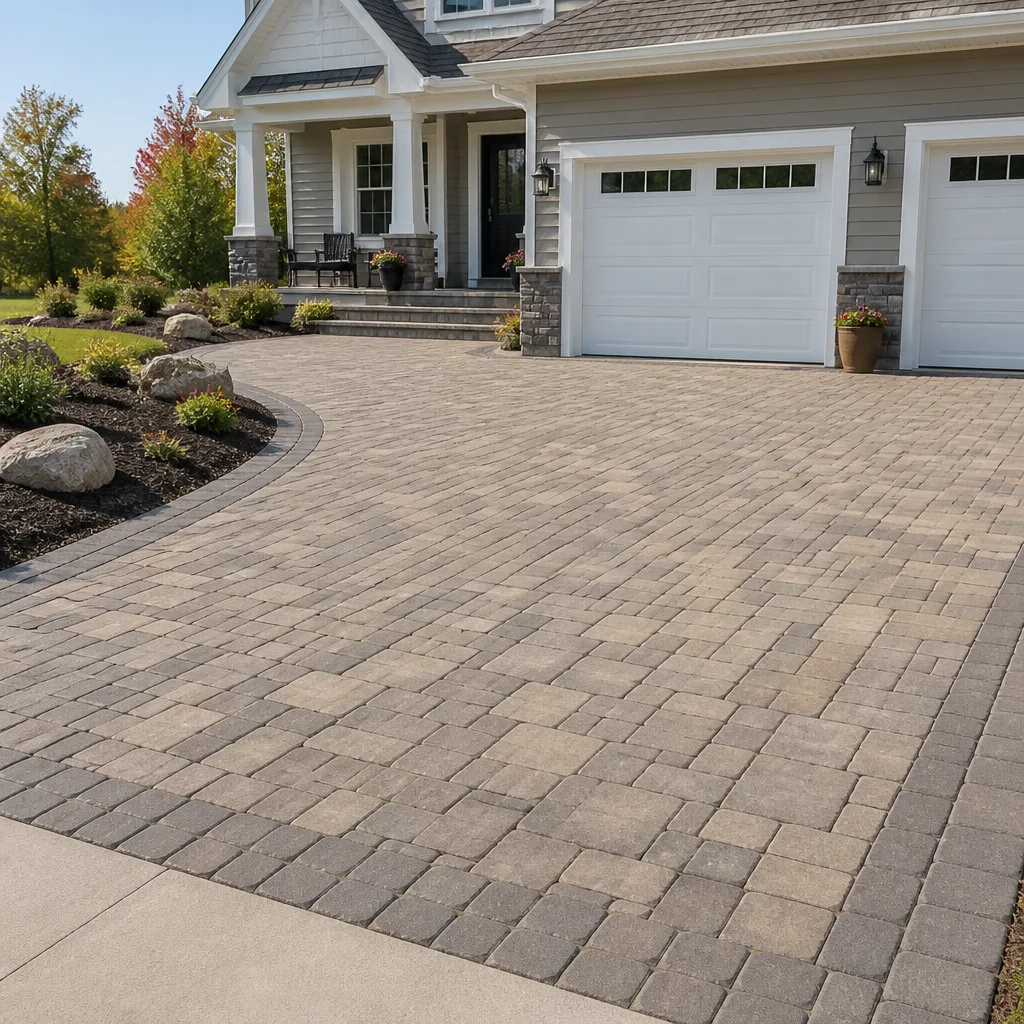
- Non-structural landscaping, including Belgard and Unilock paver patios set on existing grade (no retaining walls)
The Professional-Only List: Structural, Electrical, Plumbing, and Seismic
Four systems in your Los Angeles house are legally and practically off-limits for DIY. The list is not a suggestion. It’s the line drawn by the California Contractors State License Board, the LADBS, and your insurance policy working together.
Structural
Any wall removal that bears load, any beam change, any foundation crack repair, any new opening in an exterior wall. Los Angeles homes built before the 1995 Northridge retrofit standards often have cripple wall and foundation conditions that require an engineer’s letter before a permit is even approved. No homeowner permit covers engineering. If the work requires a structural calc, it requires a professional.
Electrical
California allows a homeowner to replace a like-for-like outlet or switch without a permit. That’s where it ends. Everything from a new circuit to a panel swap requires a licensed electrician and an LADBS electrical permit. The reason is not bureaucratic: loose connections inside walls cause electrical fires, and Los Angeles has a dense housing stock with older wiring. Knot-and-tube wiring from the 1920s and 1930s still exists in Echo Park, West Adams, and parts of Pasadena. The amateur splice on that system is how fires start. This is the one where we’re most emphatic: never open a wall to run wire yourself in Los Angeles.
Plumbing
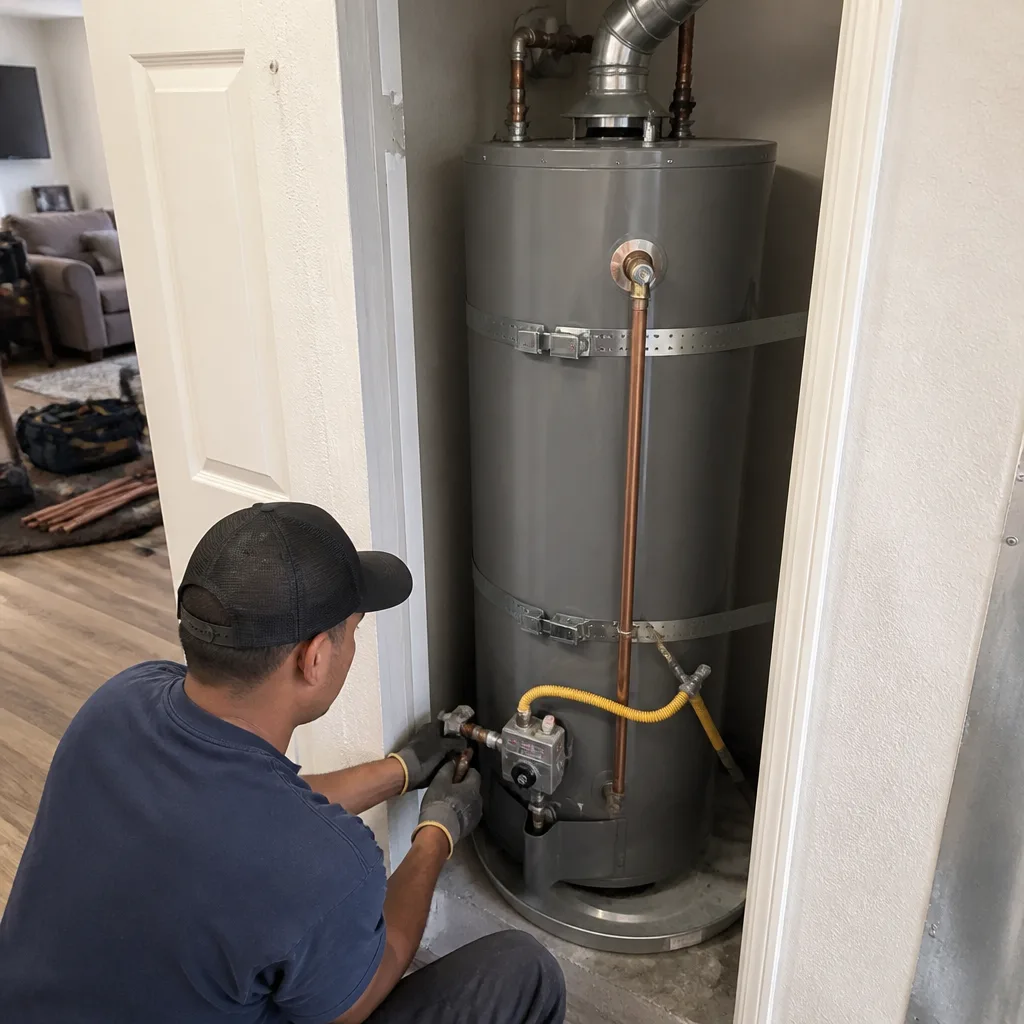
Like-for-like fixture swaps are fine. Anything involving moving a drain line, altering supply lines, or installing a water heater is not. Los Angeles water heater code requires seismic strapping and flexible connectors installed to a specific standard, and if the strapping fails during an earthquake, a licensed installer carries the liability. A homeowner who self-installed a water heater and then files a claim for earthquake damage will be asked for the permit and the installer’s license number. When neither exists, the claim dies.
Seismic
This is the uniquely Los Angeles category. Any work that involves foundation bolts, cripple wall bracing, soft-story retrofits, or chimneys that extend through the roof line triggers the seismic retrofit provisions of the LA building code. No homeowner permit covers seismic retrofit engineering. The work requires a licensed contractor and, in many cases, a structural engineer. The city’s mandatory retrofit ordinance is aggressive, and the trigger is frequently an unrelated remodel. That’s why a kitchen remodel in Los Angeles sometimes includes $8,000 to $25,000 in foundation retrofit work that had nothing to do with the kitchen itself.
If your home is in a mandatory retrofit zone and you’re planning any remodel, get the retrofit scope before the finish work. The order matters and doing it backwards costs.
The Hybrid Approach: Using a Contractor for Planning and Inspection Only
The cleanest money-saver in Los Angeles that most homeowners never use: hire a professional for the written scope and the critical-path work, and do the finish work yourself. The contractor handles the permit, the structural or trade work, and the inspection sign-off. You handle paint, trim, flooring, and cosmetics. The savings are real, often $8,000 to $20,000 on a full interior refresh, and the risk profile stays clean because every permitted system has a licensed signature.
There’s a second hybrid model worth knowing: a written scope from a professional on a project you intend to do entirely yourself. It costs a few hundred dollars and might be the best money you spend. In our planning consultations, we walk the Sacramento-adjacent neighborhoods and the Valley floor with homeowners who intend to self-perform work. We flag what the inspector will call out, what material choice will fail the permit, and what order to work in. Half the time the homeowner decides to hand us the licensed-trade portion and keep the finish work. The other half walks away with a plan that prevents a $2,000 correction fee.
The written scope is the core of what we do at Penhallow Remodeling, and it’s the part of the trade most homeowners have never been offered. A written price before any work starts is a Kingswell standard we follow on every job, whether it’s a full kitchen remodel in Los Angeles or a planning consultation for a homeowner doing the finish work themselves. The number on day one is the number on the invoice. The 365-Day Done Right Promise is in writing on every project, so if work fails inside the guarantee period, we return and fix it at no charge. That’s the guarantee layer that DIY work simply cannot have.
Los Angeles Project Budget Map: What to Expect at Each Tier
The numbers below reflect what we see across Los Angeles, from the San Fernando Valley to the Eastside and down into the South Bay, based on current labor and material rates. They are ranges, not quotes, but they will keep you from budgeting Dallas prices for Los Angeles work.
| Project Type | DIY Range (Materials + Permits) | Professional Range (Finished, Permitted) | Notes |
|---|---|---|---|
| Interior paint, 3BR house | $1,200 – $1,800 | $6,500 – $11,000 | DIY wins clearly |
| Backsplash tile, kitchen | $400 – $900 | $2,200 – $4,500 | DIY wins if substrate sound |
| Laminate/vinyl plank, 1,000 SF | $2,500 – $4,000 | $7,000 – $12,000 | DIY wins, subfloor permitting |
| Kitchen remodel, cosmetic only | $8,000 – $15,000 | $18,000 – $55,000 | Professional if any trade moves |
| Bathroom remodel, full gut | Not viable legally | $16,000 – $38,000 | Professional almost always |
| Water heater replacement | Not viable legally (gas/electric) | $1,800 – $3,800 | Licensed plumber required |
| Panel upgrade, 200-amp | Not viable legally | $4,000 – $8,500 | Licensed electrician required |
| Paver patio, 400 SF (Belgard or Unilock) | $3,000 – $5,500 | $10,000 – $15,000 | DIY wins if no retaining wall |
Two notes on the numbers. First, Los Angeles labor rates run 20-40% above the national average for licensed trades, so the professional ranges are not padded. Second, the DIY ranges assume you already own the basic tools. If you’re buying a wet saw for tile or a compressor for trim, add the tool cost and ask yourself if it’s a one-job purchase or the beginning of a workshop.
When to Call a Professional
Call before you buy materials, not after. If your project involves any of the following, the conversation before demolition is the cheapest part of the job: a wall you want gone and you don’t know if it bears load; any electrical work beyond swapping a like-for-like outlet; any plumbing that moves a drain line or touches a water heater; any foundation question, including cracks wider than a quarter-inch; any roof penetration or chimney work; and any work inside a mandatory seismic retrofit area where the permit will trigger retrofit review.
Penhallow Remodeling offers free estimates in Los Angeles. Call (936) 259-2607 and you’ll get a real person on the line, a written price before any work starts, and the 365-Day Done Right Promise in writing on every project. That applies whether we’re remodeling your kitchen or walking you through a hybrid plan where you keep the finish work.
Frequently Asked Questions
Yes, for cosmetic finish work only. LADBS will issue a homeowner permit for a bathroom remodel that does not move plumbing drains, alter supply lines, rewire circuits, or touch any structural wall. The moment you move a toilet drain or open a load-bearing wall to expand the bathroom, the permit requires a licensed contractor’s signature for the trade work. Call (936) 259-2607 if you want a professional to review your bathroom remodel scope before you file anything.
Your insurer can deny the claim. Homeowner’s policies exclude coverage for damage caused by unpermitted work performed by the policyholder, and if the damaged system was part of unpermitted work, the adjuster will investigate the permit history. In the worst case, you’ve paid for the materials and labor twice: once for the DIY work and again for the licensed remediation after the claim denial.
Yes, and the installation must be done by a licensed plumber. Los Angeles code requires seismic strapping, flexible connectors, and a permit with a final inspection. A homeowner who self-installs and later has a failure or earthquake damage claim will not have the licensed installer’s sign-off the insurer will demand.
Cosmetic kitchen remodels in Los Angeles typically run $18,000 to $55,000 depending on layout, cabinet line, and countertop material. A full layout change with structural work, a panel upgrade, and seismic retrofit work can push the number to $65,000 or more. The material choices drive a large share of the range: Cambria or Silestone quartz counters, KraftMaid or Wellborn cabinetry, and Kohler or Moen fixtures all carry different price points. Call (936) 259-2607 for a written, line-item price on your specific kitchen scope.
Some will, some won’t, and the answer often depends on whether the contractor is willing to put a written scope on the table. At Penhallow Remodeling, the Kingswell standard means a written price and a written guarantee on every project, and we’ll write the scope for the licensed-trade portion while you keep the paint, trim, and finish work if that’s how you want to divide it. The written guarantee covers our portion; the finish work is yours to own.
Yes, if we do the remediation. When we correct a failed DIY project in Los Angeles, the work falls under the same 365-Day Done Right Promise as a full remodel: if it fails inside the guarantee period, we return and fix it at no charge, no re-inspection fee, no service call. The mistake many homeowners make is waiting until after the DIY failure has been through a failed inspection to bring in a professional, which costs more than a written scope before the work started.
Common Mistakes to Avoid
- Beginning demolition before pulling the permit. LADBS charges a penalty for work begun without a permit, and the correction fee often runs 50-100% of the original permit cost. If the demo opens a wall and the inspector finds additional code violations, those get added to the same correction.
- Assuming national DIY advice applies to Los Angeles. A homeowner permit in most states covers electrical and plumbing work that California reserves for licensed trades. The YouTube tutorial that worked fine in Ohio may not be legal in Los Angeles.
- Ignoring the substrate behind cosmetic tile. The tile is never the problem. The moisture-resistant layer behind it is. If the substrate is compromised, the tile work fails, and the insurance claim gets complicated because the failure is the result of unpermitted waterproofing work.
- Buying materials before the written scope exists. The clearance appliances and the pallet of tile arrived, and then the permit required a structural change that altered the layout. Now the materials don’t fit and the return window has passed.
- Skipping the written price conversation in favor of a verbal estimate. The number that changes at the door is the number that was never written down. A written price, given before work starts, is the only number worth comparing.
- Treating the LADBS inspection as a rubber stamp. The inspector’s job is to find what does not comply, and the seismic retrofit provisions give Los Angeles inspectors a longer list than most. If the work isn’t ready, the re-scheduling window alone can cost weeks.
- Demolishing a wall without knowing if it bears load. In Los Angeles, this specific mistake triggers structural review, engineering requirements, and potentially a stop-work order. The wall you removed was likely holding up the ceiling joists, and the fix is not a weekend project.
The Bottom Line
The Los Angeles DIY decision is not a question of skill. It’s a question of permits, licensing lines, and the insurance exposure that follows unpermitted work. For paint, trim, flooring, and cosmetic tile over sound substrate, DIY is a real money-saver. For anything structural, electrical, plumbing, or seismic, the work is legally professional-only, and the cost of trying it yourself is a correction fee, a remediation bill, and a permanent note in the resale disclosure.
The smartest Los Angeles homeowners use the hybrid path: a written professional scope before the project starts, a licensed contractor for the trade work, and their own labor for the finish. It saves real money without creating the liability gap that follows DIY work in this city. If you want to know where your project falls, call (936) 259-2607 for a free estimate. We’ll write the price down before any work starts, and we’ll put the guarantee in writing too.
Written by Trevor Nash, Owner at Penhallow Remodeling, serving Los Angeles since 2004.