
Last updated October 8, 2026
Free written scope consultation - allowances, timeline, and change-order rules on paper before a single trade is scheduled
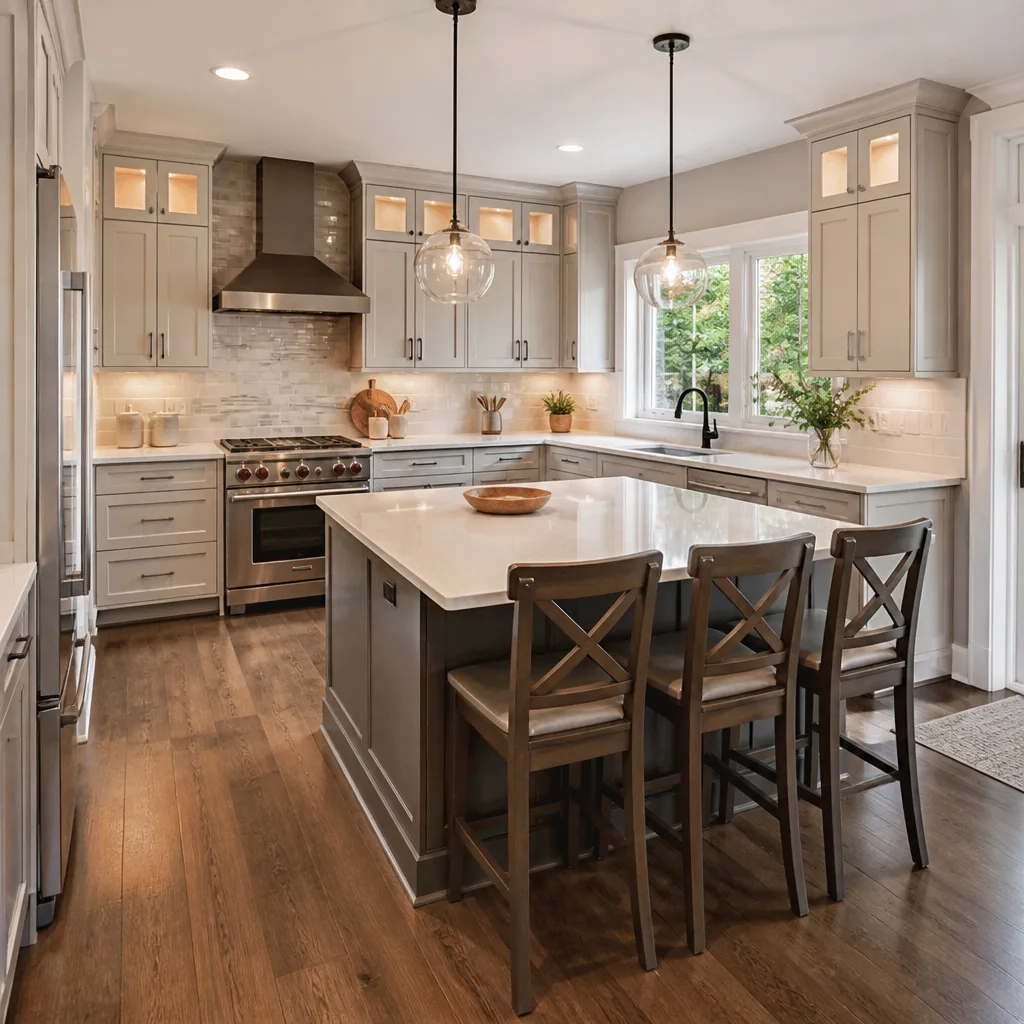
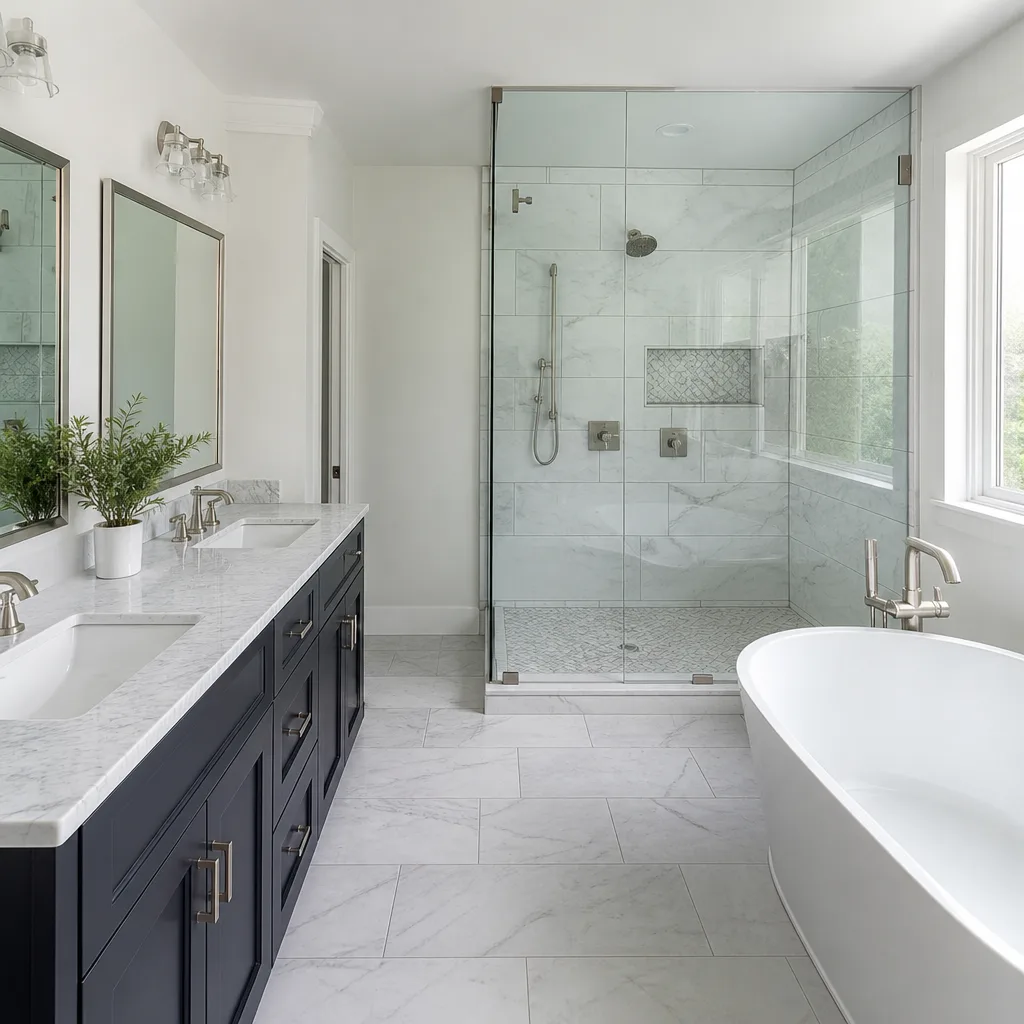


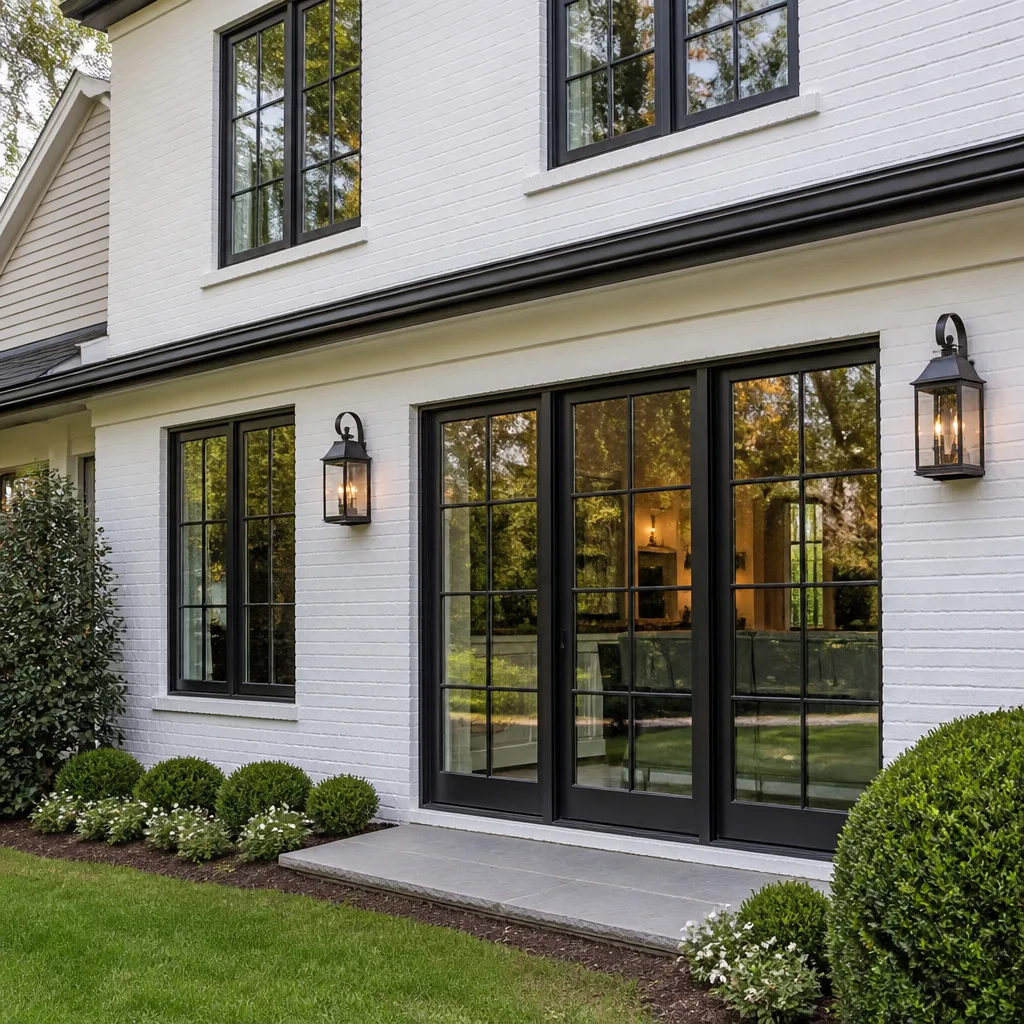


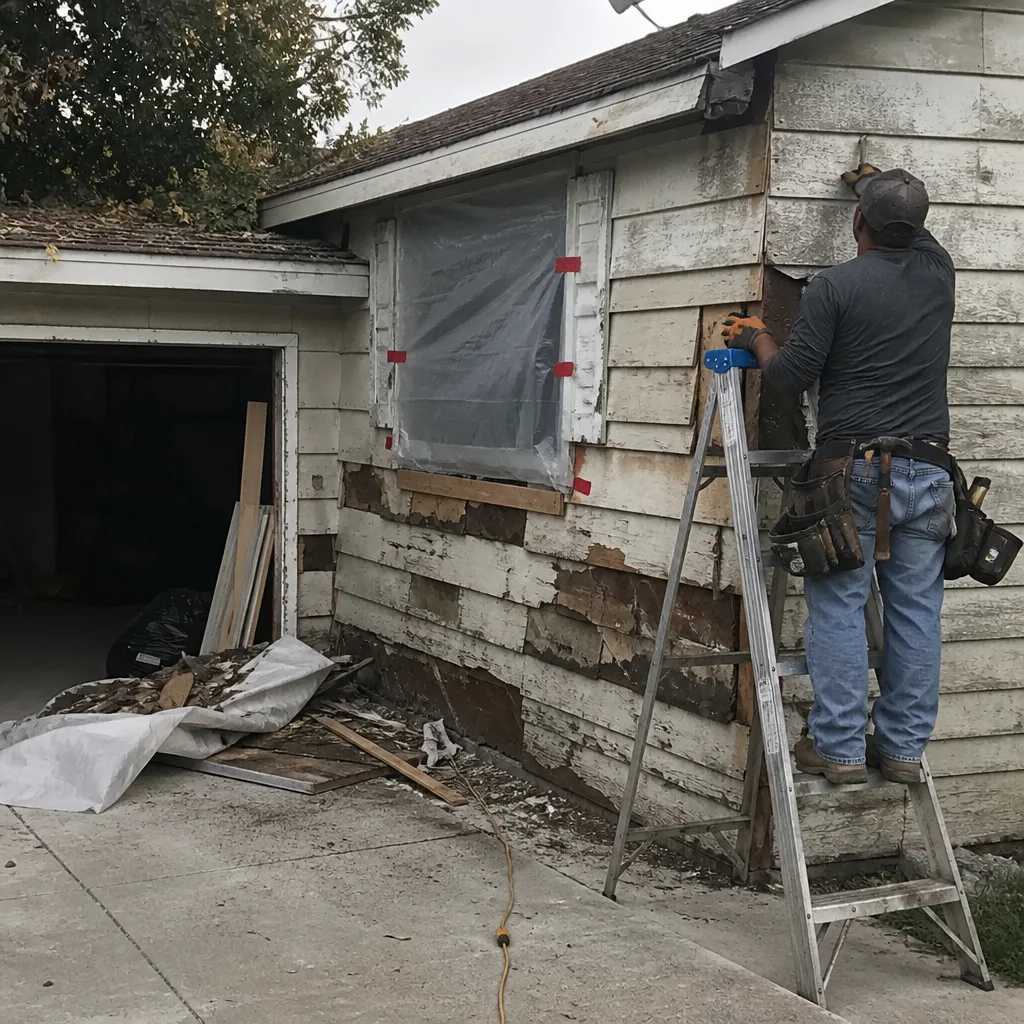 Before
 After
After Before
 After
After Before
 After
AfterDIY vs Professional Kitchen Remodeling: What’s Safe to Do Yourself
Painting your cabinets yourself saves real money. Moving a gas line yourself can cost you your homeowner’s insurance policy. The line between those two decisions is rarely explained clearly, and in Los Angeles that line is drawn in city code, state contractor law, and your mortgage paperwork. What follows is a task-by-task breakdown of which kitchen work is genuinely safe to do on a weekend, which work California law says must be done by a licensed professional, and how unpermitted DIY work follows you to the day you sell the house. We’ll also give you real numbers on what DIY actually saves after you account for the redo risk.
Quick Answer
In a Los Angeles kitchen remodel, cosmetic work like painting cabinets, swapping hardware, and tiling a backsplash over existing sound substrate is safe to DIY. Any work involving gas lines, electrical circuits, load-bearing walls, plumbing rough-in behind walls, or window and door openings requires a California state license and a city permit from LADBS. DIY on those licensed items can void your homeowner’s insurance, trigger a stop-work order, and show up as a disclosure problem when you sell.
Table of Contents
- The California License Line: What the Law Actually Says
- What’s Genuinely Safe to DIY: A Task-by-Task Breakdown
- What Requires a Licensed Contractor in Los Angeles
- The California Permit Trigger List for Kitchen Work
- Insurance, Disclosure, and Resale: The Hidden Cost of Unpermitted Work
- Real Cost Comparison: DIY Savings vs. Redo Risk
- The Hybrid Approach: Doing the Safe Work Yourself, Contracting the Rest
The California License Line: What the Law Actually Says
California has one of the clearest contractor-licensing statutes in the country, and it draws a bright line through your kitchen. Under Business and Professions Code section 7048, a homeowner can do work on their own single-family residence without a contractor’s license. That exemption covers your labor. But it does not override the building code, it does not remove permit requirements, and it does not protect you from liability when the work goes wrong. The state allows you to act as your own general contractor legally. The Los Angeles Department of Building and Safety allows owner-builder permits. What neither agency allows is unpermitted plumbing, electrical, or mechanical work, even when you do it with your own hands. So the legal question in a Los Angeles kitchen is not “can I?” It’s “what happens if I do?” The answer to that second question depends on whether the task touches a system the city regulates.
We’ve walked into kitchens in South Pasadena and Studio City where an owner-builder had half-finished a rough-in, then called us after the inspector flagged the work and refused to sign off. The result was never a quick fix. It was demolition back to the framing, a new permit, and a bill that ran two to three times what a licensed remodel would have cost from day one. The owner-builder exemption is real, but it is a narrow path. It works for painting, finishes, and surface work. It does not work for the systems behind your walls.
What’s Genuinely Safe to DIY: A Task-by-Task Breakdown
Before we get to the danger list, let’s be clear about what DIY kitchen work is genuinely reasonable. These are tasks where the worst-case outcome is cosmetic: you redo it, you live with it, or you pay someone a moderate amount to fix it. No one loses their insurance. No one gets hurt. Here is the honest list of what we tell Los Angeles homeowners they can handle without a license, a permit, or a second thought, drawn from our General Contractor Maintenance Checklist for Los Angeles Homeowners.
- Cabinet painting and refinishing. This is the single best DIY value in a kitchen remodel. A professional cabinet paint job in Los Angeles runs $3,500 to $7,000 depending on door count and finish. Materials for a careful DIY job run $300 to $800. The difference is preparation and spray equipment, not magic. If you can remove doors, label hinges, sand to 220 grit, and apply a bonding primer, you can get a finish that looks professional from four feet away. Closer than that, spray application beats brush and roller every time, and that’s where pros earn their money.
- Hardware swaps. Replacing pulls and hinges is a two-hour job with a drill and a template. You cannot hurt anything if you measure twice. Cost runs $2 to $15 per pull depending on finish, and the visual impact on a dated kitchen is outsized.
- Backsplash tile over existing sound substrate. If the drywall or cement board behind your current backsplash is intact, dry, and flat, setting mosaic or subway tile over it is a legitimate DIY weekend project. Use a quality modified thinset, and if you’re tiling over anything questionable, a Schluter membrane gives you a waterproof isolation layer without requiring a license to install. The caveat: if you pull the old backsplash and the drywall crumbles or you find water damage, stop. That is no longer a surface job.
- Caulking and sealing. Around the sink, between the countertop and the backsplash, along the baseboards. This is five dollars of materials and twenty minutes of work. It prevents thousands of dollars in water damage. Do it yourself, do it twice a year.
- Paint and wall repair. Patch small drywall holes, sand, prime, and paint. No permit. No license. No risk.
- Lighting fixture swaps using existing boxes. Replacing a fixture that mounts to an existing junction box, on an existing circuit, with the same voltage requirements, falls within what an owner can do. Turn the breaker off, test the wires with a non-contact voltage tester, and take photos before you disconnect anything. If the wiring looks old, fabric-insulated, or you see aluminum rather than copper, call an electrician.
Here is the pattern: safe DIY work is work where the surface already exists and is sound. The moment you open a wall, touch a system, or remove a structural element, you’ve crossed the line.
What Requires a Licensed Contractor in Los Angeles
California contractor licensing law (California Business and Professions Code section 7026, and the companion code 7026.1) says any work on a project where the aggregate labor and materials exceed $500 requires a contractor’s license when the work is performed for compensation. For a homeowner doing their own work, the compensation test doesn’t apply. But the building code still does, and Los Angeles enforces it through LADBS plan check and inspection. More importantly, these tasks involve systems where a mistake creates a fire hazard, a gas hazard, or a structural hazard. The state does not leave those systems to good intentions.
Licensed trades you cannot legally self-perform in a Los Angeles kitchen
- Gas line work of any kind. Moving a gas line, extending a gas line for a new range, or capping a gas line during demo requires a C-36 plumbing contractor with a valid California license. This is not a suggestion. An unpermitted gas line modification that leaks can kill everyone in the house, and your insurance company does not need to find a leak to deny the claim. The unpermitted modification itself is enough. Do not touch a gas line.
- Electrical circuit additions or modifications. Adding a dedicated circuit for a new microwave, running wire for under-cabinet lighting, moving an outlet, or adding a GFCI where none exists requires a C-10 electrical contractor and a permit. Los Angeles enforces this through inspection of the rough-in before the walls close. A homeowner who does this work unpermitted now owns a code violation that will surface in the pre-sale home inspection or, worse, in a fire investigation.
- Plumbing rough-in behind walls. Moving a sink drain, relocating water supply lines, or changing the rough-in location for a dishwasher requires a C-36 plumbing license and a permit. Surface connections like swapping a faucet or hooking up a new dishwasher supply line are generally owner-permitted, but anything behind the wall is not.
- Load-bearing wall removal or modification. Even cutting a pass-through in a wall that carries roof or floor load requires a structural engineer’s stamp and a building permit. Los Angeles is earthquake country. A Modified Mercalli Intensity rating of VIII or worse is a question of when, not if, in much of the LA basin. Load paths are not conceptual, and a header sized by a YouTube video is not a header.
- Window or door opening changes. Enlarging a window opening, adding a door, or moving an exterior wall requires a permit and, depending on scope, a structural engineer. This is lateral force territory. In Los Angeles, your exterior walls are part of the shear system that keeps the house standing in a seismic event.
The common thread is simple: if the work touches gas, line voltage electrical, drain or supply plumbing behind walls, or structure, hire a licensed contractor. There is no exception that makes unlicensed work on these systems smart in Los Angeles.
The California Permit Trigger List for Kitchen Work
One of the most useful things a homeowner can know before touching a kitchen is exactly which tasks trigger a permit in the city of Los Angeles. The California Residential Code and the Los Angeles Municipal Code draw the lines, and LADBS publishes them in plain language. But the list is long, and most homeowners never read it. Here is the practical version, organized by whether you can do the work without pulling anything.
No permit required in Los Angeles
- Painting, including cabinet painting
- Hardware replacement
- Backsplash tile over existing sound substrate
- Caulking and sealing
- Fixture swaps on existing plumbing or electrical boxes where no rough-in changes
- Countertop replacement (unless it requires moving plumbing or electrical or changes structural support)
- Cabinet refacing where no layout or structural change occurs
Permit required in Los Angeles
- Any gas line relocation, extension, or capping
- Any new electrical circuit or relocated outlet (under-counter lighting with a new circuit included)
- Any drain or water supply relocation behind a wall
- Any load-bearing wall or shear wall modification
- Any window or exterior door opening change
- Kitchen layout changes affecting the sink rough-in location
- Any work requiring a structural engineer’s stamp
If a task appears on the permit list, a licensed contractor in California is required to obtain that permit and schedule the inspections. The permit is not optional, and “the contractor said we didn’t need one” is not a defense that holds up with LADBS or with your insurer. We pull permits on every job that requires one, and we have never once had a client tell us they regretted having the city inspect and sign off, as outlined in our General Contractor Maintenance Schedule: What to Do and When. The inspection is the proof you own, on paper, that the work was done to code.
Insurance, Disclosure, and Resale: The Hidden Cost of Unpermitted Work
The most expensive DIY work in a Los Angeles kitchen is not the work you redo. It’s the work you never see the bill for until a claim is denied or a sale falls apart. Here is how unpermitted DIY work follows you.
Homeowner’s insurance policies in California cover sudden and accidental damage. They do not cover damage caused by unpermitted work, faulty workmanship, or code violations that the homeowner created or allowed. If you move a gas line yourself without a permit and that line leaks and causes a fire, the insurer’s investigation will find the unpermitted modification. At that point the claim is denied, and worse, the mortgage holder still expects the house to be made whole. In our experience, the homeowners who end up in this position are never the ones who installed the line recklessly. They are the ones who installed it carefully, believed they did it right, and discovered that careful unpermitted work is still unpermitted work. A Toto toilet installed correctly but without a permit does not burn a house down. A gas line installed carefully but without a permit can, and the distinction means everything to an insurer.
The second hidden cost is resale disclosure. California Civil Code section 1102 requires sellers to disclose any work done without a permit if that work would have required one. You cannot legally sell a Los Angeles house and omit the fact that you moved a sink drain without pulling a permit. Buyers and their agents ask for permit history from LADBS during escrow as a matter of routine. When unpermitted work appears, one of three things happens: the buyer walks, the buyer demands a credit, or the deal is contingent on the seller getting retroactive permits. Retroactive permitting means opening the wall so LADBS can see the work, or paying a contractor to reconstruct it. That cost routinely runs $5,000 to $15,000 on a kitchen where the original DIY savings were maybe $2,000.
In Los Angeles, the resale market is too competitive for a seller to hide a permit problem. Buyer’s agents in Highland Park, Eagle Rock, and Silver Lake run permit searches as standard due diligence. The question is never “will they find it?” It’s “what does it cost when they do?”
Real Cost Comparison: DIY Savings vs. Redo Risk
The honest math on DIY kitchen work in Los Angeles looks nothing like the headlines. A homeowner reads that labor is 40 to 60 percent of a kitchen remodel and concludes they can cut the job in half by doing it themselves. That math works for paint and hardware. It collapses the moment the task requires a license, a permit, or an inspection. Here is the comparison, using the going rates we see across LA County.
| Task | Typical Pro Cost in LA | Realistic DIY Cost | True DIY Savings | Redo Risk If It Goes Wrong |
|---|---|---|---|---|
| Cabinet painting | $3,500 – $7,000 | $300 – $800 | $2,700 – $6,200 | Low. You repaint. |
| Backsplash tile (existing substrate) | $800 – $1,800 | $150 – $400 | $650 – $1,400 | Low. You retile or hire out. |
| Gas line move for new range | $400 – $900 | $50 – $150 in parts | $350 – $750 | Catastrophic. Fire, CO exposure, insurance denial. |
| New electrical circuit for micro/hood | $500 – $1,200 | $100 – $250 in materials | $400 – $950 | High. Fire hazard, code violation, resale disclosure. |
| Plumbing rough-in move | $1,500 – $4,000 | $200 – $500 in parts | $1,300 – $3,500 | High. Hidden leak, mold, slab/wall damage. |
| Load-bearing wall removal with beam | $8,000 – $20,000 | Not possible legally without engineering | N/A | Catastrophic. Structural failure in a seismic event. |
The pattern is uncomfortable: the tasks with the biggest DIY savings are the same tasks with the least severe consequences when they go wrong. The tasks where the savings seem attractive are the ones where the failure cost dwarfs the savings by an order of magnitude. A gas line move saves $500 in labor and risks a $30,000 remediation and a denied insurance claim. A cabinet paint job saves $4,000 and the worst case is a weekend of sanding and repainting. If you remember nothing else from this guide, remember that ratio, and explore more guides & resources for Los Angeles homeowners.
The Hybrid Approach: Doing the Safe Work Yourself, Contracting the Rest
The smartest Los Angeles kitchen remodels are hybrid projects. The homeowner handles the low-risk cosmetic work on a negotiated schedule, and a licensed contractor handles the licensed portions with a written price and a guarantee. Here is how to structure that without losing the advantage of either side.
- Start with a licensed contractor for a scope and number. Before you paint a single cabinet, bring in a general contractor to define the licensed scope and give you a written price. At Penhallow Remodeling, we put that number in writing before any work starts and we hold to it. That gives you a fixed anchor for the licensed portion of the job, and it tells you exactly which tasks are DIY-safe in your specific kitchen.
- Schedule the DIY work around the licensed work, not instead of it. A common sequence: contractor demos and does the rough-in for plumbing, electrical, and gas while you paint cabinet doors in the garage. Then the contractor installs the cabinets and counters, and you handle the hardware, caulking, and backsplash tile afterward. This keeps permits and inspections clean and gives you the savings from the tasks that are genuinely safe in your hands.
- Get the guarantee on the licensed work in writing. This is the part most hybrid homeowners skip. A licensed contractor should give you a written guarantee that covers the work inside a defined window. Ours is the 365-Day Done Right Promise: if the work fails inside a year, we come back and fix it at no charge. It’s written on every project. That guarantee means the licensed portion of your kitchen is not a rolling risk; it’s a closed loop.
- Do not let DIY work spread into the licensed scope. The most common failure we see in hybrid remodels is scope creep in the wrong direction. The homeowner starts by painting cabinets, then decides to “just relocate that outlet real quick” or “just run this water line over a foot.” That’s the moment the project leaves the safe zone. Draw the line at the start and hold it.
- Document everything. Keep receipts for materials, photos of the work at every stage, and a copy of the contractor’s permit and inspection sign-offs. When you sell the house, that paper trail answers every question a buyer’s agent will ask about the kitchen.
The hybrid approach is not a compromise. It is the only structure that lets you capture the real DIY savings without taking on the hidden liability. And when the licensed portion is covered by a written price from a contractor whose guarantee is on paper before the work starts, you are not gambling on trust. You are holding a written number and a written promise. In Los Angeles, where kitchen remodels run anywhere from $18,000 to $55,000 and up depending on cabinet line, countertop material, and layout changes, that written number is the difference between a project that ends on budget and one that ends in mediation. If you want the full picture on how the licensed scope is priced, our Kitchen Remodeling in Los Angeles guide walks through real numbers for cabinetry, counters, and plumbing and electrical rough-in. If your project includes a bath, the same pricing discipline applies on the Bathroom Remodeling in Los Angeles side, and for whole-home work you’d start with a General Contractor in Los Angeles.
Common Mistakes to Avoid
- Treating the owner-builder exemption as a permit exemption. The California owner-builder rule lets you act as your own contractor. It does not let you skip permits on plumbing, electrical, gas, or structural work. In Los Angeles, LADBS will stop the work and you’ll pay more to correct it than the permit would have cost.
- Moving a gas line “just a few inches.” The distance is irrelevant. A gas line modification is a gas line modification, and an unpermitted one is a liability with your name on it. We have seen homeowners in the San Fernando Valley move a range line four inches to fit a new slide-in and end up with an insurance non-renewal after a routine inspection flagged it.
- Hiding a DIY rough-in behind drywall without an inspection. The inspector’s job is not to punish you. It is to create the record that protects you when you sell. Closing a wall over unpermitted plumbing or electrical means opening it again later, and the later opening always costs more.
- Assuming a home warranty covers unpermitted work. Home warranty companies deny claims for code violations and unpermitted modifications as a matter of policy. The warranty is not a backstop against skipped permits.
- Using handyperson rates for licensed scope. In California, a handyperson cannot legally perform work that requires a contractor’s license if the combined labor and materials exceed $500. A handyperson who offers to move a gas line for $200 is not cheap; they are unlicensed and uninsured, and the work they do is your liability.
- Skipping the disclosure when you sell. California seller disclosure law is specific and enforced. Failed to disclose unpermitted kitchen work and the buyer discovers it after close? You are facing a lawsuit with a well-established legal precedent favoring the buyer.
- Believing DIY savings are always real savings. The savings on a cabinet repaint are real and compounding. The savings on a plumbing rough-in move are borrowed against your insurance policy and your resale value, and the interest rate is brutal.
When to Call a Professional
Call a licensed contractor the moment the work touches a gas line, an electrical circuit, a drain or water line behind the wall, or any wall that might be load-bearing. Also call before you buy materials for anything that appears on the LADBS permit list, because a contractor can tell you in one visit whether your planned scope is DIY-safe or permit-required. If a previous owner did unpermitted work and you are about to remodel the kitchen anyway, now is the time to bring it into compliance, because you will have to before you sell. Penhallow Remodeling offers free estimates in Los Angeles. Call (936) 259-2607 and we’ll walk the job with you, write the number down, and tell you plainly which parts are safe in your hands and which parts need a license.
Frequently Asked Questions
Yes, you can legally act as your own contractor on your own single-family home under California’s owner-builder rule, but you must still pull the same permits a licensed contractor would, and you must pass the same LADBS inspections. Tasks that are cosmetic and surface-level, like cabinet painting or backsplash tile over sound substrate, need no permit. Tasks that touch gas, electrical, plumbing behind walls, or structure require permits whether you do the work or a contractor does.
In our experience across Los Angeles, it’s unpermitted gas or electrical work behind a closed wall. The fix typically costs $5,000 to $15,000 because the wall must be opened, the work corrected or redone, and a retroactive permit obtained. The original DIY savings on those tasks run $350 to $950. The ratio is bad enough that no licensed contractor we know would let it happen on their own house.
No, not if you are replacing cabinets in the same footprint without moving plumbing, electrical, or structural elements. Cabinet refacing and cabinet replacement that does not change the layout is finish work, and LADBS does not require a permit for it. If the new layout moves a sink, a gas appliance, or a dedicated circuit, the permit requirement kicks in on those systems.
Yes, if the existing substrate is sound, dry, and stable. A Schluter waterproofing membrane over older drywall gives you a clean, code-appropriate base without changing the rough-in. Just do not demolish the wall behind the old tile down to the studs and then rebuild it without knowing what is behind it. Once you open the wall, you own whatever is back there.
Yes. Buyer’s agents and their inspectors routinely pull LADBS permit records during escrow, and California law requires you to disclose unpermitted work that would have required a permit. Unpermitted kitchen work shows up in escrow with a price attached, and it’s never a small number. The cleanest path is to permit what needs permitting now and keep the paperwork.
Most mid-range Los Angeles kitchen remodels run $18,000 to $55,000 depending on cabinet line, countertop material, and layout changes. KraftMaid or Wellborn cabinetry, Cambria or Silestone quartz counters, and a full rough-in update sits in the middle of that band. A cosmetic-only refresh with cabinet repainting, hardware, and a new backsplash can run $5,000 to $12,000. The only number that matters is the written one your contractor gives you before work starts, and the guarantee that comes with it.
The Bottom Line
The DIY vs. professional question in a Los Angeles kitchen is not really about your skill level. It is about which tasks the city and the state have decided are too dangerous or too structural to leave unregulated, and which tasks are genuinely just finish work. Paint the cabinets. Swap the hardware. Tile the backsplash over sound substrate. Call a licensed contractor for the gas, the electrical, the plumbing rough-in, and anything that touches a load-bearing wall. The savings you keep from the safe work are real. The savings you chase from the licensed work are borrowed money, and in Los Angeles the lender always comes to collect. Written by Penhallow Remodeling, where every job gets a written price before work starts and the 365-Day Done Right Promise on paper.
Written by Trevor Nash, Owner at Penhallow Remodeling, serving Los Angeles since 2004.