
Last updated October 8, 2026
Free written scope consultation - allowances, timeline, and change-order rules on paper before a single trade is scheduled
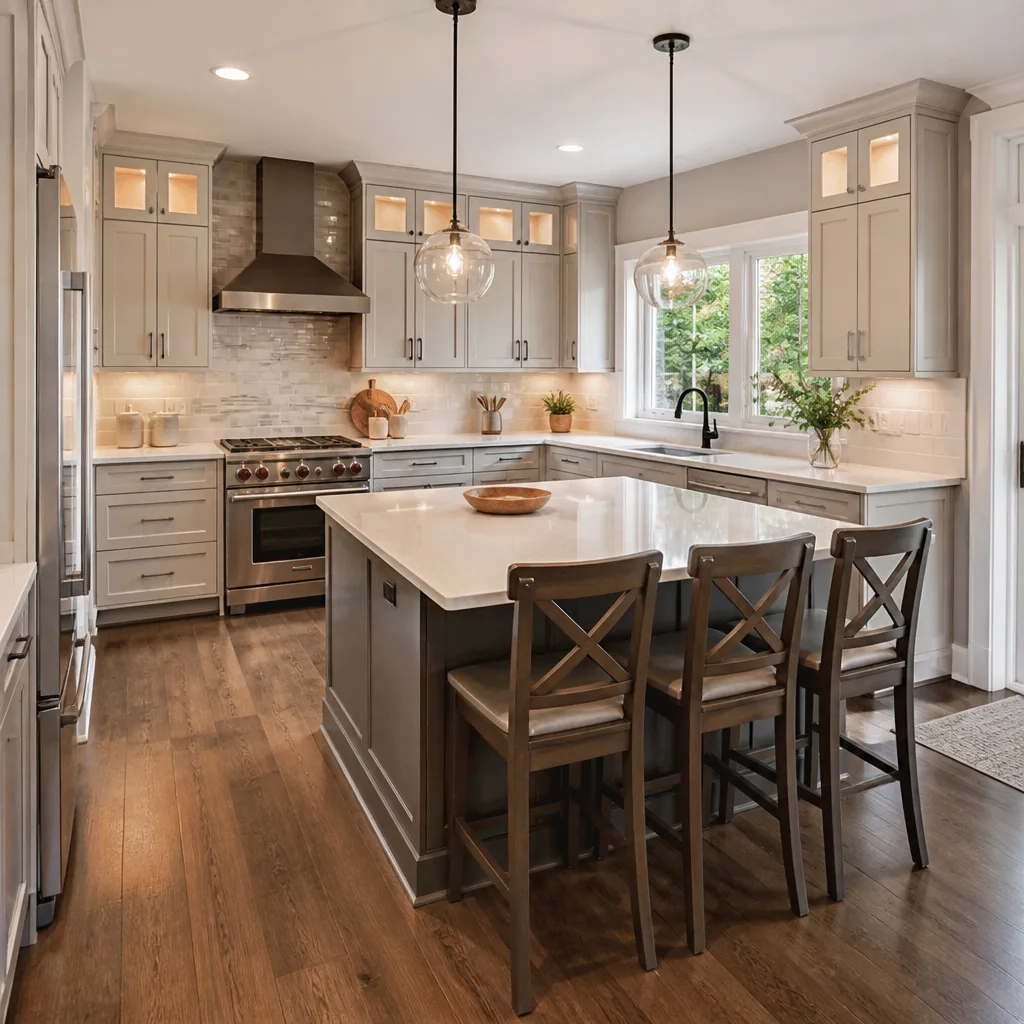
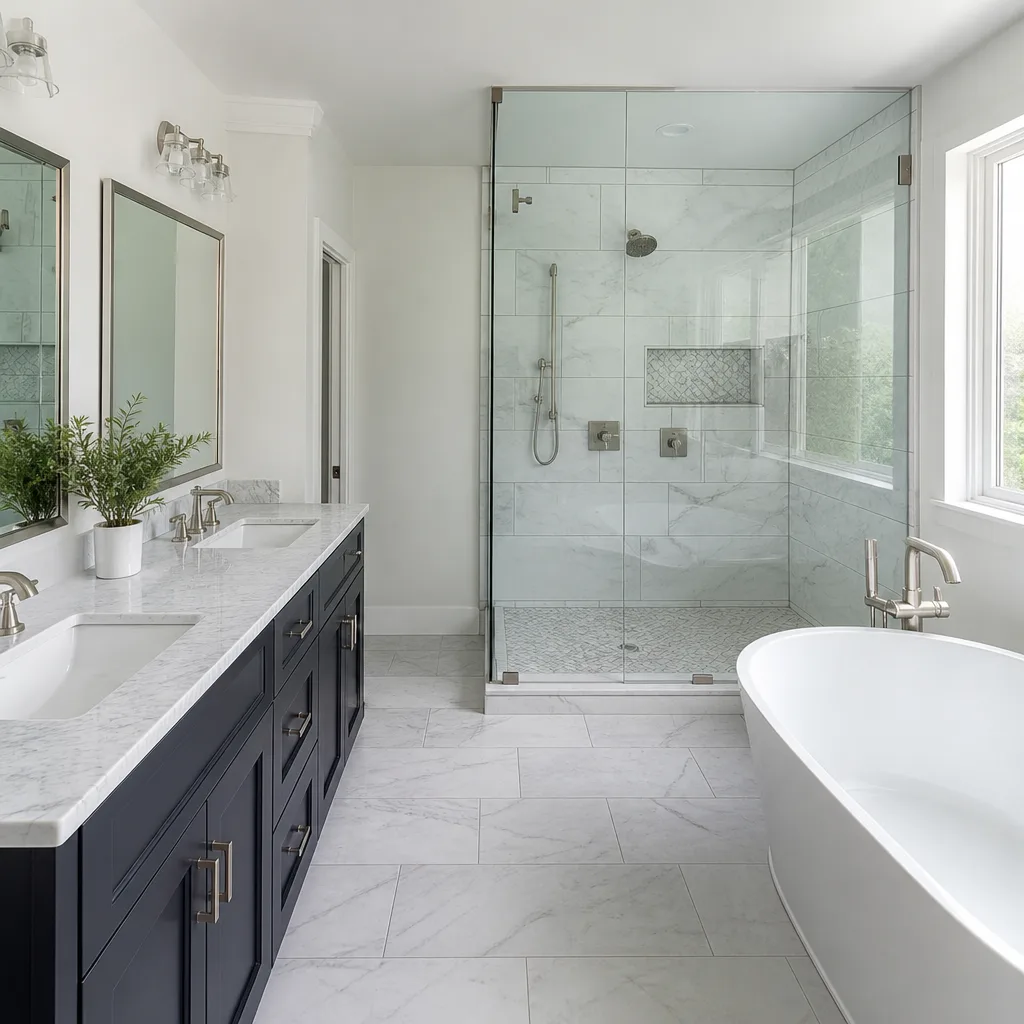





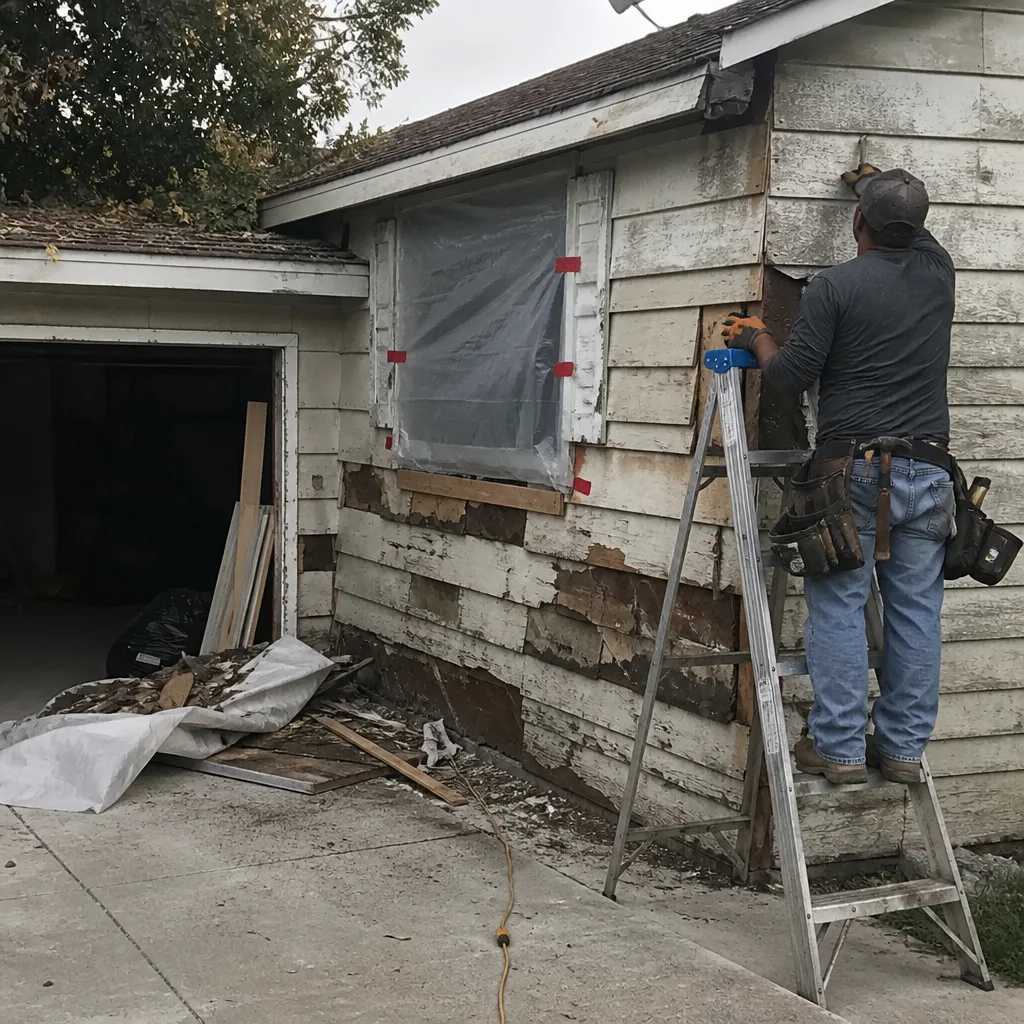 Before
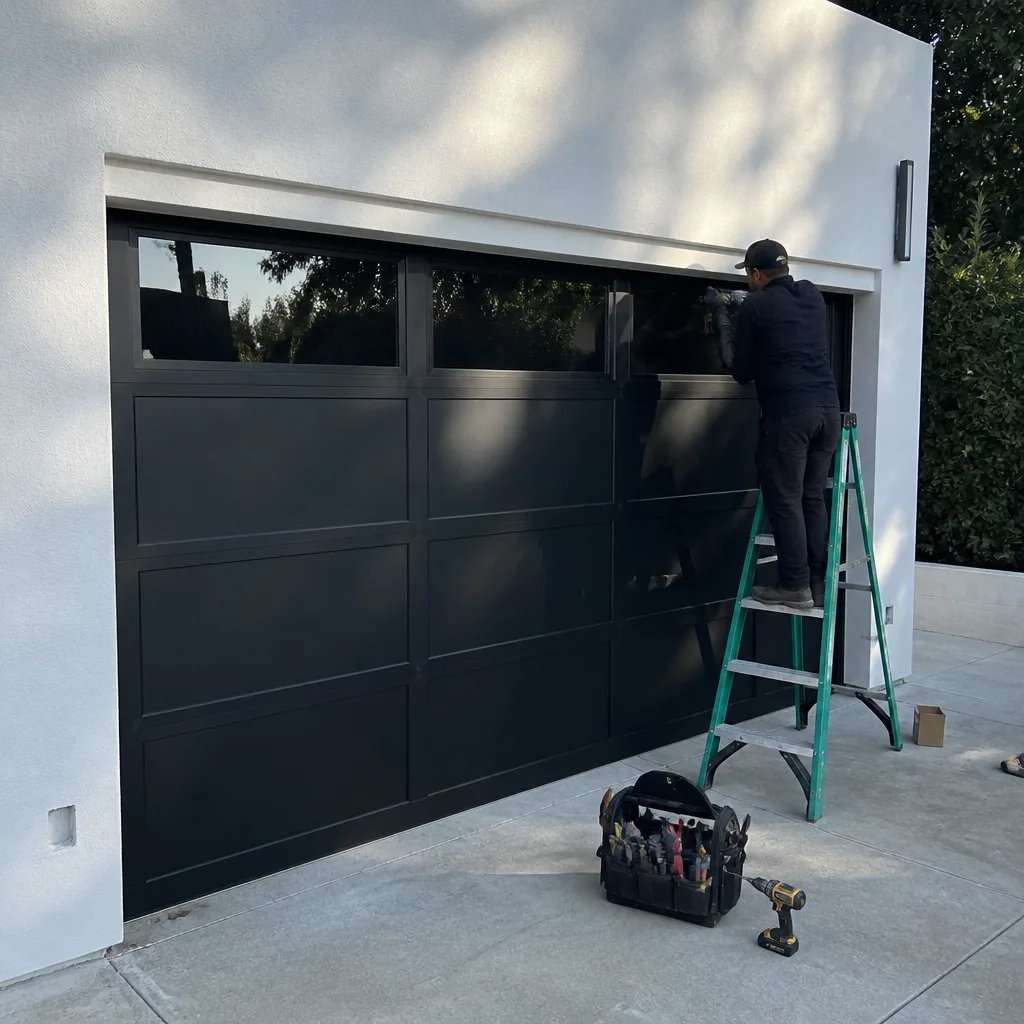 After
After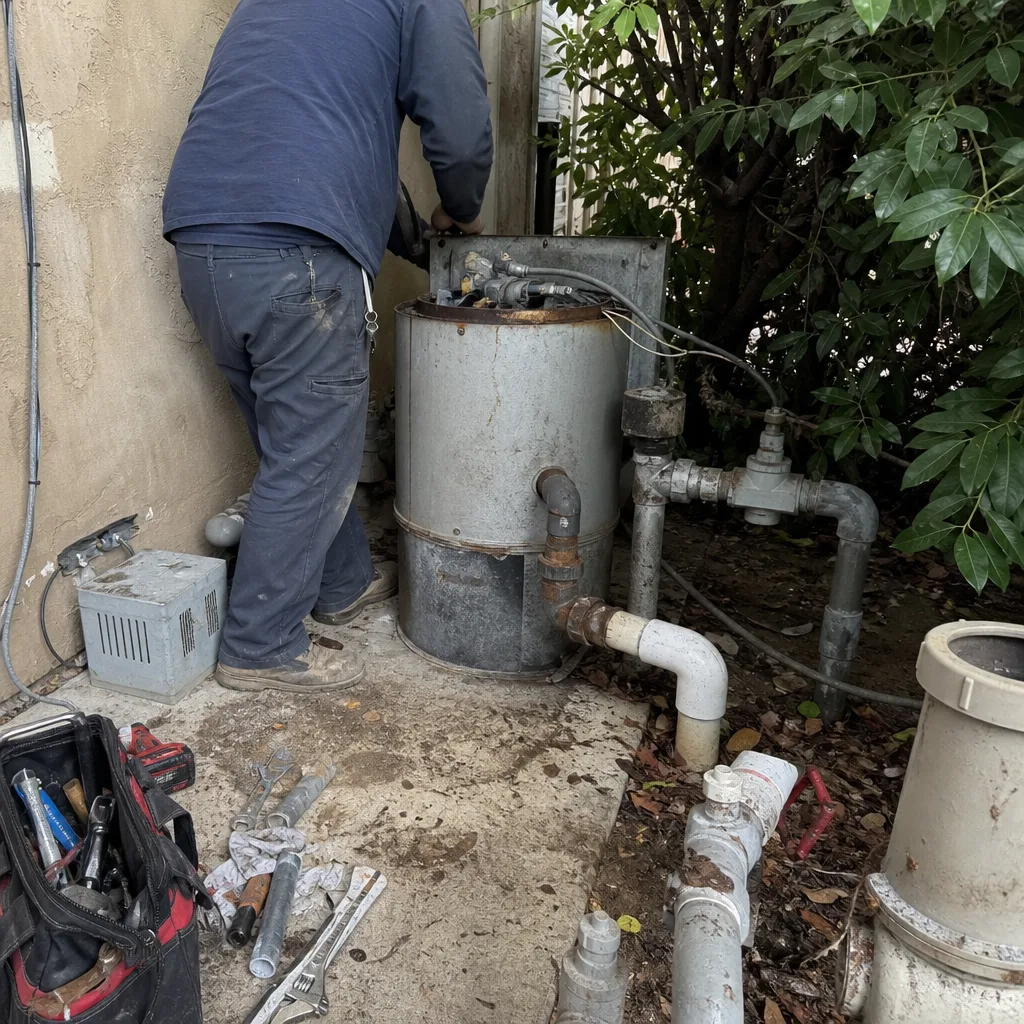 Before
 After
After Before
 After
AfterDIY vs Professional Home Remodeling: What’s Safe to Do Yourself
A homeowner in Silver Lake saved about $4,000 tiling their own shower. Then their buyer’s inspector flagged the unpermitted waterproofing during escrow, and the fix cost $11,000 before the sale could close. That is the real DIY question in Los Angeles: not whether you can do the work, but what happens when the work has to survive a building inspection, an insurance claim, or a resale disclosure form. This guide draws the line where it actually matters: at permit triggers, substrate integrity, and the disclosures California law requires when you sell.
Quick Answer
Cosmetic work like painting, trim, hardware swaps, and cabinet refacing is safe for most homeowners to DIY. Anything involving plumbing, electrical, structural changes, or waterproofing carries real risk in Los Angeles, both physically and legally, because permitting and inspection requirements apply regardless of who swings the hammer. If a job requires a permit, the smart money is on a licensed contractor who carries the liability for code compliance and stands behind the work.
Table of Contents
- What Actually Requires a Permit in Los Angeles
- Cosmetic-Safe DIY: What You Can Confidently Do Yourself
- DIY With Risk: Where Amateurs Get Into Trouble
- Licensed-Only Work: The Line You Shouldn’t Cross
- Substrate and Rough-In: What “Looks Done” Actually Means
- The Insurance Gap Most Homeowners Don’t Know About
- The Real Cost Comparison: DIY vs Hiring a Contractor
- Selling a House With Unpermitted Work in Los Angeles
What Actually Requires a Permit in Los Angeles
Los Angeles has some of the strictest building enforcement in California. The Los Angeles Department of Building and Safety (LADBS) requires permits for a wider range of work than most homeowners realize. Here is the part that catches people: the permit requirement attaches to the scope of work, not the person doing it. You cannot dodge a permit by doing it yourself.
Projects that require a permit in Los Angeles regardless of who performs them:
- Any plumbing change beyond replacing a fixture in place – moving a sink, adding a bathroom, relocating a shower drain
- Electrical work beyond replacing a like-for-like outlet or switch – adding circuits, moving panels, running new wire
- Any wall removal or structural modification – even non-load-bearing walls need a permit if you’re altering framing
- Window and door replacements that change opening sizes – like-for-like swaps are typically exempt, enlarging is not
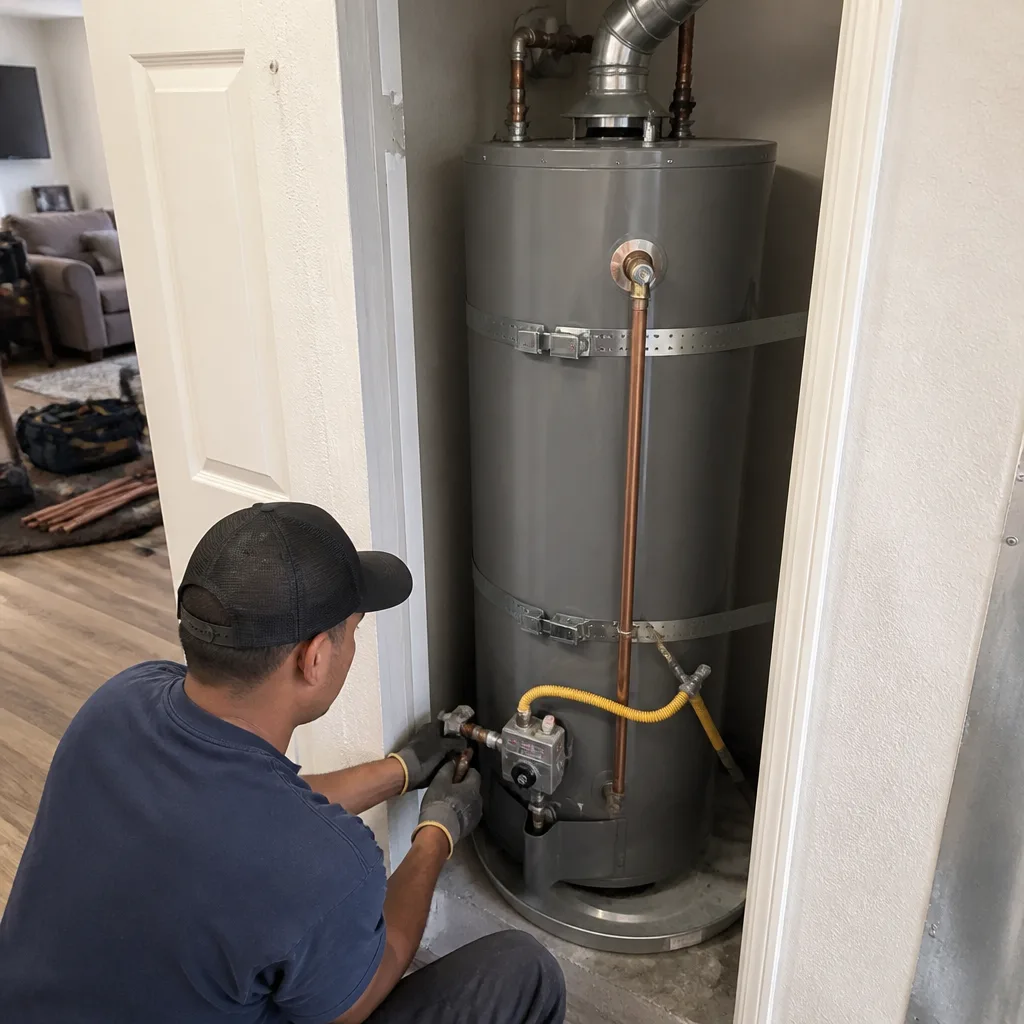
- Water heater replacements – yes, even swapping a tank for a tankless unit
- Roof replacements over 500 square feet – plus any re-sheathing work
- Bathroom and kitchen remodels that move walls, drains, or electrical – which is most of them
Los Angeles also has specific seismic retrofit requirements that most other cities don’t. If you’re doing structural work on an older home, particularly pre-1980 construction, the city may require foundation bolting or cripple wall bracing as part of the permit. That is not a DIY-level conversation. When we estimate structural work in Los Angeles, we factor LADBS plan check timelines into the schedule because they affect when materials can even be ordered.
What Happens When You Skip the Permit
Skipping a permit in Los Angeles is not a victimless shortcut. LADBS can issue a stop-work order if a neighbor or inspector notices the work. The city can also require you to open walls for inspection after the fact, which is more expensive than doing the inspection right the first time. And when you sell, the California seller disclosure forms specifically ask about unpermitted work. You can lie on that form, but that creates liability that follows you after the sale.
Cosmetic-Safe DIY: What You Can Confidently Do Yourself
We tell homeowners this all the time: there is plenty of home remodeling work that is genuinely safe to do yourself, saves real money, and never touches a permit counter. The key is staying on the finished surface and not opening anything up.
- Interior painting – walls, ceilings, trim. No permit required. The biggest risk is choosing the wrong sheen for a bathroom or kitchen, which causes peeling. Use satin or semi-gloss in wet areas.
- Cabinet hardware and faucet swaps – replacing pulls, hinges, and like-for-like sink faucets with shutoff valves in place. If you’re not moving plumbing, you’re not triggering a permit.
- Trim, baseboard, and crown molding installation – purely cosmetic interior finish work. Requires a miter saw and patience, not a permit.
- Cabinet refacing – replacing doors, drawer fronts, and veneers on existing cabinet boxes. No plumbing, no electrical, no structural change.
- Caulking and grout repair – re-caulking a tub or sink, touching up cracked grout lines. These are maintenance tasks that protect your waterproofing.
- Light fixture swaps – replacing a dining room pendant or bathroom vanity light with a like-for-like fixture in the same electrical box. No new wiring, no permit.
One note from experience: even cosmetic work has a failure mode. We have been called to fix DIY caulking jobs where the homeowner used latex caulk in a shower instead of 100% silicone. That is a $40 material error that becomes a $2,000 water damage repair in Los Angeles once mold sets into drywall. The work was safe to DIY; the product choice was not.
DIY With Risk: Where Amateurs Get Into Trouble
This is the middle zone. These jobs don’t always require a permit, but they carry failure modes that are expensive to fix. If you’re confident, careful, and willing to research, you can do some of these. If you’re not, the correction will cost more than the original job would have cost a professional.
- Tile installation on floors – no permit needed for floor tile. But improper subfloor preparation leads to cracked tile and hollow spots within a year. In Los Angeles, older homes often have dimensional lumber subfloors that flex. You need to know what deflection rating your floor has before you set tile, or you’ll be tearing it out.
- Laminate or vinyl plank flooring – generally DIY-friendly, but door undercuts, transitions, and moisture barriers matter. In Los Angeles, slab-on-grade homes can wick moisture through concrete. Skipping the vapor barrier creates warping or mold.
- Backsplash tile – the most common DIY tile job. The risk here is lower: it’s decorative, not waterproofing-critical. But uneven lines and lippage (tile edges sticking up) are visible forever.
- Vanity replacement in the same footprint – if the plumbing stub-outs match the new vanity, this can be straightforward. If they don’t, you’re moving pipes, and that crosses into permit territory.
- Demolition of non-structural elements – tearing out old cabinets, flooring, and drywall is physical work, not skilled work. But you need to know what’s behind the wall before you swing. Hitting a wire or a drain pipe turns a free demo day into a $1,500 repair call.
The pattern here: DIY work goes wrong when the substrate isn’t right. That’s the layer underneath the finished surface. You can install tile perfectly over a bad substrate and still fail. Understanding what’s underneath is the difference between a job that lasts 15 years and one that fails in 15 months.
Licensed-Only Work: The Line You Shouldn’t Cross
Some work is simply not appropriate for a homeowner, full stop. It is not a knock on anyone’s skill. It is about liability, code compliance, and safety systems that have to work every single time.
- Any structural modification – removing or cutting load-bearing walls, altering beams, changing rooflines. In Los Angeles, this also triggers seismic review, which is an engineering conversation, not a framing conversation.
- Electrical panel work – service upgrades, panel swaps, new circuits. This is how fires start. Los Angeles has older housing stock with legacy wiring, and a panel swap often reveals deferred maintenance a homeowner is not equipped to diagnose. This is genuinely dangerous work, and a licensed electrician should handle it.
- Waterproof shower construction – building a shower pan, installing cement board substrate (the moisture-resistant layer behind your tile), and waterproofing with membrane systems. This is the single highest-failure DIY remodel job we see in Los Angeles, and failures don’t stay in the shower. Water travels, and in Southern California’s dry climate, the damage sometimes hides for years before showing as mold or rot.
- Gas line work – any modification to gas appliance connections or lines. In Los Angeles, gas work requires specific permits and testing. A bad gas connection doesn’t just leak; it can kill.
- Whole-home or main bathroom remodels – when you’re moving plumbing, rewiring, relocating walls, and reconfiguring the floor plan, you are running a construction project. That means sequencing, inspections, and subcontractor coordination. We’ve never met a homeowner who enjoyed living through a six-week remodel they were also trying to project-manage.
The consistent line: if the failure mode is water damage, fire, structural collapse, or a gas leak, hire a licensed contractor. The downside risk is not a cosmetic flaw. It is a genuine safety hazard to the people living in the house.
Substrate and Rough-In: What “Looks Done” Actually Means
Two terms explain most DIY remodeling failures. If you understand these, you’ll know exactly why some jobs look finished in photos but aren’t done in reality.
Substrate is the layer beneath the finished surface. In tile work, it’s the cement board or uncoupling membrane between the tile and the wood subfloor or studs. In countertops, it’s the plywood support under a stone slab. In paint, it’s the primed and sealed drywall. The finished surface is only as durable as what it’s adhered to.
Rough-in is the hidden phase of plumbing and electrical work: the pipes inside walls, the drain lines under floors, the wire runs through studs. Rough-in happens before drywall goes up. It is inspected by the city before it gets covered. When someone says a remodel “just needs finishes,” they’re usually describing a job where rough-in was never done or never inspected.
Here is why this matters in Los Angeles specifically: LADBS requires a rough-in inspection before you close walls on plumbing or electrical work. If you do rough-in yourself and cover it without inspection, you have created an unpermitted condition that must be disclosed when you sell. And the buyer’s inspector will likely catch it, because inspectors in this market know what self-performed rough-in looks like. We have seen escrows die over this exact issue.
The Insurance Gap Most Homeowners Don’t Know About
Here is the part that rarely comes up in DIY conversations: your homeowner’s insurance policy is not a safety net for self-performed structural or unpermitted work. Most policies in California exclude coverage for damage that results from work done without a required permit, or work performed by someone who was not licensed when the scope required licensing.
In plain terms: if you move a wall without a permit, and that wall fails, and the failure damages your house, your insurance carrier has grounds to deny the claim. If you rewire a room yourself, and there’s a fire, and the fire marshal determines the cause was improper wiring, the claim can be denied. The insurance company doesn’t have to prove you did it wrong; they just have to show the work required a permit and one wasn’t pulled.
This is the risk calculation most people skip. You’re not just betting on your ability to do the work. You’re betting that the work will never fail in a way that involves an insurance claim. In Los Angeles, where earthquake and water damage claims are already heavily scrutinized, that’s a bad bet. A licensed contractor’s general liability insurance covers this gap. In our experience, the premium a contractor charges for permitted, insured work is usually far less than the uncovered exposure of doing it alone.
The Real Cost Comparison: DIY vs Hiring a Contractor
The DIY calculation usually looks like this: “A contractor quoted $8,000, and materials cost $2,500, so I save $5,500.” That math misses three real costs that show up in almost every Los Angeles DIY remodel.
Tool Rental and Purchase
Tile saw rental runs $75-150 a day in Los Angeles. A decent miter saw costs $200-400. A wet saw you’ll use twice if you’re lucky. Specialty tools for plumbing and electrical work add up fast. If your project needs tools you don’t already own, the tool cost can easily reach $500-1,000 on a single bathroom, and that’s before you account for the time spent learning to use them safely.
Material Waste From Inexperience
Professional tile setters order 10-15% overage for cuts and breakage. First-time DIYers average 20-30% overage because of mistakes, pattern confusion, and recuts. In a Los Angeles market where decent porcelain tile runs $4-8 per square foot, a 20% waste rate on a 100-square-foot bathroom floor costs an extra $80-160. That’s small. But if you’re learning on a $12-per-square-foot tile, it’s not small, and if you have to redo a section entirely, the waste doubles. Then there’s the cost of hauling debris. Los Angeles transfer stations charge per load, and construction debris is heavy.
The Cost of Fixing Mistakes
This is the category nobody budgets for, and it’s the one that kills the savings. Common corrections we price in Los Angeles:
- Shower waterproofing failure and repair: $4,000-12,000 depending on water damage extent
- Electrical miswiring correction: $800-3,000 depending on scope and accessibility
- Plumbing leak repair inside a finished wall: $1,500-5,000 once drywall, insulation, and finishes are restored
- Tile removal and reset due to lippage or adhesion failure: $15-30 per square foot, plus new tile
- Redoing a failed floor installation: $8-20 per square foot including disposal
The realistic framework: add the cost of tools, assume 25% material waste, and budget one correction at 50-100% of what the contractor originally quoted for that scope. If the DIY savings still pencil out after that math, do it yourself. If not, the contractor’s written price is actually the cheaper option, you just pay it up front instead of discovering it in installments.
For context on what professional work costs in this market, our kitchen remodeling in Los Angeles projects typically run $18,000-$55,000 depending on layout, cabinet line, and countertop material. A bathroom remodel in Los Angeles typically lands between $12,000 and $35,000. Those are written prices, not ranges that move after demo. And that guarantee is part of what you’re buying.
Selling a House With Unpermitted Work in Los Angeles
If you do any remodeling work in Los Angeles without a permit, and you later sell the house, California law requires you to disclose it. The California Civil Code and the standard California Association of Realtors seller disclosure forms have specific questions about unpermitted work, room additions, converted garages, and modifications done without inspection.
Here is exactly what that looks like in practice:
- The seller discloses unpermitted work – the buyer knows before closing. This frequently triggers a price reduction, because the buyer is purchasing a house with a known code compliance issue, and their lender may require the issue to be resolved before funding.
- The seller fails to disclose – the buyer discovers the unpermitted work after closing, typically through a contractor estimate or a city records check. The seller is now exposed to a lawsuit for misrepresentation and failure to disclose. This is not rare in Los Angeles; it’s a routine real estate litigation category.
- The city finds out independently – LADBS can flag unpermitted work during a property record review, which many buyers and lenders request. If LADBS issues a notice of violation, the work must be permitted retroactively, which often means opening walls for inspection and bringing everything up to current code, not the code that existed when the work was done.
The disclosure obligation doesn’t mean every DIY job is a problem. Cosmetic work doesn’t create a disclosure issue because it never required a permit. The problem is specifically unpermitted work that should have been permitted. A painted bedroom is invisible in escrow. A remodeled bathroom with a moved drain is not.
For a more complete picture of what a permitted remodel involves, see our overview of working with a general contractor in Los Angeles.
Common Mistakes to Avoid
- Assuming a permit isn’t required because a neighbor did the same thing without one. Your neighbor’s unpermitted work is a liability sitting in their wall, not proof that the work was legal. In Los Angeles, two identical houses on the same street can have different permit status depending on when work was done and what code applied at the time.
- Using the wrong waterproofing product in a wet area. Latex caulk where silicone is required, mastic adhesive in a shower instead of thinset, green board instead of cement board. Each of these is a $10-40 product error that creates a $3,000-10,000 repair. Waterproofing is not the place to save money.
- Covering rough-in work without an inspection. Once drywall goes up over uninspected plumbing or electrical, you can’t un-ring that bell. The work either stays hidden and creates liability, or you pay to open walls later and do it twice.
- Underestimating tool costs and waste. The $300 tile saw and the third trip to the hardware store are part of the project cost. When you’re comparing DIY to a contractor quote, the contractor’s price includes the tools they already own and the experience that keeps waste low.
- Starting demo before you know what’s in the wall. In Los Angeles, that wall might contain knob-and-tube wiring, galvanized supply lines, or a load-bearing header. Demo without investigation is how a one-day project becomes a three-week repair.
- Believing that a successful DIY cosmetic project means you’re ready for rough-in work. Painting a room well teaches you nothing about plumbing venting, electrical load calculations, or shower pan slope. The skill gap between surface work and systems work is the widest gap in remodeling.
- Not budgeting for disposal. Los Angeles construction debris can’t just go in the weekly trash bin. You need a dumpster rental or multiple transfer station trips, and both cost real money that the average DIY budget forgets entirely.
When to Call a Professional
You should call a professional when the job touches any of these: plumbing beyond a fixture swap, electrical beyond a like-for-like replacement, structural changes, waterproofing in wet areas, or any project that needs a permit. You should also call a professional if you’ve already started, discovered something unexpected in the walls, and aren’t sure whether it’s safe to continue. That’s a normal part of remodeling in older Los Angeles housing stock.
Penhallow Remodeling offers free estimates in Los Angeles. You’ll get a written price before any work starts, and every project carries the 365-Day Done Right Promise: if it’s not done right, we make it right, in writing. Call (936) 259-2607 to schedule a free estimate.
Frequently Asked Questions
You can legally do cosmetic work without a permit: painting, trim, cabinet hardware, like-for-like fixture swaps, flooring, and caulking. You can also do some moderate work like backsplash tile and vanity replacement in the same footprint. The limit is plumbing, electrical, structural, and waterproofing work, all of which require permits and licensed professionals in Los Angeles.
Common DIY corrections in Los Angeles range from $800 for minor electrical fixes to $12,000 for shower waterproofing failures with water damage. Most corrections we price fall between $1,500 and $5,000. The most expensive mistakes are the waterproofing failures, because the visible tile work looks fine while the substrate behind it rots quietly.
Usually not, if the work required a permit and you didn’t pull one, or if the damage resulted from work that a licensed professional should have performed. California insurers routinely deny claims for damage caused by unpermitted structural or systems work. You should check your policy before starting any project that touches plumbing, electrical, or structure.
Yes, California law requires you to disclose unpermitted work on seller disclosure forms. Failing to disclose creates legal liability after the sale. Buyers and lenders in Los Angeles frequently check LADBS permit records, so unpermitted work is often discovered during escrow even if you don’t mention it.
Shower waterproofing failures are the most common and most expensive DIY mistake we see. Homeowners tile a shower correctly on the surface but skip or botch the waterproofing layer underneath, and the failure isn’t visible for months or years. In our experience serving Los Angeles, this repair rarely costs less than $4,000 once water damage is addressed.
The LADBS website lists permit requirements, but as a rule of thumb: if you’re moving plumbing, changing electrical, altering structure, or replacing a water heater, you need a permit. If you’re only working on finished surfaces, you usually don’t. When in doubt, call LADBS or a licensed contractor before you start, not after demo.
The Bottom Line
The DIY question in Los Angeles isn’t really about skill. It’s about liability. Cosmetic work is safe to do yourself, and it’s where the real savings live. The moment a project touches plumbing, electrical, structure, or waterproofing, the math changes: permit requirements, insurance exclusions, resale disclosures, and the cost of corrections all stack against the savings. Understanding substrate and rough-in is the difference between a project that looks done and one that is done. For more guides & resources on navigating remodeling in Los Angeles, visit our blog. And when you do hire a contractor, get the price in writing and the guarantee in writing. That’s the standard every Los Angeles homeowner should expect, and the one we’ve built our company around.
Written by Trevor Nash, Owner at Penhallow Remodeling, serving Los Angeles since 2004. For more on how we work, visit the Penhallow Remodeling home page.